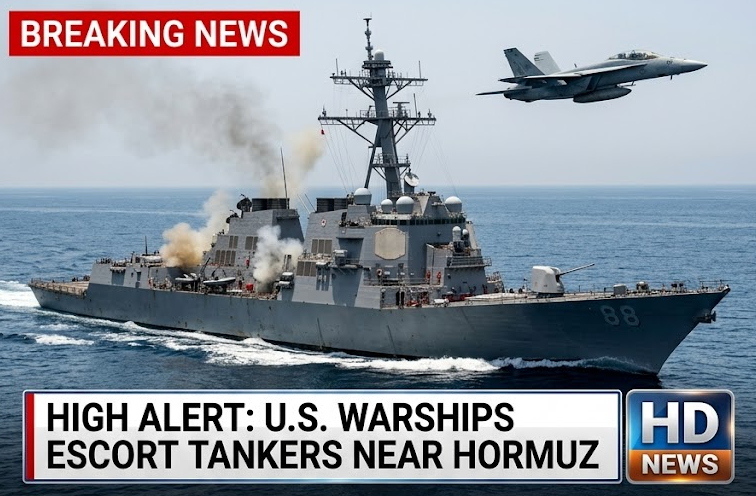
U.S. naval forces have intensified their presence near the Strait of Hormuz, escorting commercial oil tankers through the volatile waterway as missile threats continue to raise alarm across the region. Despite recent diplomatic efforts to ease tensions, military officials confirm that the situation remains highly unstable, with the risk of sudden escalation still very real.
According to defense sources, multiple U.S. warships are now actively accompanying tankers along key transit routes, forming protective corridors designed to deter potential attacks. The move follows a series of reported missile launches and drone activity targeting both military and civilian vessels in recent days. While no major strikes have been confirmed during the latest escort operations, the persistent threat has kept forces on high alert.
The Strait of Hormuz, a narrow but critically important passage linking the Persian Gulf to global shipping lanes, handles a significant portion of the world’s oil exports. Any disruption in this corridor can have immediate and far-reaching consequences for international energy markets. As a result, the U.S. and its allies are prioritizing the safe passage of commercial vessels, particularly oil tankers that are vital to maintaining global supply.
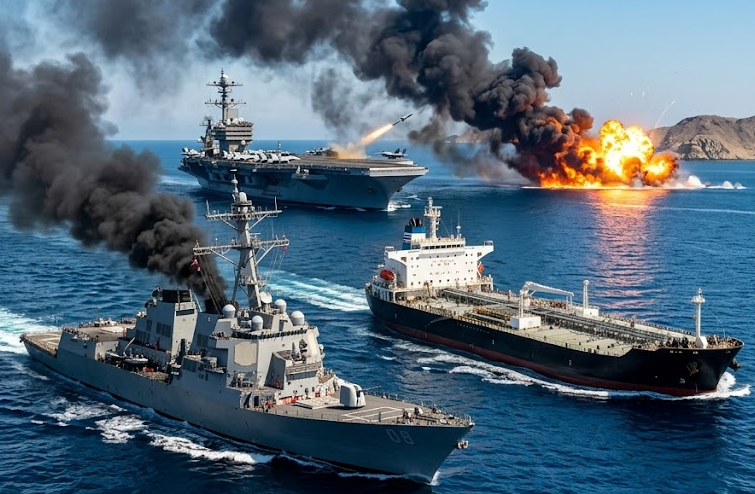
Military officials emphasize that the escort missions are defensive in nature. Surveillance systems, including radar and aerial reconnaissance, are being used to detect potential threats early, while naval crews remain prepared to respond rapidly if necessary. The presence of guided-missile destroyers and support ships underscores the seriousness of the current security environment.
Shipping companies have welcomed the increased protection but remain cautious. Many operators are continuing to implement enhanced safety measures, such as limiting exposure in high-risk zones and maintaining constant communication with naval authorities. Some vessels are reportedly traveling in convoys to maximize security, reflecting the level of concern within the maritime industry.
Meanwhile, tensions in the broader region show few signs of easing. Intelligence assessments suggest that missile capabilities among regional actors remain active, and the possibility of miscalculation or unintended confrontation cannot be ruled out. Even a single successful strike could quickly unravel the fragile stability that currently exists.
Global markets are closely watching developments. Oil prices have shown signs of volatility, reacting to each new report of military activity or угроз. Analysts warn that prolonged instability could lead to sustained increases in energy costs, with ripple effects across global economies.
Diplomatic channels remain open, with ongoing efforts to reduce tensions and prevent further escalation. However, the continued need for armed escorts highlights the gap between political agreements and realities on the ground.
As U.S. warships continue to guide tankers through one of the world’s most sensitive maritime corridors, the message is clear: while trade flows may continue, they do so under the shadow of conflict, where vigilance and caution are paramount.