
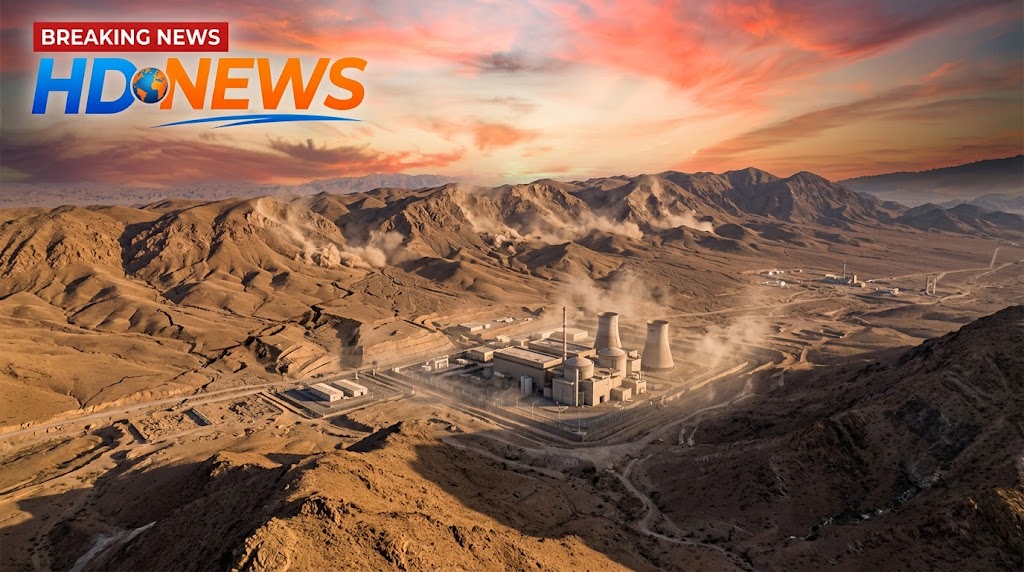
Recent reports indicate that Iran has experienced another earthquake within a short span of time, this one occurring in the southern part of the country near areas often associated with nuclear-related activities. The coincidence of location and timing has fueled widespread discussion, particularly online, where speculation about possible nuclear involvement has quickly gained traction amid ongoing regional tensions.
Seismic monitoring data shows that several relatively mild earthquakes have taken place across Iran over the past week. Among them was a tremor measuring between 4.3 and 4.6 in magnitude in regions such as Gerash and Fars. These areas are not typically known for housing major nuclear infrastructure. The quakes were shallow and, according to current reports, did not result in any significant damage. However, their occurrence has drawn heightened attention, largely because of the broader geopolitical climate.
As often happens in such situations, social media platforms have played a major role in shaping public perception. A variety of unverified claims have circulated rapidly, suggesting that the seismic activity might be linked to hidden or deliberate actions. Some posts have speculated about the possibility of a secret nuclear test, while others have proposed scenarios involving covert explosions at military or nuclear facilities. There are even suggestions that the tremors could be the result of targeted strikes aimed at underground installations.
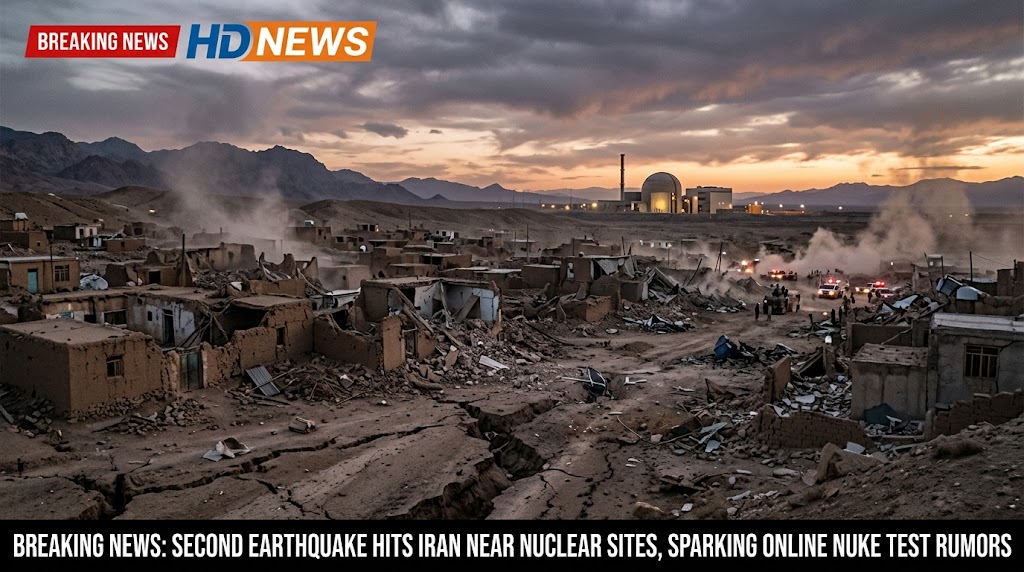
Despite these theories, there is currently no credible evidence supporting any connection between the earthquakes and nuclear activity. Experts in seismology emphasize that natural earthquakes and man-made explosions, including nuclear tests, produce distinct seismic signatures. The recent tremors recorded in southern Iran match patterns consistent with natural tectonic movements rather than artificial disturbances.
Geographically, Iran is situated in a region known for its seismic activity. The country lies along several major fault lines, making earthquakes a relatively common occurrence. Southern Iran, in particular, is part of an active tectonic zone where shifts in the Earth’s crust frequently generate small to moderate tremors. In this context, the recent events are not unusual from a scientific standpoint.
There has also been no official confirmation of damage to nuclear facilities as a result of these earthquakes. Key sites, such as the uranium enrichment facility at Natanz, have not been reported as affected. Ongoing analysis, including satellite imagery and international monitoring efforts, continues to assess the situation. So far, the available data does not support claims that the quakes were linked to any nuclear testing or military incidents.
Scientists and analysts are urging the public to approach such situations with caution. While it is understandable that unusual timing or location can raise concerns, drawing conclusions without evidence can lead to misinformation. Earthquakes alone are not reliable indicators of covert operations or weapons testing. Instead, they should be interpreted within the broader geological framework of the region.
For example, similar-sized earthquakes occur regularly in tectonically active zones around the world, including parts of Japan, California, and Turkey. These events rarely have any connection to human activity, yet they can still generate speculation when they coincide with politically sensitive contexts.
In summary, while the recent earthquakes in southern Iran have sparked significant discussion and speculation, the most plausible explanation remains natural seismic activity. There is no verified proof linking these tremors to nuclear tests or military actions. As the situation continues to be monitored, both scientific analysis and verified information should guide public understanding, rather than unconfirmed claims circulating online.