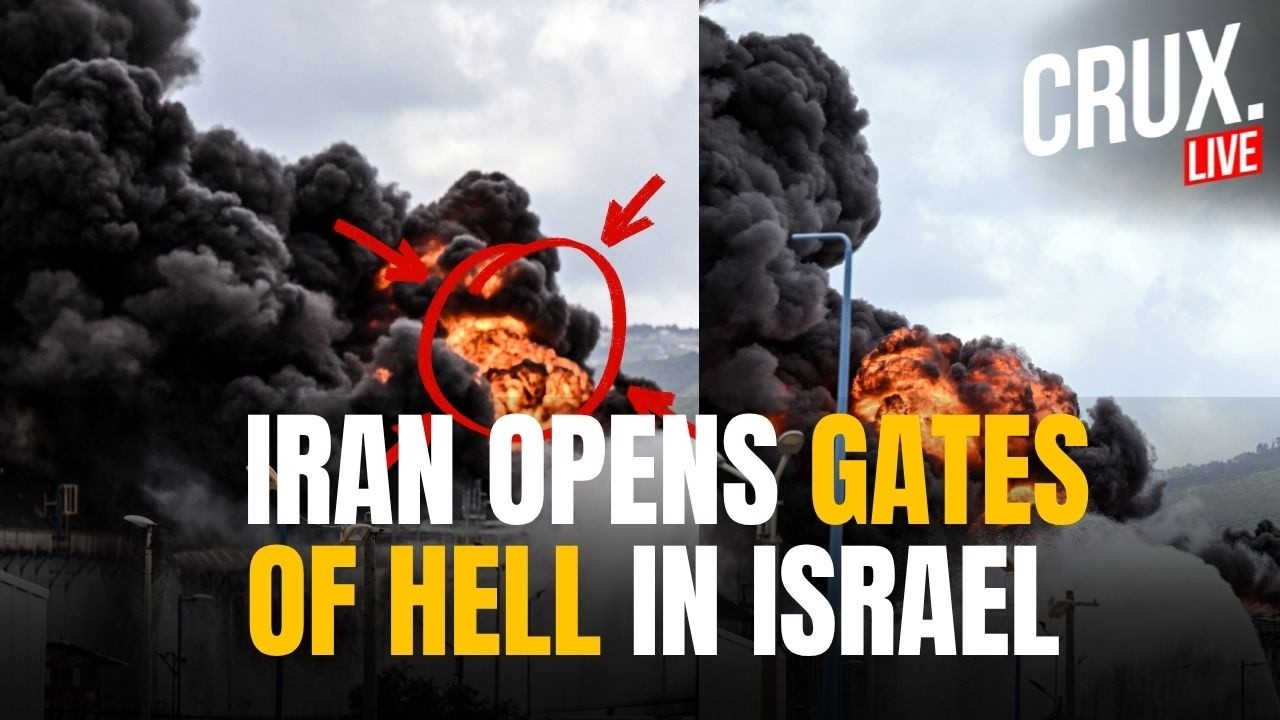
The skyline of Haifa lit up in orange and black as flames tore through one of Israel’s most critical energy facilities. Thick smoke billowed into the sky, visible for miles—an unmistakable sign that the war had just entered a far more dangerous phase.
According to multiple reports, Iran launched a fresh wave of missile strikes targeting northern Israel, with one of the most significant hits landing on the Bazan oil refinery complex, the country’s largest fuel processing hub. The impact triggered a massive fire, sending towering plumes of smoke over the port city and forcing emergency crews into a race against time.
But this wasn’t just another strike.
This was a message.
The Haifa refinery isn’t an ordinary industrial site—it’s a cornerstone of Israel’s energy infrastructure, responsible for supplying fuel to both civilian and military sectors. Over the past weeks, it has already been targeted multiple times, but this latest attack appears to mark a significant escalation, with visible fires and operational disruption.
Eyewitness footage circulating online shows flames engulfing parts of the facility as sirens echoed across the city. While early reports suggested no mass casualties, the symbolic impact was undeniable: Iran had struck at the heart of Israel’s economic lifeline.
And it didn’t happen in isolation.
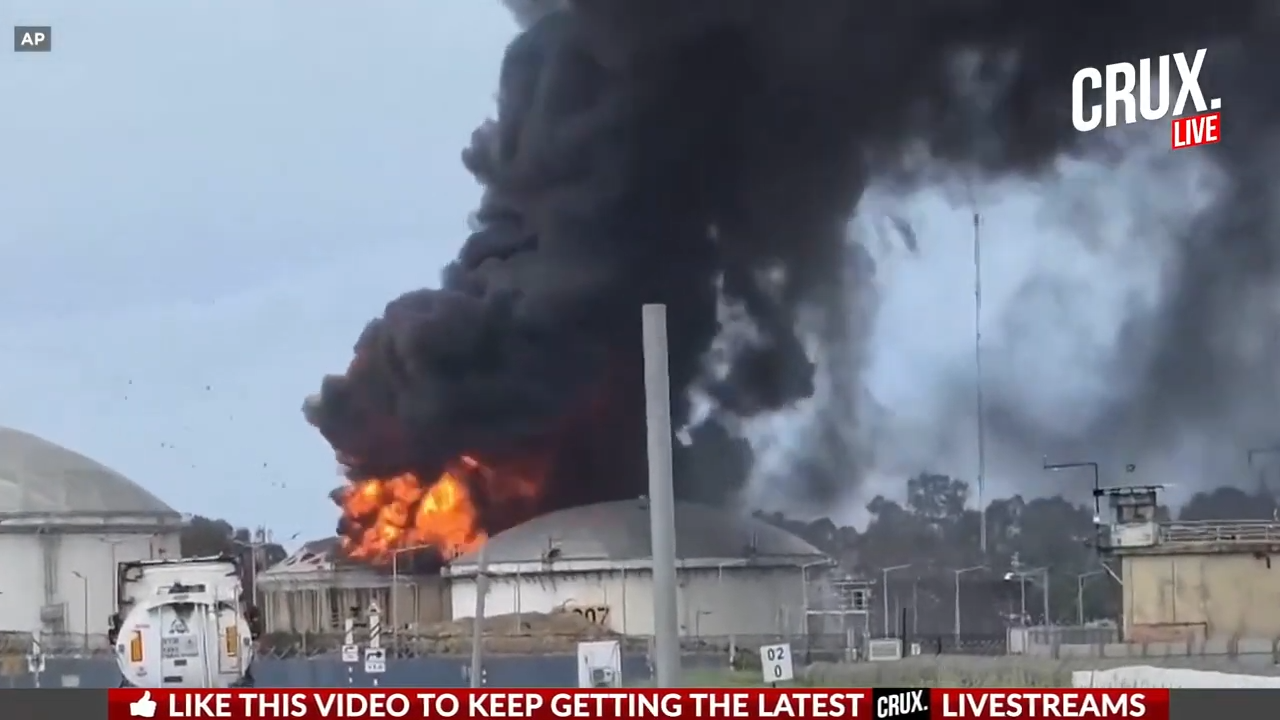
This attack is part of a broader strategy unfolding across the region. Iran has increasingly targeted energy infrastructure—not just in Israel, but across the Middle East—turning oil refineries, tankers, and fuel depots into primary battlegrounds. By doing so, Tehran is attempting to hit where it hurts most: energy supply, economic stability, and global markets.
Some reports suggest that missiles may have been launched not only from Iran, but also from allied groups in Lebanon, signaling a coordinated, multi-front offensive. If true, it represents a dangerous shift—one where the conflict is no longer contained between two nations, but is spreading across multiple actors and borders.
The timing is no coincidence.
Just days before the strike, Israel had intensified attacks on Iranian energy facilities, including oil depots and gas infrastructure. In response, Iran vowed retaliation—and Haifa became one of its highest-value targets.
This tit-for-tat escalation is now creating a cycle that is increasingly difficult to break.
And the consequences are already being felt beyond the battlefield.
Oil markets are reacting nervously. Global prices are rising. Governments are watching closely as one of the world’s most volatile regions edges closer to full-scale war. Even political leaders are issuing stark warnings—hinting at even harsher retaliation if attacks like this continue.
But perhaps the most alarming question is this:
What happens if the next strike is even bigger?
Military analysts warn that targeting energy infrastructure is only the beginning. If escalation continues, future attacks could involve ports, naval bases, or even urban centers at a much larger scale. And with multiple factions now involved—including groups aligned with Iran—the risk of a wider regional war is growing by the day.
For the people of Haifa, the fire may eventually be extinguished.
But the signal it sent?
That will linger.
Because in modern warfare, hitting a refinery isn’t just about fuel.
It’s about power, الاقتصاد, and control.
And right now, all three are burning.