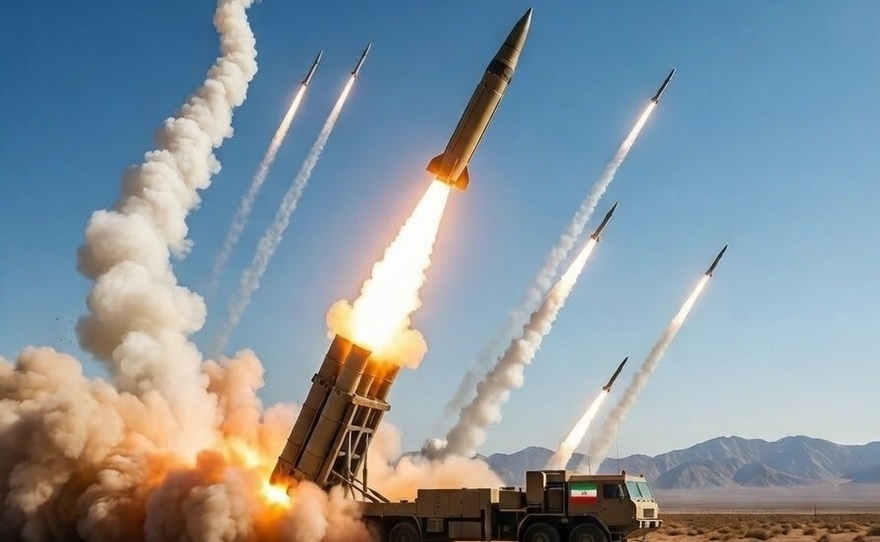
As tensions between Iran and Israel intensify, the conflict appears to be entering a more dangerous and prolonged stage. Recent reports indicate that Tehran has deployed its advanced Khorramshahr-4 ballistic missile—a long-range system capable of carrying a significantly heavy payload—toward Israeli territory. This development marks a notable escalation and reflects growing concerns that the confrontation may evolve beyond short-term exchanges into a sustained military standoff.
The Khorramshahr-4 represents one of Iran’s more sophisticated missile systems. As an upgraded version of earlier medium-range ballistic missiles, it is designed to deliver larger warheads over considerable distances. Footage released by Iranian sources reportedly shows the missile being launched toward targets that include central regions near Tel Aviv, as well as key military installations. Analysts suggest that such strikes serve a dual purpose: they are not only intended to inflict damage but also to send a strategic message. By deploying high-capacity missiles, Iran may be signaling its willingness to maintain pressure over an extended period rather than engaging in isolated attacks.
Meanwhile, Israeli leadership has begun preparing the public for a conflict that could stretch on for weeks rather than days. Military officials and political figures alike have indicated that the current situation is unlikely to resolve quickly. This shift in tone suggests a transition from sporadic confrontations to a more sustained campaign, potentially involving repeated missile launches, defensive countermeasures, and coordinated military operations on both sides. The expectation of a longer conflict raises the stakes, as prolonged engagements tend to increase both military and civilian risks.
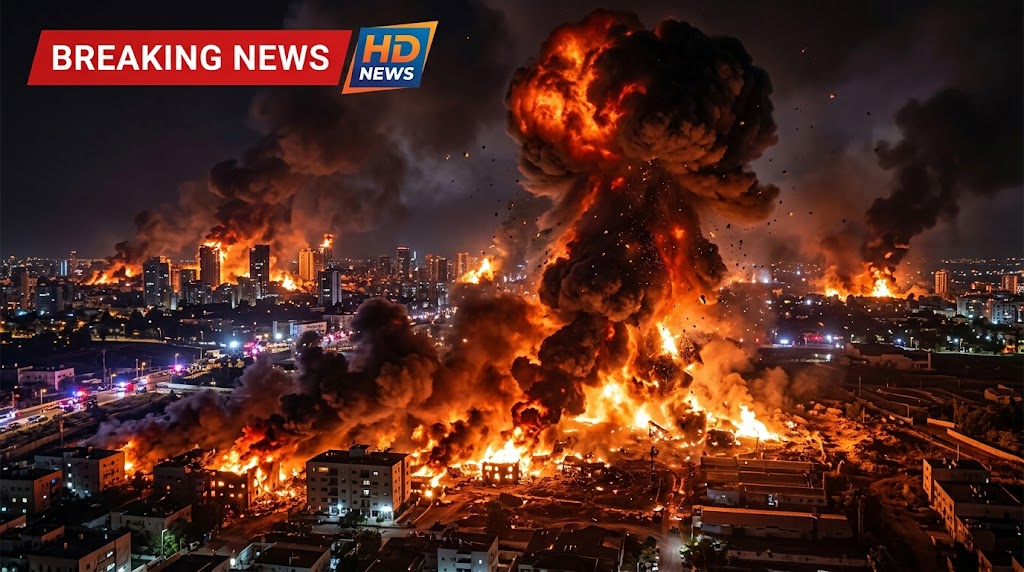
One of the most pressing challenges facing Israel is the scale and frequency of missile barrages. Iran has reportedly employed waves of ballistic missiles, including not only the Khorramshahr-4 but also systems such as the Qadr and Emad. Some of these missiles are believed to carry cluster-type warheads, which can disperse multiple submunitions over a wide area. This tactic is particularly concerning because it is designed to strain and potentially overwhelm air defense systems. As a result, Israeli cities have been subjected to repeated alerts, forcing civilians into shelters while defense systems work continuously to intercept incoming threats.
The broader implications of this escalation extend far beyond the immediate battlefield. The use of high-capacity ballistic missiles highlights a significant intensification of the conflict, drawing increased attention from the international community. Global markets, particularly energy sectors, have shown signs of volatility as uncertainty grows over the stability of the region. At the same time, neighboring countries are closely monitoring developments, aware that any further escalation could have spillover effects on regional security. Diplomatic efforts are likely to intensify as international actors seek to prevent the situation from spiraling further out of control.
Looking ahead, the trajectory of the conflict remains uncertain. Iran’s willingness to deploy heavy missile assets, combined with Israel’s preparations for a prolonged confrontation, suggests that neither side is expecting a quick resolution. Instead, the Middle East may be entering a period of sustained tension marked by ongoing military exchanges and strategic maneuvering. This evolving situation has the potential to reshape regional dynamics, influencing alliances, defense strategies, and geopolitical calculations.
In such a volatile environment, each new development carries significant weight. The continued use of advanced weaponry not only tests military capabilities but also underscores the fragile balance of power in the region. As events unfold, the world will be watching closely, aware that the consequences of this conflict could extend well beyond its immediate participants.