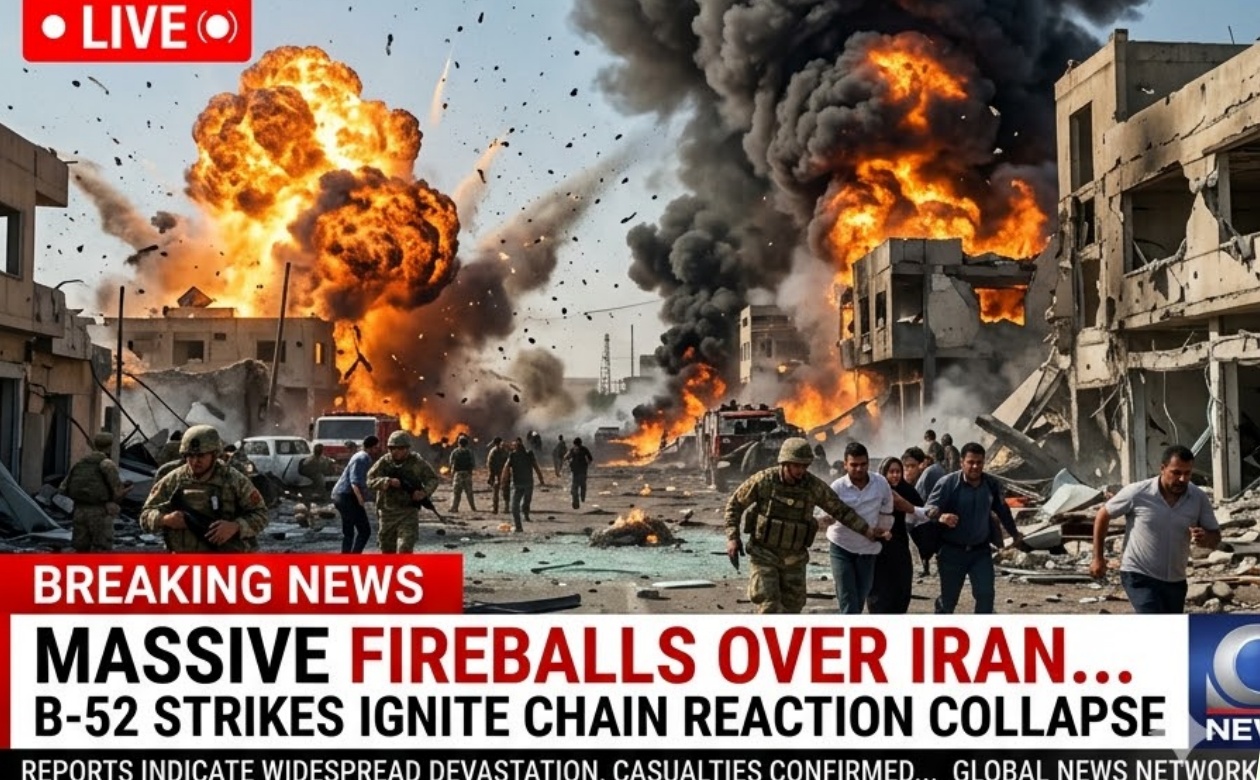
In a dramatic escalation of the ongoing Iran conflict, powerful visuals and eyewitness reports have emerged showing huge fireballs and towering smoke plumes lighting up the night sky across central Iran — scenes consistent with sustained high‑intensity bomber strikes and subsequent chain reaction explosions from secondary detonations. The dramatic events coincide with the deployment of U.S. Air Force B‑52 Stratofortress bombers into Iranian airspace as part of Operation Epic Fury, underscoring a significant shift in the conduct of the campaign.
According to Pentagon briefings, B‑52 bombers — the Cold War‑era strategic heavyweights — have begun conducting direct overland missions inside Iran, a sign that American forces believe they now hold substantial control of the skies after weeks of air defense suppression. These bombers, capable of carrying a massive payload of precision‑guided JDAM munitions, have been targeting hardened facilities, military industrial complexes, and ammunition depots that survived earlier waves of airstrikes.
The dramatic imagery emerging from social media and military intelligence feeds appears most intense over Isfahan province, where recent strikes on an ammunition depot caused multiple violent secondary explosions, producing fireballs visible from miles away and shockwaves that rattled nearby towns. In some recordings, massive blasts light the horizon like fiery pillars stacked on top of each other, a visual hallmark of a chain reaction collapse triggered by penetrating bunker‑buster blasts setting off stored munitions and fuel.
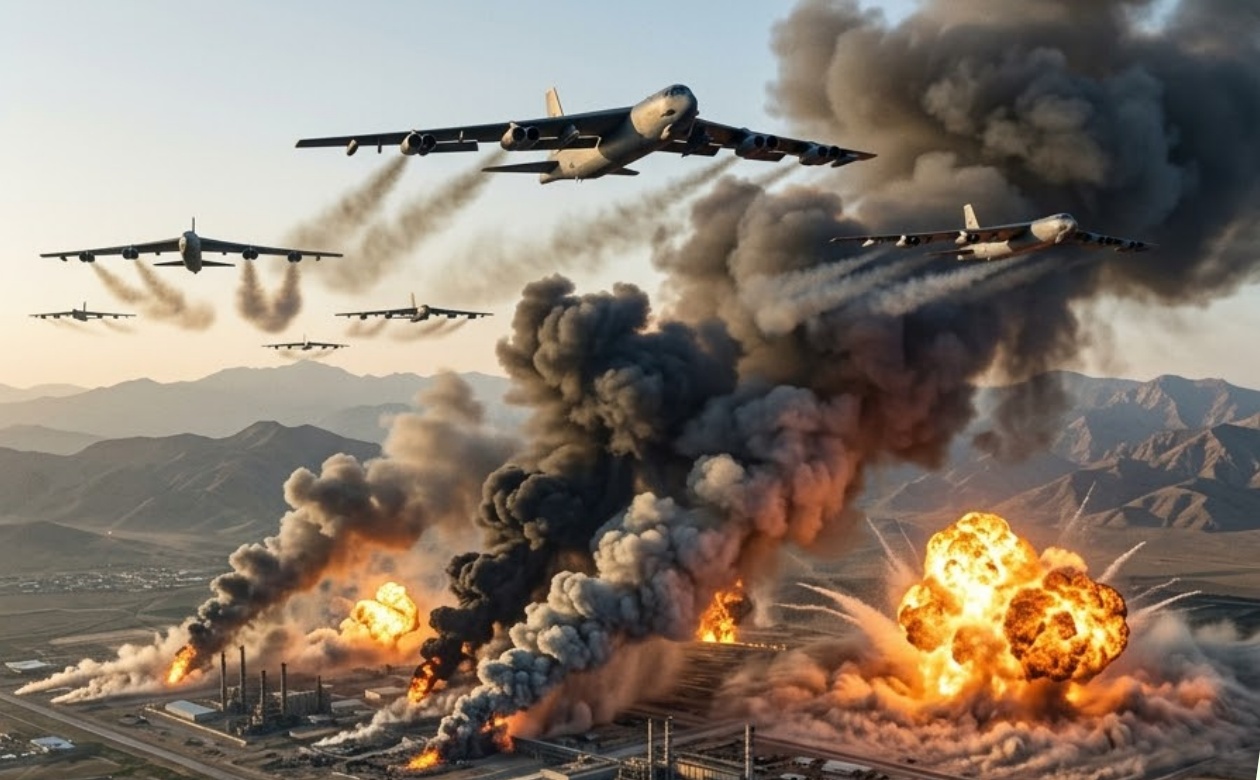
These massive fireballs are not just symbolic — they signal the destruction of significant stocks of weapons, propellant, and stored materials that Iran has relied on to fuel its missile and drone campaigns against U.S. and allied forces. The scale of these detonations indicates that the strikes are hitting deep, densely packed sites where conventional aerial bombing would normally risk limited impact. Instead, the sustained use of heavy JDAMs from the B‑52s — now flying within Iranian airspace due to degraded defenses — has increased destructive effectiveness.
U.S. defense officials, while not disputing the intensity of the strikes, have been cautious in public statements. They describe the ongoing campaign as surgically targeted and aimed at neutralizing Iran’s ability to wage prolonged warfare, rather than indiscriminately bombing civilian areas. However, the dramatic visuals of fireballs exploding and smoke rising over major cities have already shaped global perceptions of the conflict’s severity.
Tehran’s response has been defiant. Iranian military spokespeople condemn the strikes as acts of aggression that will not break the nation’s resolve, even as they acknowledge the difficulty in responding to high‑altitude bomber operations carried out with precision weapons. Iranian air defenses, damaged by weeks of bombardment, have struggled to counter the heavy bomber threat effectively.
Market reactions and international diplomatic chatter have reflected growing unease. Energy prices have shown volatility amid fears of expanding strategic infrastructure targeting, while global capitals call for restraint even as military operations intensify.
As massive fireballs continue to paint Iran’s night sky, the conflict enters a new and uncertain phase — one where the scale of destruction far outpaces earlier air campaigns and signals a potential turning point in how this war is being fought and perceived worldwide.