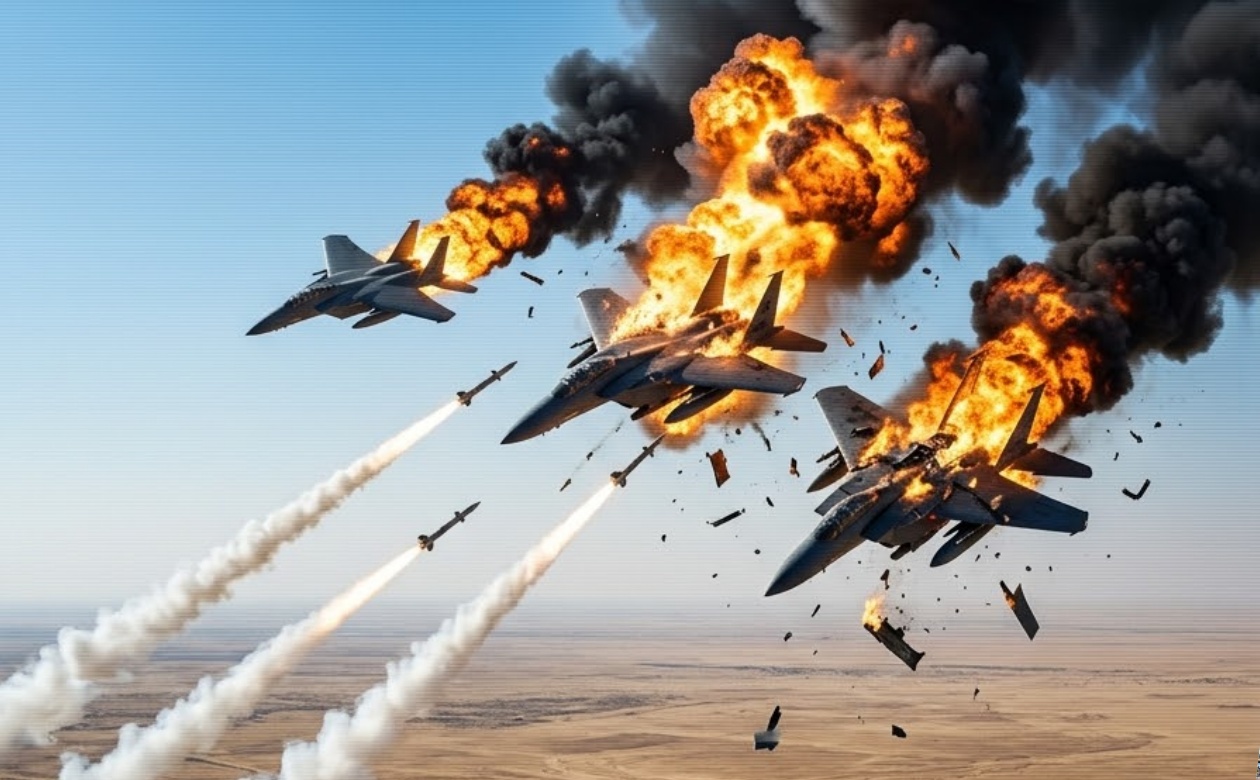
In a revelation that has both shocked and embarrassed many observers, President Donald Trump acknowledged that Patriot missile systems—manufactured in the United States but operated by Kuwaiti forces—accidentally shot down three American F-15E Strike Eagle jets over Kuwait during the ongoing conflict with Iran. What Trump brushed off as a “minor incident” has instead drawn attention to serious coordination failures and the risk of friendly fire within the U.S.-led coalition opposing the so-called Axis of Resistance.
The घटना took place on March 1, 2026, during a period of heavy Iranian missile and drone attacks. At the time, three U.S. fighter jets participating in Operation Epic Fury were incorrectly flagged as hostile targets by Kuwait’s air defense network. Patriot missile batteries—systems that have recently struggled to intercept incoming Iranian strikes—engaged and destroyed all three aircraft. Although all six pilots managed to eject safely and were later rescued, the broader consequences have been significant, both politically and militarily.
When addressing the situation publicly, Trump attempted to minimize its seriousness, stating that although three U.S. planes had been shot down by their own side, “everything is fine” because the pilots survived. His casual tone quickly sparked criticism and ridicule, with many analysts interpreting it as a sign of deeper disorganization and mounting stress within U.S. and allied forces in the region.
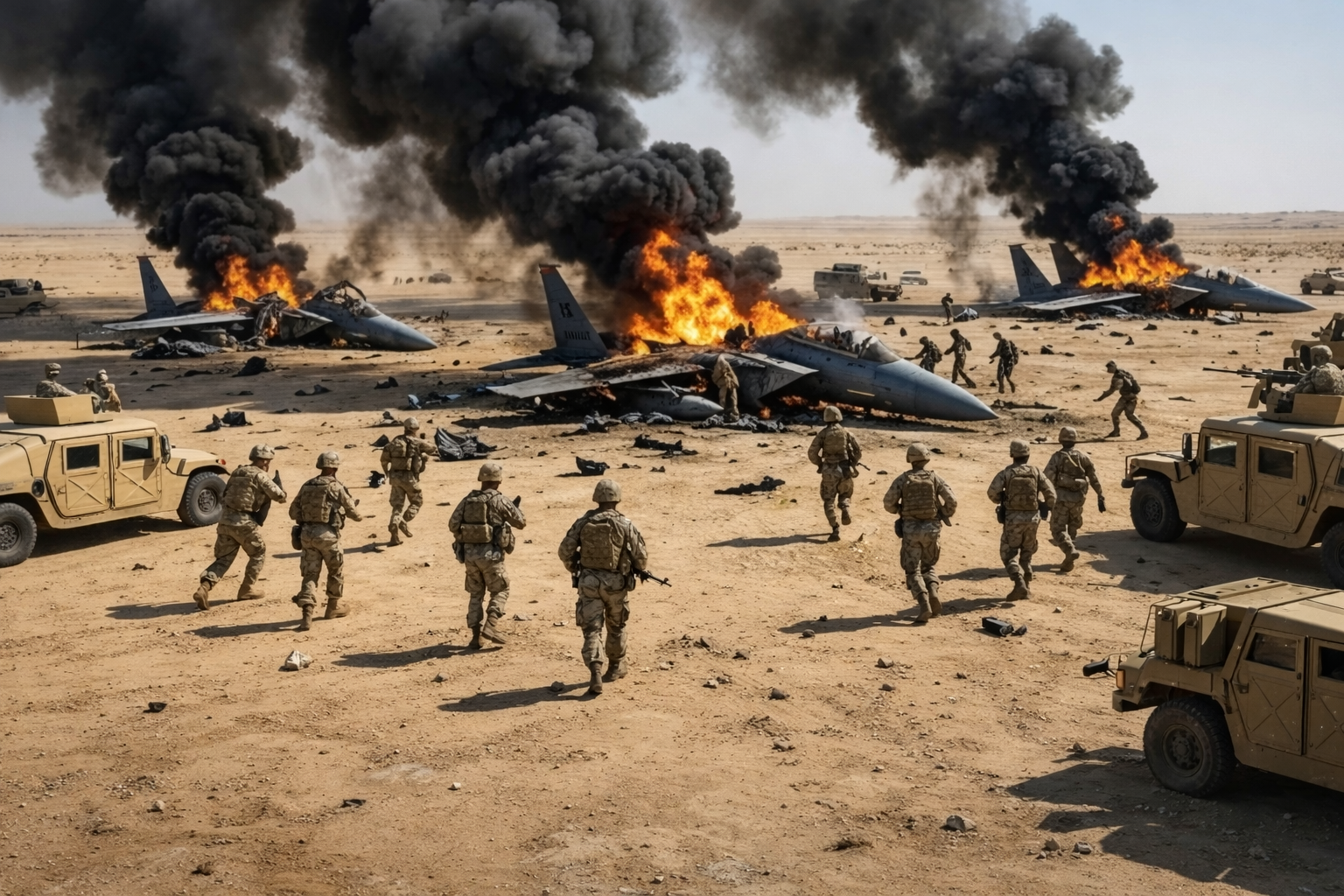
Importantly, this was not an isolated mistake. It followed weeks of sustained Iranian pressure that has pushed air defense systems in countries like Kuwait, Qatar, and Saudi Arabia to their limits. Continuous threat alerts, operator fatigue, and overstretched defenses have created an environment where errors are increasingly likely—even to the point of targeting friendly aircraft. The fact that U.S.-made systems destroyed U.S. jets on allied territory highlights cracks in what was once presented as a highly coordinated regional defense network.
Military experts suggest the incident points to a broader issue: under intense and prolonged pressure, coalition forces are finding it increasingly difficult to distinguish between genuine threats and their own assets. The situation is made worse by the underperformance of Patriot systems, long marketed as a reliable shield against missile attacks, which have not only struggled against Iranian weapons but have now contributed to friendly losses.
As tensions continue to escalate, this so-called “minor incident” could have lasting repercussions for U.S. credibility. Beyond the immediate damage, it signals a troubling reality—when pressure intensifies, even strong alliances can begin to falter internally.
While opposing forces continue to gain momentum, the U.S.-led coalition is left grappling with mistakes of its own making. Despite efforts to control the narrative, the underlying message is hard to ignore: defensive systems are faltering, and the cost of continued escalation is rising sharply.