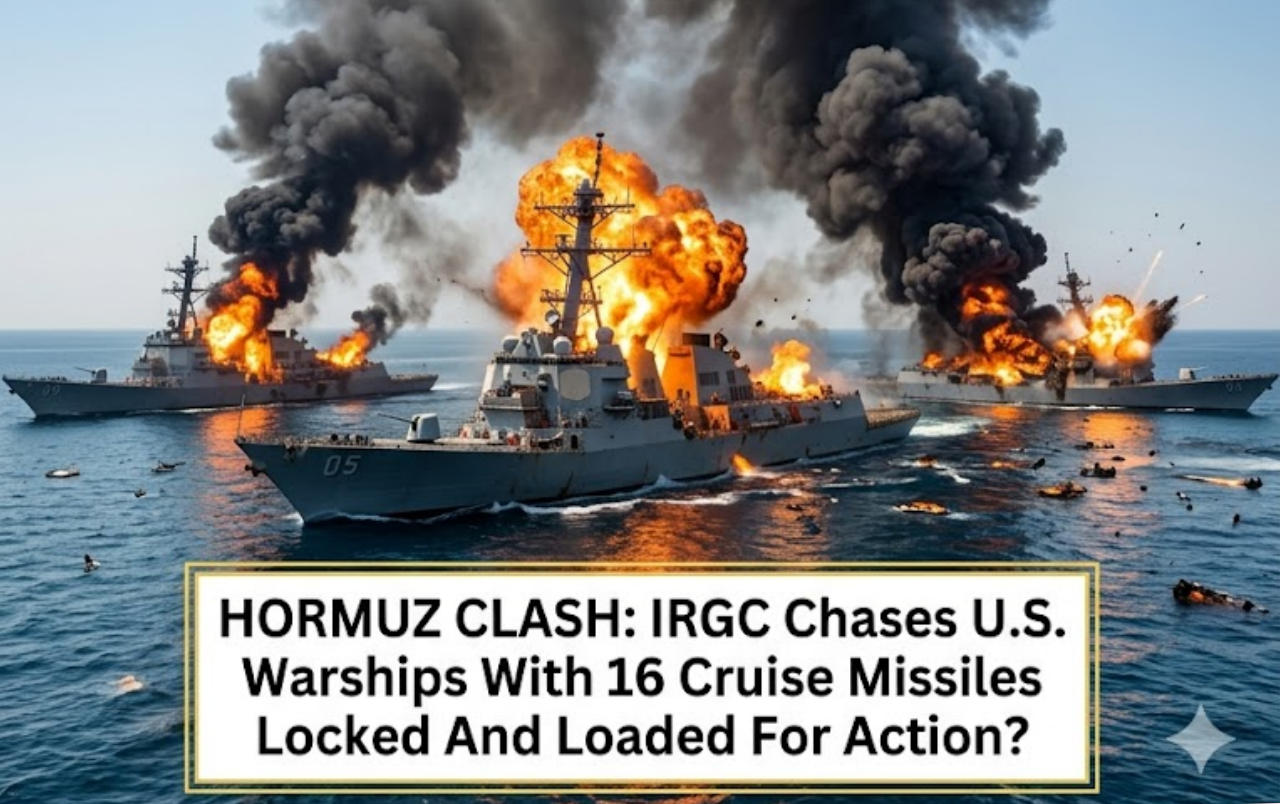
Tensions in the Strait of Hormuz reached a boiling point in a dramatic and fast-moving maritime standoff, as Iran’s Islamic Revolutionary Guard Corps (IRGC) was reported to have pursued U.S. warships with multiple cruise missiles allegedly prepared for launch. The encounter, unfolding in one of the world’s most strategically vital waterways, has raised alarms about how quickly routine military shadowing can escalate into open conflict.
According to regional monitoring sources, several IRGC fast-attack craft and support vessels began tracking a U.S. Navy destroyer group transiting through the narrow passage. The Strait of Hormuz, responsible for carrying a significant portion of global oil shipments, has long been a hotspot for military brinkmanship. This latest incident, however, appeared to push boundaries further than usual.
Unconfirmed intelligence reports suggested that Iranian units had armed up to 16 anti-ship cruise missiles, placing them in a “ready-to-fire” posture. While such claims remain difficult to independently verify, analysts note that Iran possesses a range of coastal and ship-launched missile systems capable of threatening naval vessels operating in confined waters. The combination of narrow geography and high-speed maneuvering vessels creates a particularly volatile tactical environment.
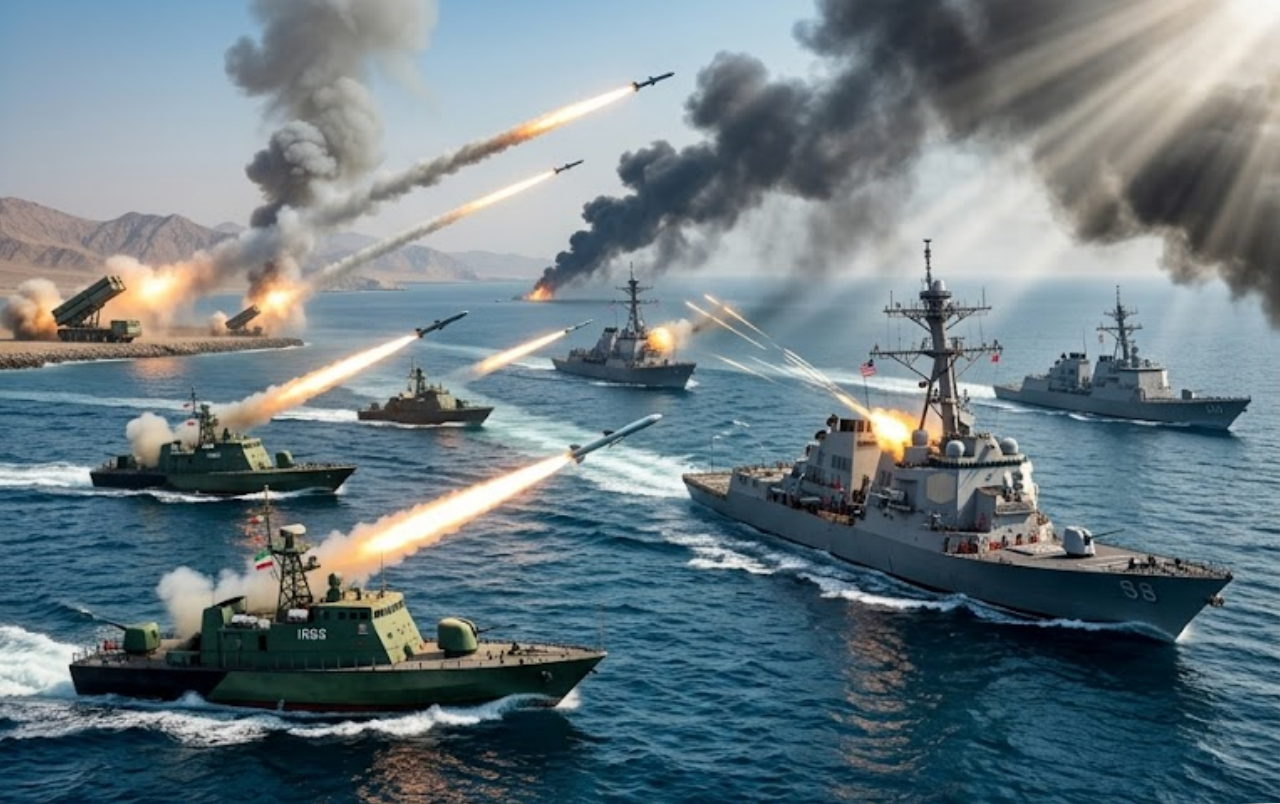
U.S. naval forces reportedly responded by elevating their defensive readiness. Aegis combat systems aboard American ships would likely have been activated at full capacity, scanning for incoming threats and preparing interception protocols. Fighter aircraft from nearby carriers or regional bases may also have been placed on standby, ready to provide air cover if the situation deteriorated.
Eyewitness accounts from commercial shipping crews described a tense atmosphere, with military vessels maneuvering aggressively and communication channels crackling with warnings. At least one report suggested that U.S. ships issued clear radio messages cautioning Iranian units to maintain distance, emphasizing that any hostile action would be met with immediate response.
Despite the high stakes, no missiles were ultimately launched in this scenario, and the confrontation gradually de-escalated. Experts point out that such encounters often involve calculated signaling rather than immediate intent to engage. Both sides aim to demonstrate strength without crossing the threshold into full-scale conflict.
Still, the incident underscores the fragility of stability in the region. A single miscalculation—whether technical or human—could trigger consequences far beyond the Gulf. With global energy markets closely tied to the security of the Strait of Hormuz, even brief disruptions can ripple across the world economy.
As geopolitical tensions continue to simmer, this near-clash serves as a stark reminder: in the crowded and contested waters of Hormuz, the line between deterrence and disaster remains dangerously thin.