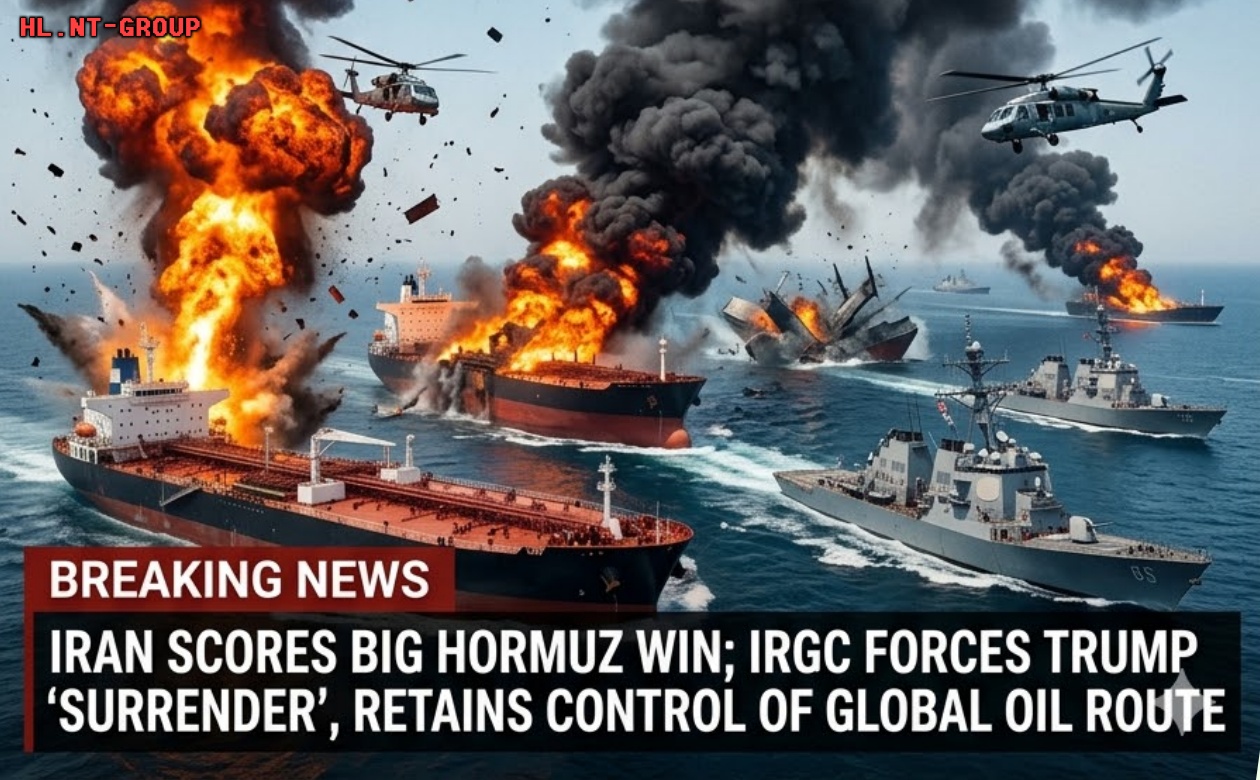
In a dramatic turn in the ongoing Iran–US-Israel confrontation, Tehran appears to have secured a significant strategic advantage centered on the Strait of Hormuz—the world’s most critical oil chokepoint. While political narratives differ sharply, recent developments suggest that Iran has successfully leveraged its geographic and military position to shape the terms of a temporary pause in hostilities.
At the heart of this moment is the Strait of Hormuz, a narrow waterway through which nearly 20% of global oil supply passes. Control over this route has long been one of Iran’s strongest geopolitical tools. During the recent escalation, Iran—particularly its Islamic Revolutionary Guard Corps (IRGC)—demonstrated its ability to disrupt, restrict, or condition access to the strait, sending shockwaves through global energy markets and forcing urgent diplomatic responses. ()
The situation reached a critical point when U.S. President Donald Trump issued stark ultimatums, at one stage calling on the IRGC to surrender in exchange for immunity. () However, events unfolded differently. Rather than capitulating, Iran maintained pressure, signaling that any reopening of Hormuz would come with conditions—and that it retained operational dominance in the region.
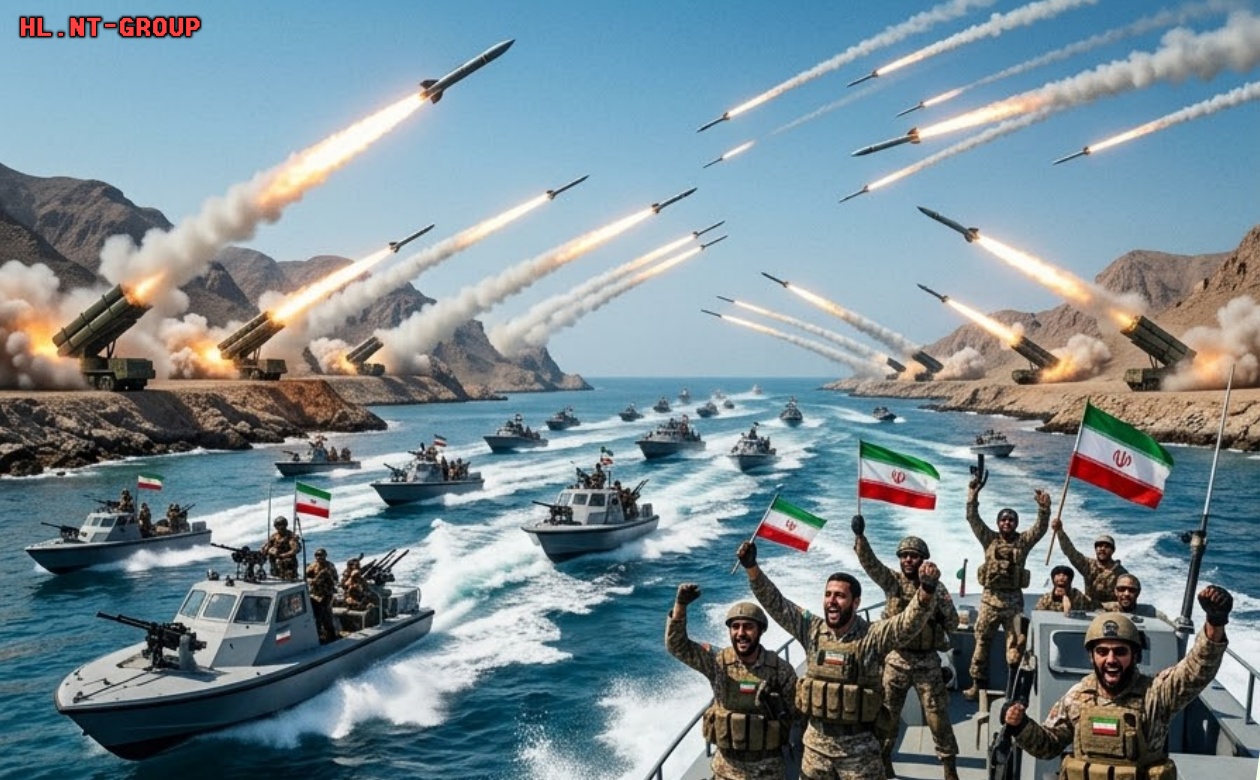
A breakthrough came with a last-minute agreement: a two-week ceasefire tied directly to the reopening of the strait. Under this arrangement, Iran agreed to allow safe passage for oil tankers, while the United States paused planned military escalation. () The timing was critical, as the deal was reached just hours before potential large-scale strikes, underscoring how close the conflict had come to spiraling further.
Despite the ceasefire, Iran has made clear that its influence over Hormuz remains intact. Officials indicated that maritime traffic may continue—but under Iranian oversight and strategic conditions, potentially including coordinated passage or even future economic controls such as transit fees. () This has led some analysts to interpret the outcome as a form of asymmetric victory for Tehran: not through outright military defeat of its adversaries, but by forcing them to negotiate under pressure.
Meanwhile, Trump has framed the agreement differently, describing it as a success for U.S. strategy and a step toward stabilizing global energy flows. () Both sides are claiming victory—a common feature in conflicts where perception and narrative are as important as battlefield outcomes.
What is clear, however, is that Iran has demonstrated its ability to hold a critical global artery at risk—and use that leverage effectively. The IRGC’s posture throughout the crisis reinforced a key reality: in modern geopolitical conflicts, control of strategic infrastructure can outweigh conventional military strength.
As the ceasefire unfolds, uncertainty remains. Will this fragile pause lead to a longer-term agreement, or is it merely a tactical break before renewed confrontation? For now, one thing stands out—Iran has shown that in the battle over Hormuz, it remains a decisive and unavoidable force.