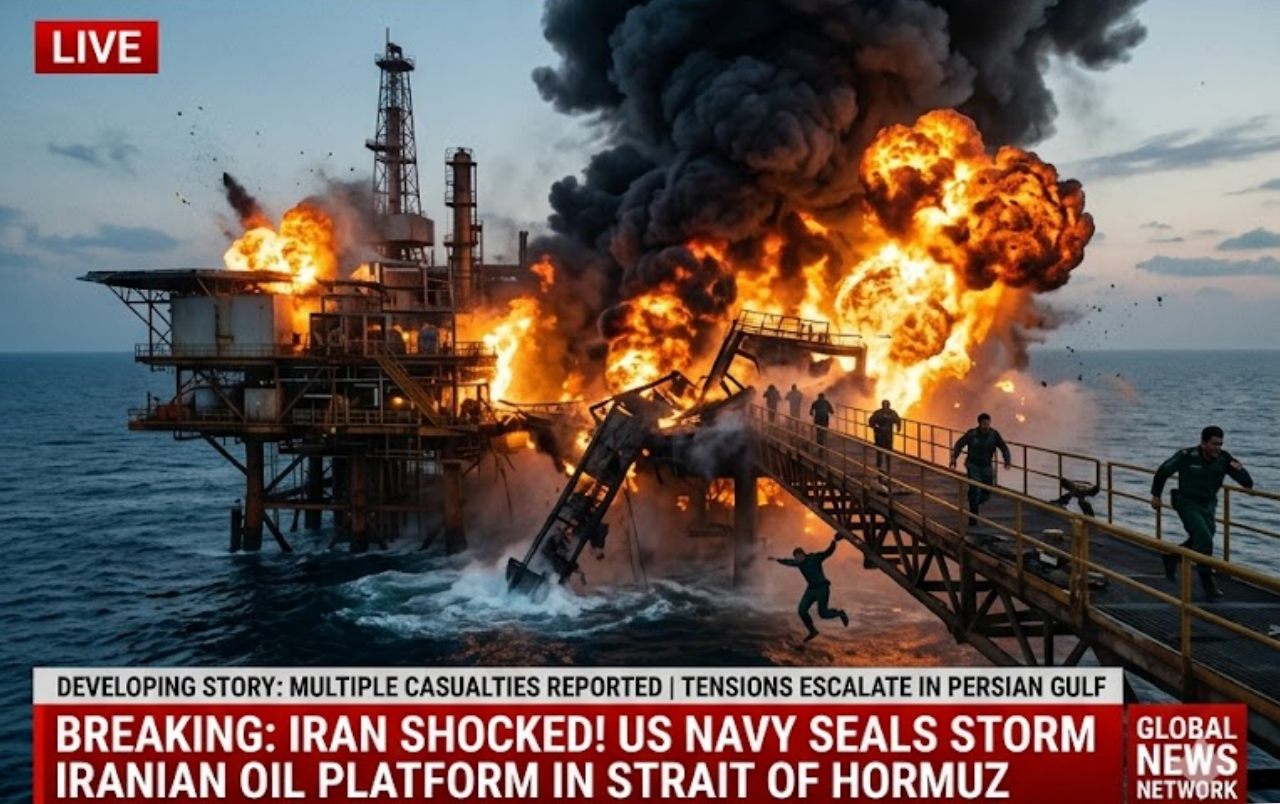
In a highly dramatic escalation of the U.S.–Iran war, U.S. special operations forces — including members of the elite Navy SEALs — reportedly carried out a daring raid on an Iranian oil platform in the Strait of Hormuz, a critical chokepoint for global energy supplies. The operation marks one of the most overt ground‑level confrontations between American forces and Iranian infrastructure since the conflict began, and it has sent shockwaves through Tehran and world capitals alike.
According to U.S. defense sources, the mission was launched in response to Tehran’s repeated threats to disrupt shipping traffic through the Strait of Hormuz, which handles roughly 20 percent of the world’s oil exports. Iranian forces had been suspected of using offshore installations as staging points for surveillance, anti‑ship systems, and support for asymmetric attacks on commercial vessels and military assets. Although Washington has previously deployed warships and aircraft in the region, this mission is believed to be the first direct assault on a fixed Iranian oil‑related facility.
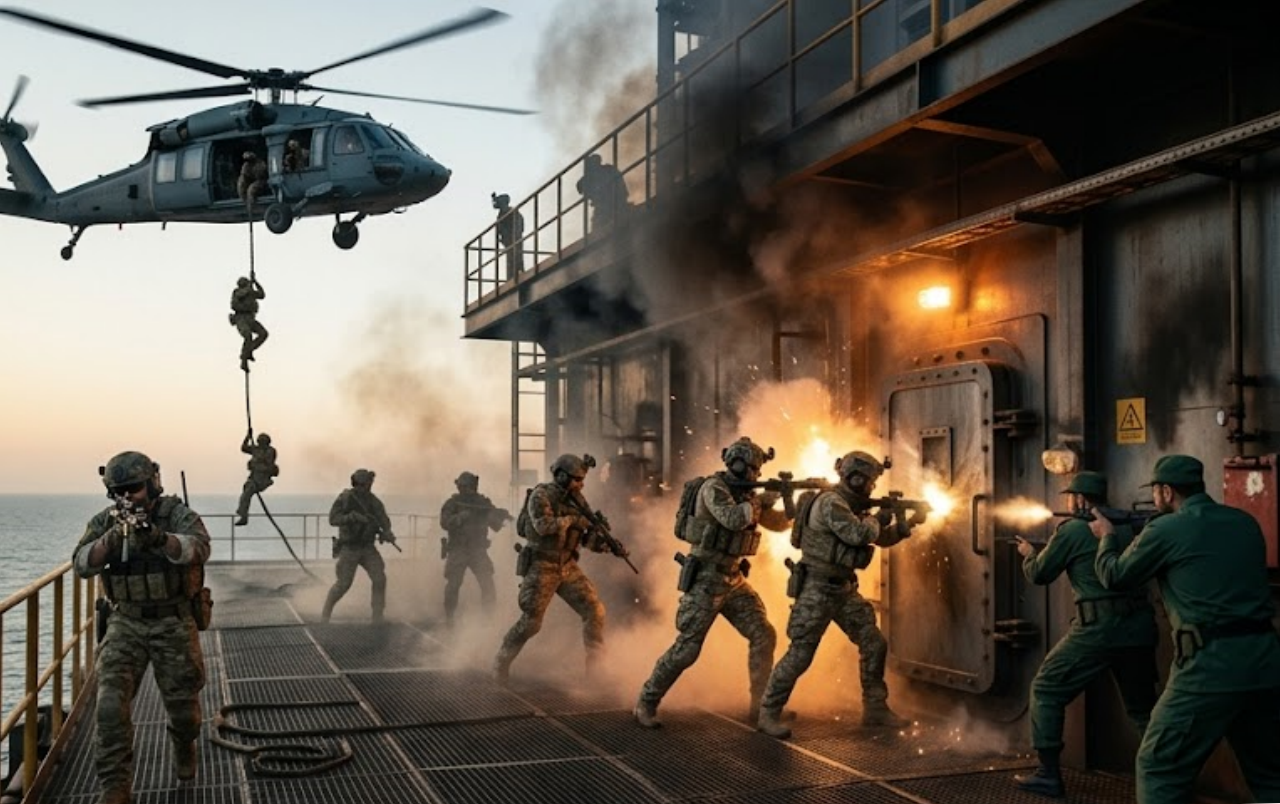
The SEAL assault reportedly took place under cover of darkness. Helicopters and fast boats are said to have delivered the assault team onto the platform, where intense close‑quarters combat occurred before the site was neutralized and secured. U.S. commanders described the operation as successful, with limited American casualties, though independent confirmation of losses on either side has not been released. The Pentagon did not immediately comment on specifics, in keeping with longstanding policy of operational security.
Iranian state media and officials reacted with shock and outrage. Tehran condemned the raid as a blatant attack on sovereign economic infrastructure and vowed “serious consequences” in response. Iranian leaders have repeatedly framed foreign military pressure in the Gulf as aggression not only against their armed forces but against the nation’s economic lifeline. Such rhetoric has contributed to rapid escalation across the region.
The Strait of Hormuz has been a flashpoint ever since U.S. and allied forces began pressuring Iran militarily after Tehran threatened to close the strait entirely in retaliation for strikes on its territory. The narrow waterway has seen a sharp decline in commercial shipping, and insurance premiums for tanker traffic have skyrocketed as threats from mines, missiles, and drones have multiplied. Analysts warn that any further disruption to this maritime artery could trigger a global energy crisis, pushing oil prices sharply higher.
U.S. special operations personnel — including Army Rangers and Navy SEALs — have been reported deployed throughout the Middle East amid the widening war, as Washington seeks to bolster forces capable of precision missions and rapid strikes. Yet the reported assault on Iranian energy infrastructure represents a notable expansion of their role from support operations to direct action against economic targets.
International reaction has been mixed. Some U.S. allies have expressed concern that such high‑risk operations risk broadening the conflict, while others argue that decisive action is necessary to prevent Iran from further leveraging control over the strait. Meanwhile, Tehran has vowed retaliation “in kind,” raising fears of a tit‑for‑tat spiral that could draw in neighboring Gulf states and global powers alike.
As tensions around the Strait of Hormuz remain at historic highs, the reported Navy SEAL raid underscores just how quickly an already volatile confrontation can escalate into a direct clash over strategic resources and regional power.