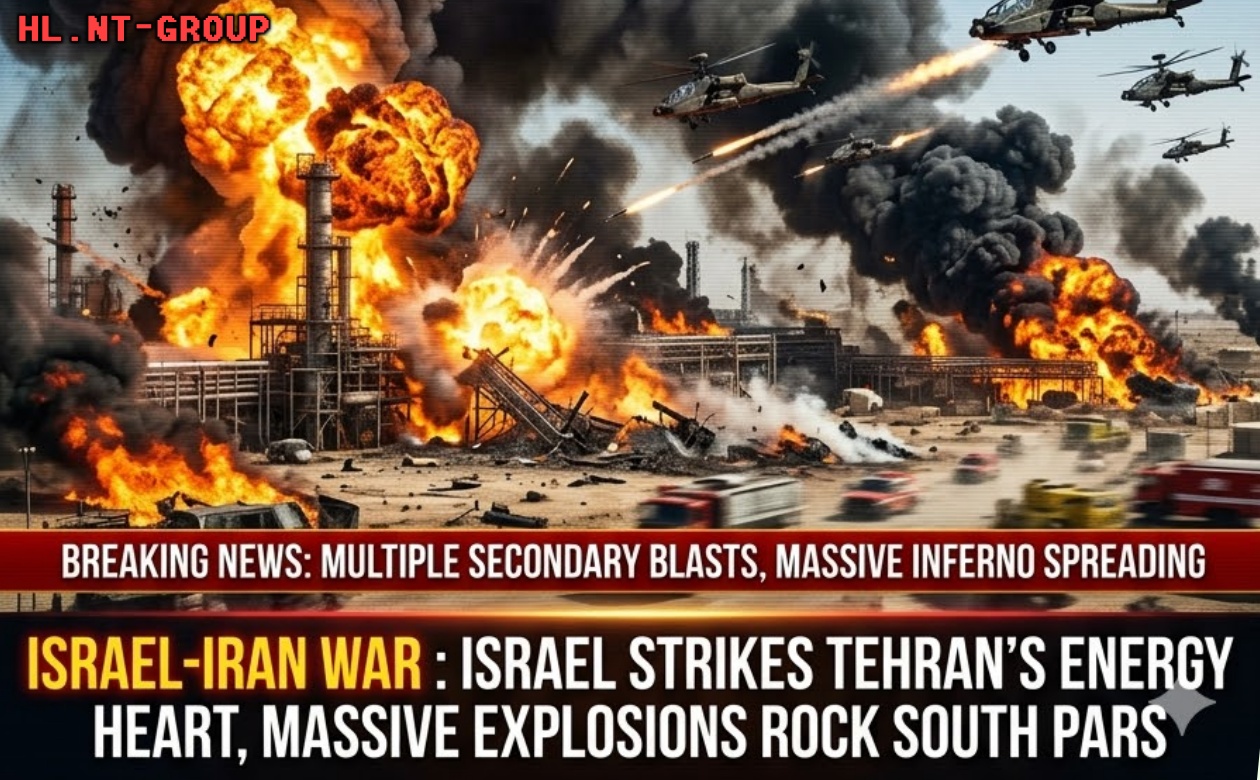
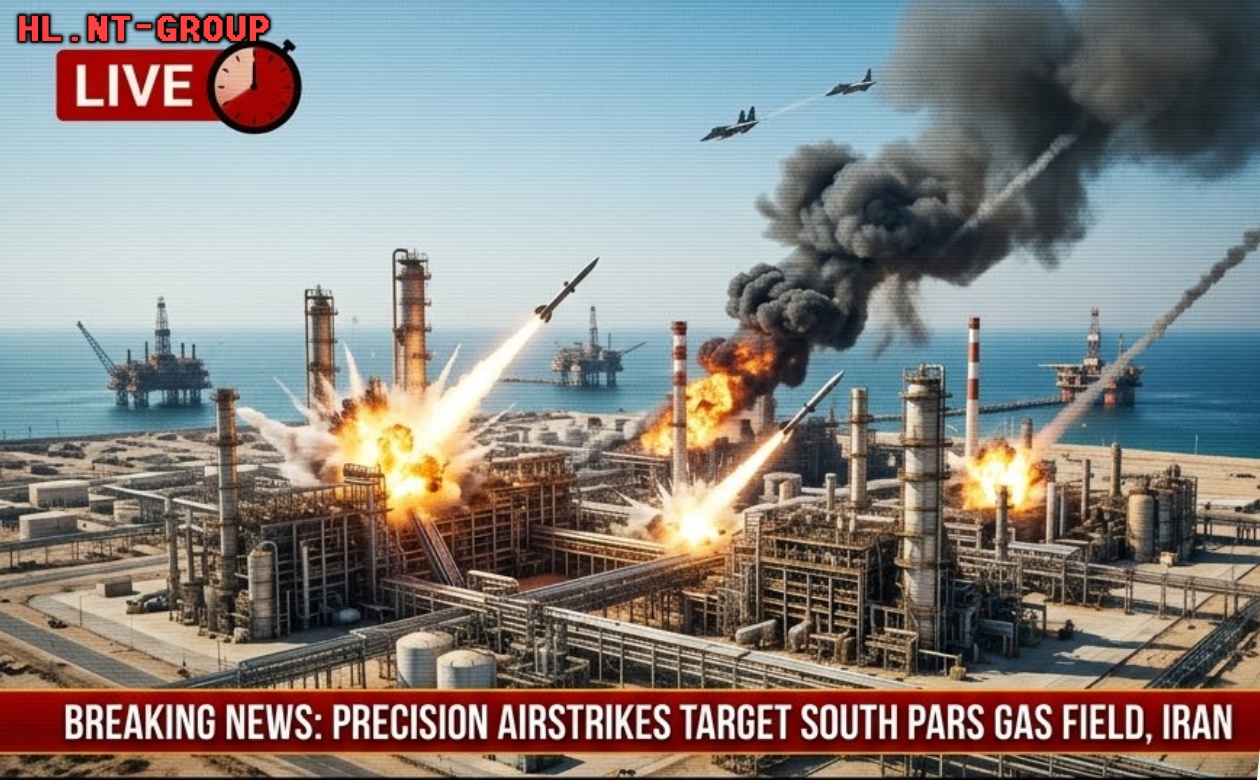
The Israel‑Iran war has taken a dramatic turn as Israel reportedly launched a powerful strike on South Pars — the heart of Iran’s energy infrastructure — triggering massive explosions at one of the most strategically important petrochemical and natural gas complexes in the world. The assault, confirmed by Israel’s Defense Minister, targeted the South Pars petrochemical facility in Asaluyeh, a site responsible for a substantial portion of Iran’s petrochemical production and crucial to its energy sector and economic stability.
Located on the southwestern coast of Iran, the South Pars complex is part of the world’s largest shared gas field and serves as the backbone of the country’s energy machine. Facilities there process vast quantities of natural gas that support domestic electricity generation, heating, and exports that generate billions in revenue — funds Tehran has historically funneled into military and regional influence operations. The reported explosions that shook South Pars were powerful enough to send shockwaves across the industrial zone, ignite fires, and cause significant structural damage, raising alarms about both immediate disruption and long‑term economic impact.
Israeli authorities described the attack as a calculated move to weaken Iran’s economic base and degrade the resources available to sustain its war effort. Defense officials asserted that the strike was intended to “hit the regime where it fuels its power,” explicitly aiming at energy infrastructure that underpins the Iranian economy — a strategy that goes beyond targeting strictly military assets. Tehran’s official media reported the sounds of multiple explosions and smoke rising over the complex, with rescue and emergency services mobilized to contain the aftermath and assess damage.
The ramifications of these strikes extend far beyond Iran’s borders. Disruptions at South Pars have already begun to ripple through global energy markets, contributing to surging gas prices and renewed anxiety about supply stability. Analysts warn that any sustained impairment of production from this critical hub could send ripples into European and Asian markets, potentially driving up energy costs and deepening economic uncertainty worldwide.
Moreover, the attack has reignited fears of a broader regional escalation. Iran has repeatedly pledged to retaliate for strikes on its infrastructure, and the focus on energy lifelines like South Pars raises the stakes significantly. Regional neighbors and global powers are closely watching developments, concerned that targeting such vital infrastructure could invite counterstrikes against energy facilities throughout the Persian Gulf, including in Ras Laffan and other Gulf export centers.
This latest salvo in the Israel‑Iran conflict underscores a troubling shift: the war is not only defined by missile barrages and military targets, but now also by direct assaults on the economic and energy foundations that sustain nations. As Israel continues to escalate operations and Tehran vows retaliation, the world faces a precarious crossroads — where energy security, military confrontation, and geopolitical tensions converge with global implications for markets, regional stability, and the future of the conflict.