Tel Aviv / Persian Gulf – In what appears to be its most extensive and coordinated offensive so far, Iran has launched a large-scale operation, claiming to have hit or severely damaged 55 joint U.S. and Israeli military command sites across the Middle East in a single wave of attacks on March 21, 2026.
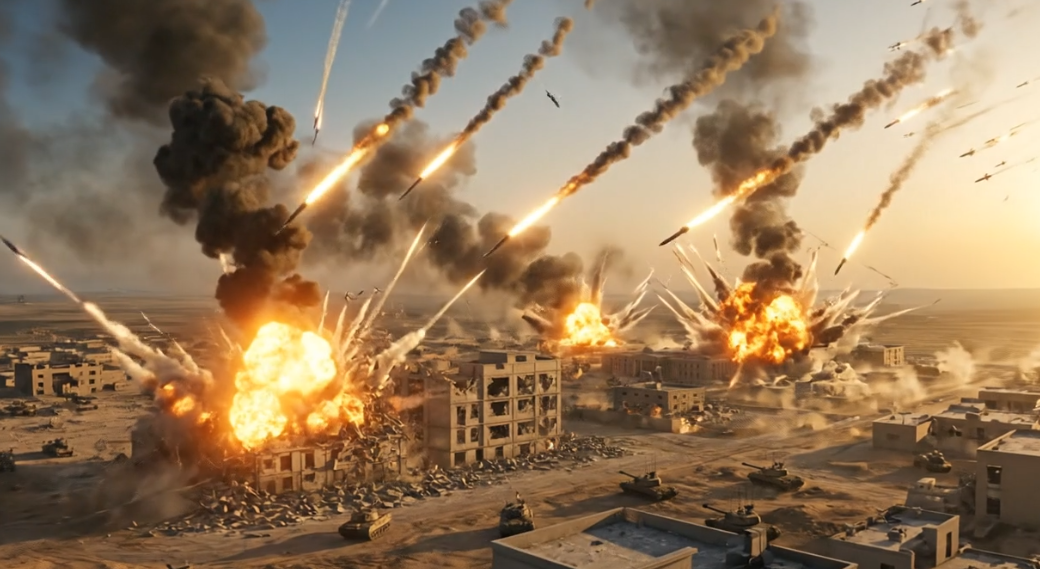
According to statements from Iran’s Islamic Revolutionary Guard Corps (IRGC), the assault involved a combination of ballistic missiles and loitering drones targeting military facilities in Israel, Iraq, Syria, Jordan, and several Gulf nations. Reports from multiple locations describe powerful explosions and plumes of smoke rising from strategic sites. Iranian state media has circulated footage showing large blasts, portraying the strikes as highly accurate and overwhelming in scale.
One of the most concerning developments is the reported disappearance of a senior Israeli military figure, who is feared to have been killed in the attacks. While Israeli officials have yet to confirm details regarding identity or status, the situation has prompted heightened national alert measures.
Iranian leadership has characterized the operation as its most forceful response to date, signaling that further strikes may follow. Officials framed the offensive as retaliation for recent actions by U.S. and Israeli forces targeting Iranian positions.
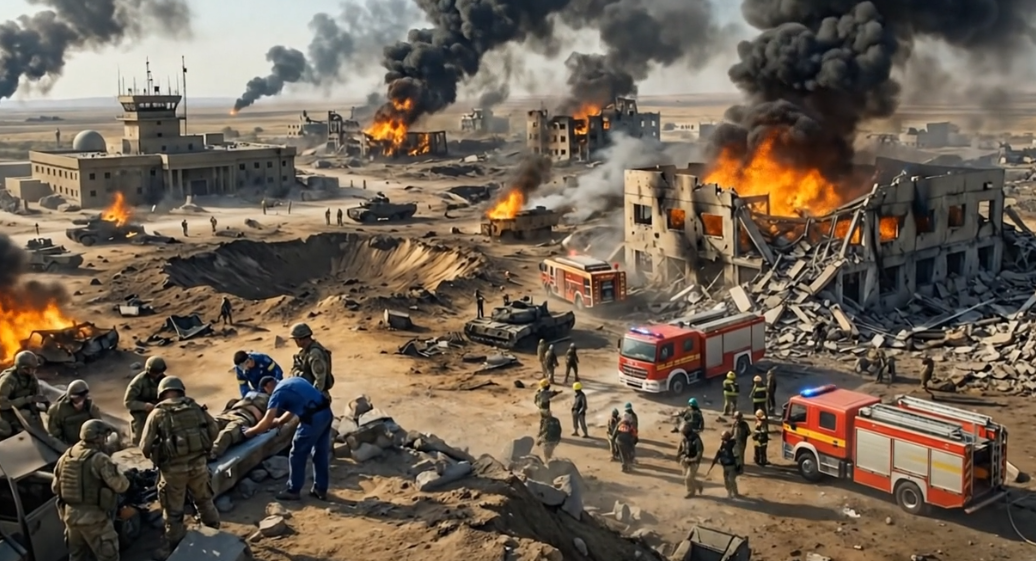
Both Israel and the United States have strongly condemned the attacks, describing them as deliberate assaults on military infrastructure and security. In response, both countries have initiated retaliatory operations aimed at Iranian missile systems and command networks. Israel, in particular, has placed its defense forces on the highest level of readiness nationwide.
This wave of attacks represents a significant escalation in both scale and coordination. By targeting dozens of sites across multiple countries simultaneously, Iran appears to be demonstrating its capacity to project force across the region. If confirmed, the loss of a high-ranking Israeli official would mark a serious operational and symbolic setback.
As the region absorbs the impact of these developments and casualty figures continue to emerge, it is becoming increasingly evident that the conflict has entered a far more volatile and unpredictable stage—one that could shape the future of the Middle East in the coming hours and days.