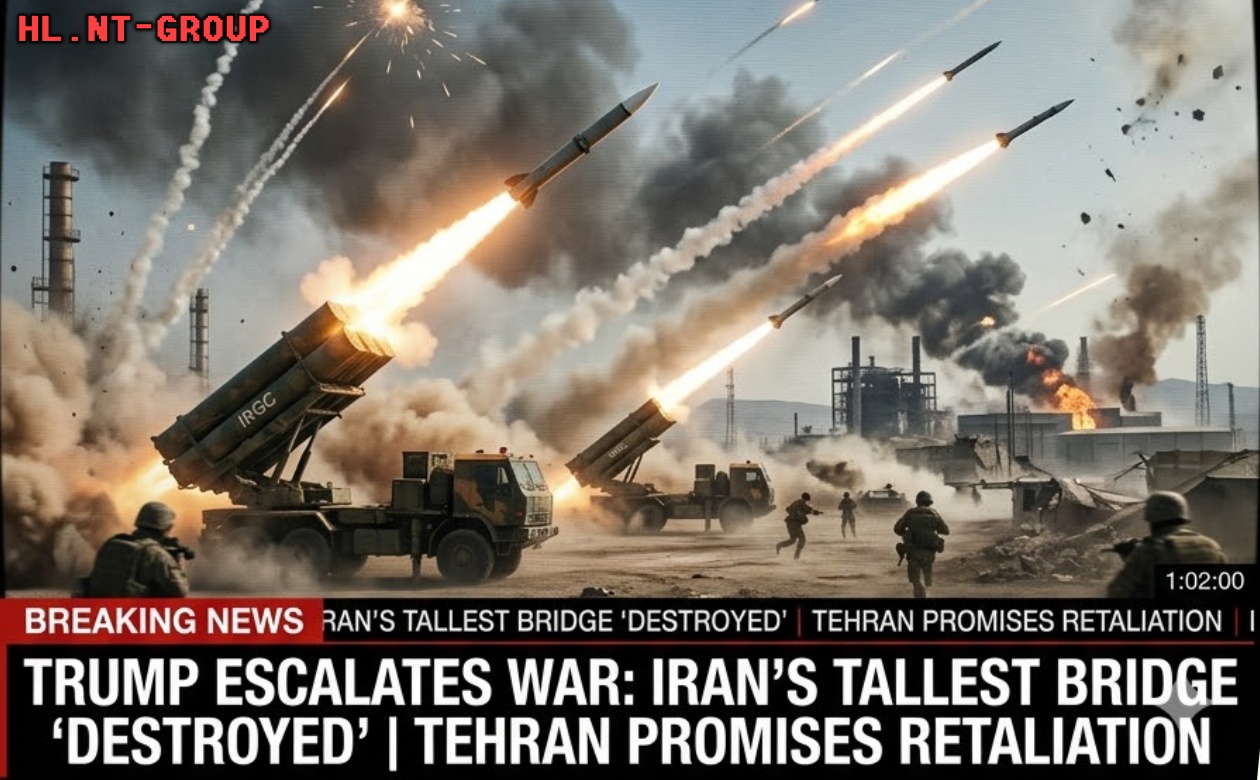
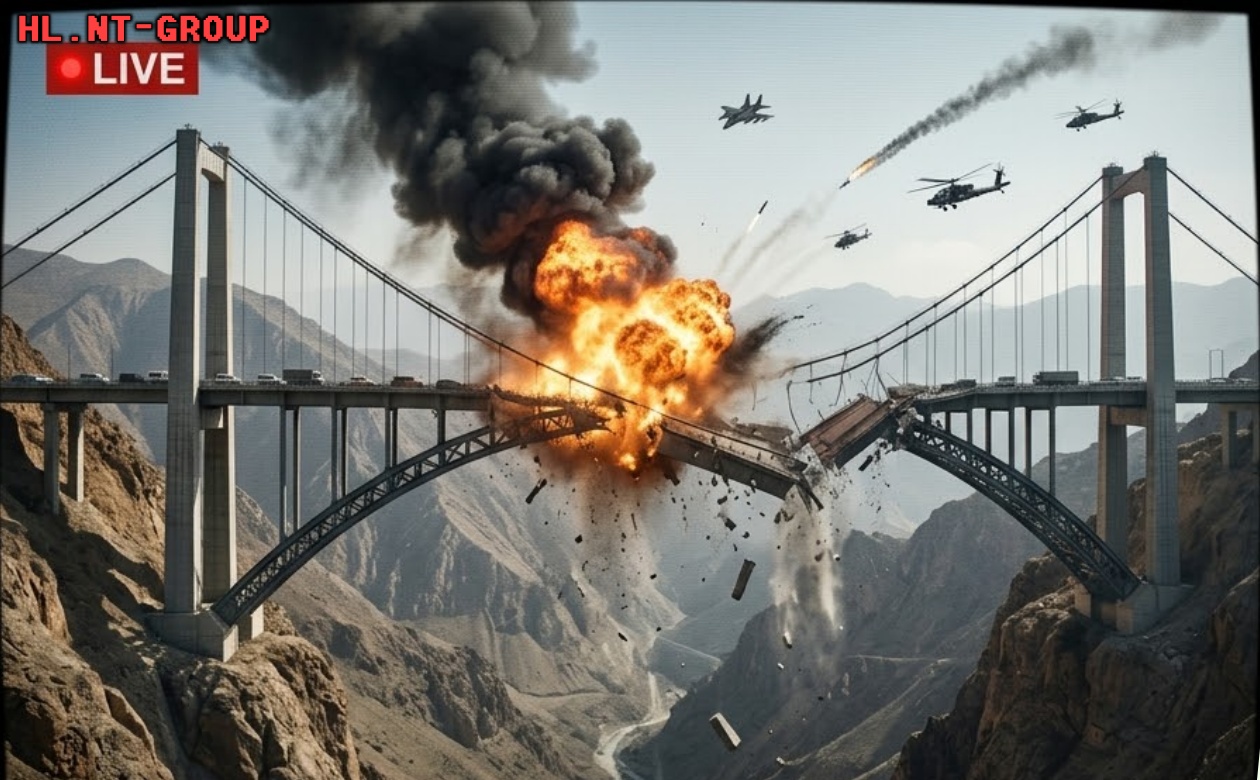
In one of the most dramatic escalations of the ongoing US‑Iran conflict, a major strike has reportedly destroyed Iran’s tallest bridge, a critical new infrastructure project linking Tehran and Karaj, after President Donald Trump vowed to target Iranian bridges and power plants if Tehran did not comply with US demands to reopen the Strait of Hormuz. The bridge — referred to in Iranian media as the B1 bridge — was still under construction when it was hit by US airstrikes, resulting in confirmed civilian casualties and dozens more wounded, according to Iranian state sources. In a video posted online, Trump celebrated the collapse as a strategic blow, warning that similar attacks on Iran’s infrastructure “will not be the last” if the regime did not agree to US ceasefire conditions.
The destruction of this major transportation link marks a significant escalation beyond targeting purely military sites, as it directly affects Iran’s civilian infrastructure and mobility, amplifying tensions and drawing sharp condemnation from Tehran. Iranian officials have promised retaliation for what they describe as attacks on sovereign infrastructure, framing the bridge strike as evidence of US and Israeli attempts to “cripple the national backbone.” Tehran has not specified how it will respond, but state media and foreign ministry spokespersons have repeatedly warned that further strikes on non‑military targets will provoke “harsh and decisive countermeasures.”
Pentagon sources and analysts note that the strike on the bridge was part of a broader strategy to pressure the Iranian government into reopening the Strait of Hormuz and curbing Tehran’s capacity to wage war through its missile and proxy networks. However, the targeting of civilian infrastructure has drawn international criticism, with experts warning such actions could violate international humanitarian law if they disproportionately affect ordinary civilians without clear military necessity. While Trump has acknowledged legal concerns, he has dismissed them publicly, insisting that crippling infrastructure is necessary to compel Iran to negotiate or face further destruction.
The bridge attack has also had regional implications, with neighbouring Gulf states and energy markets reacting to the heightened instability. The closure and potential targeting of critical infrastructure have already contributed to rising oil prices and renewed fears about the security of global energy routes. As diplomatic efforts to negotiate a ceasefire continue — though currently stalled — both Washington and Tehran appear locked in a cycle of escalating strikes and counter‑threats, increasing the risk of a wider war that could engulf the Middle East and beyond.