
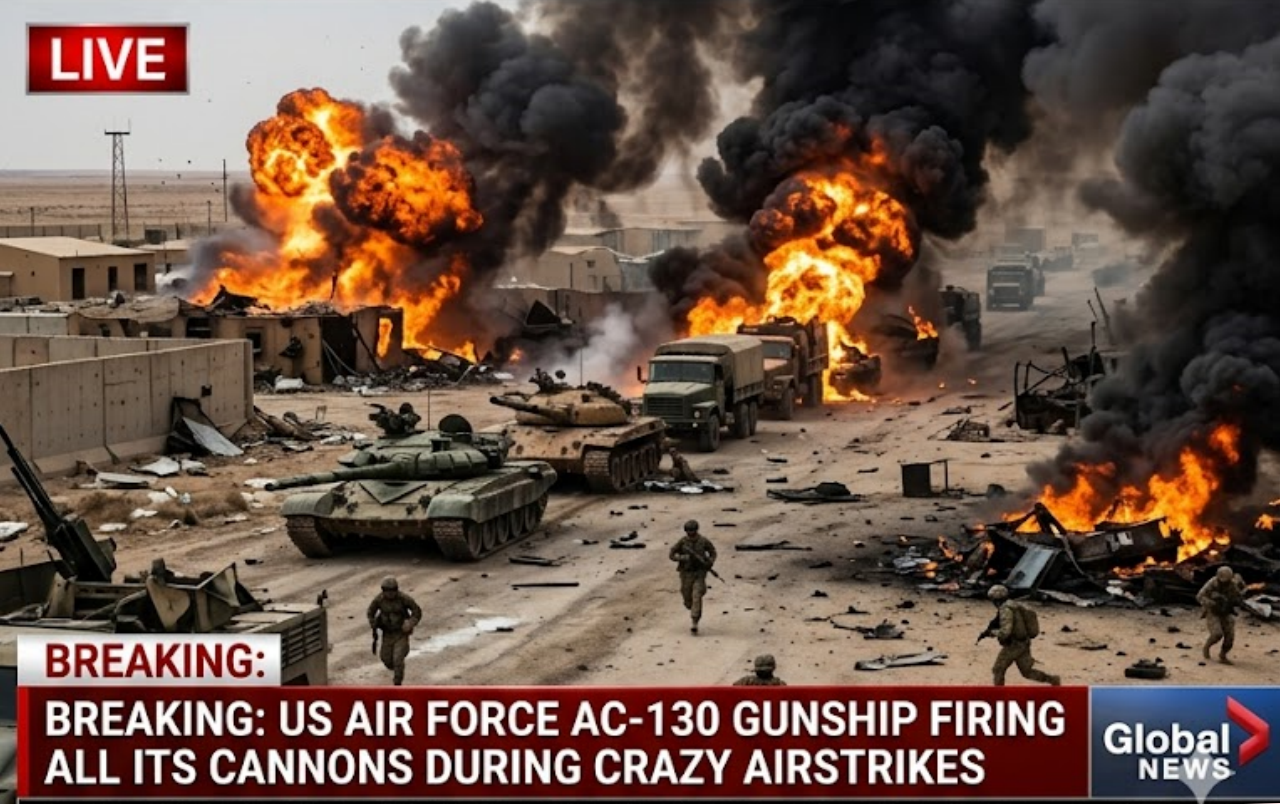
When an AC-130 gunship enters the battlefield… everything changes.
Slow-moving, heavily armed, and built for one purpose—overwhelming firepower—the AC-130 is one of the most feared aircraft in modern warfare. Equipped with devastating weapons, including a 105mm cannon, 40mm autocannon, and precision-guided munitions, it can circle a target and deliver sustained, pinpoint destruction from above.
And when it fires?
It doesn’t just strike.
It dominates.
But claims that AC-130 gunships are currently “unleashing hell” directly over Iran in large-scale airstrikes need careful context.
Here’s what is actually confirmed.
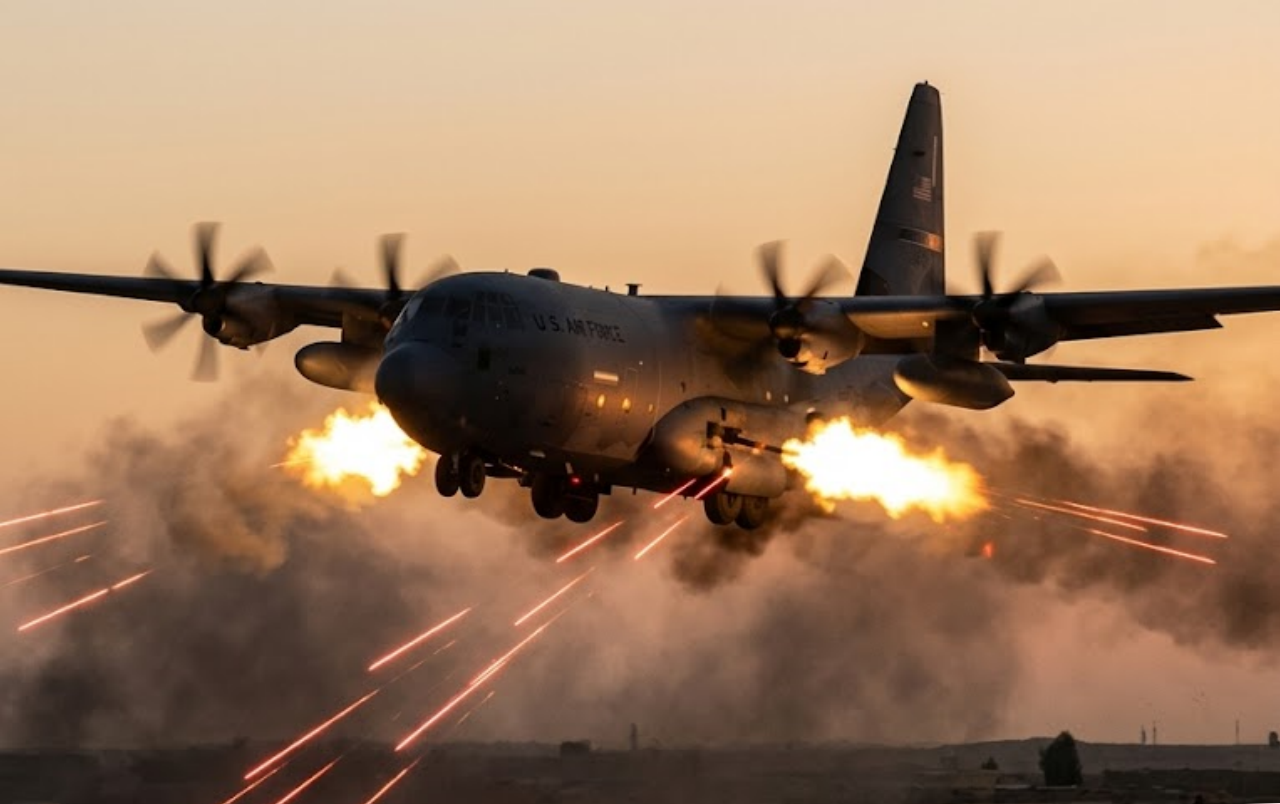
The U.S. has used AC-130 gunships in combat against Iran-linked forces, particularly in Iraq and Syria. In one documented case, an AC-130J Ghostrider responded immediately after a missile attack on a U.S. base—tracking and striking militants responsible in a rapid counterattack.
These strikes were:
- Fast
- Highly targeted
- Conducted as self-defense responses
And they were effective—resulting in casualties among hostile fighters and destruction of vehicles and equipment.
But here’s the key distinction:
There is no verified evidence that AC-130 gunships are currently conducting large-scale, continuous “furious airstrikes” deep inside Iran itself.
And there’s a reason why.
The AC-130, despite its power, is not designed for heavily defended airspace like Iran. It operates best in environments where air defenses are limited. Over Iran—where advanced missile systems and radar networks are active—sending a slow, low-flying gunship would be extremely risky.
Instead, confirmed strikes inside Iran have primarily involved:
- Fighter jets
- Cruise missiles
- Long-range precision weapons
These platforms are better suited for penetrating defended airspace.
So where does the dramatic image come from?
From the nature of the aircraft itself.
When an AC-130 engages a target, it circles overhead and fires repeatedly—creating the impression of continuous, overwhelming firepower. On the ground, it can feel like non-stop bombardment, which is why it has earned such a reputation.
But its use is typically controlled, precise, and limited—not wide-area destruction across a country.
Still, the presence of AC-130 gunships in the region matters.
It signals readiness.
It means U.S. forces are prepared to respond instantly to threats—especially against militia groups or mobile targets linked to Iran.
And if conflict continues to escalate?
Their role could expand.
Because in modern warfare, it’s not always the fastest aircraft that matters most.
Sometimes… it’s the one that stays, watches, and fires with relentless precision.
And when that aircraft is an AC-130—
The battlefield never forgets.