
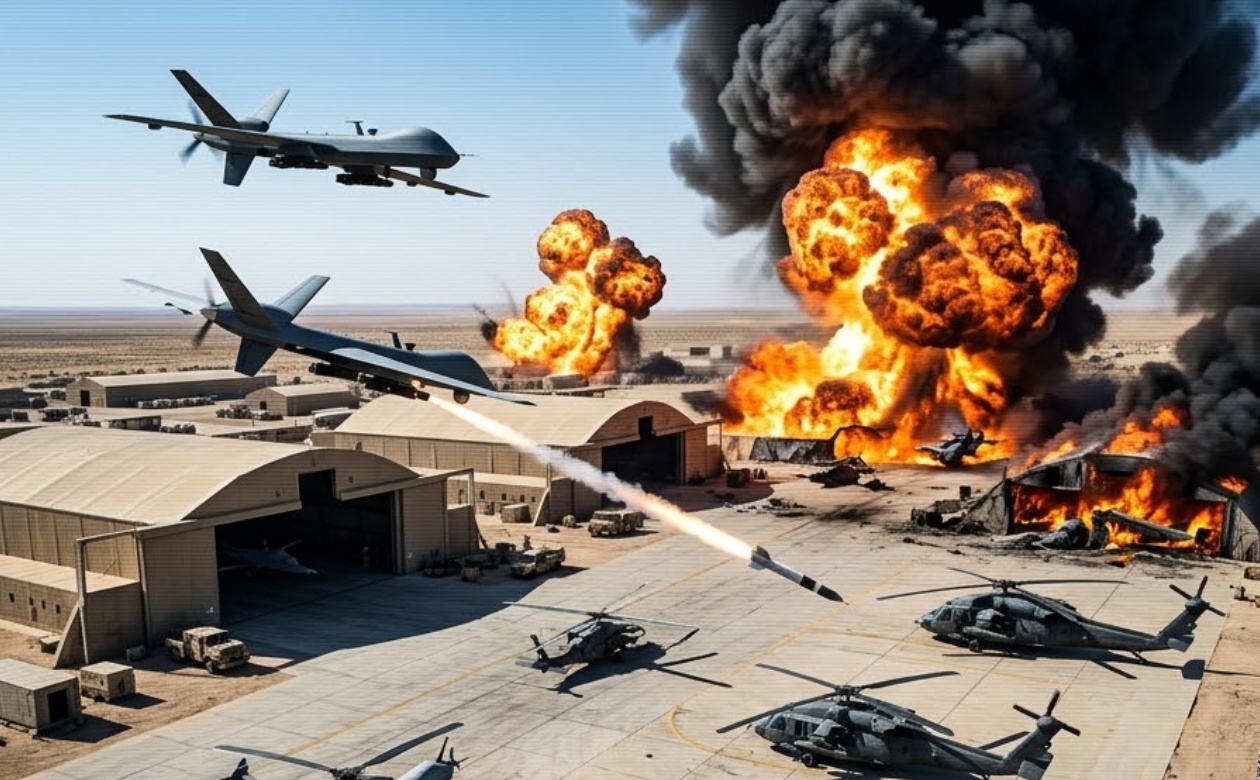
Gulf Region – In a significant security incident, a U.S. military installation in a Gulf country has reportedly been targeted by a coordinated drone operation, raising fresh concerns about the vulnerability of forward-deployed forces in the region.
According to initial accounts, multiple unmanned aerial systems were able to enter the airspace around the base, conducting a period of surveillance before striking selected targets. Reports suggest the drones gathered intelligence on key locations such as radar systems, aircraft positions, and operational facilities before transitioning into an attack phase.
The strikes are said to have hit fuel storage areas, maintenance zones, and several helicopters stationed on the ground, including AH-64 Apaches. Fires and secondary explosions were reported following the தாக்க, with visible smoke rising above the base as emergency crews responded. Some aircraft are believed to have been damaged or destroyed, though official confirmation on the extent of losses remains limited.
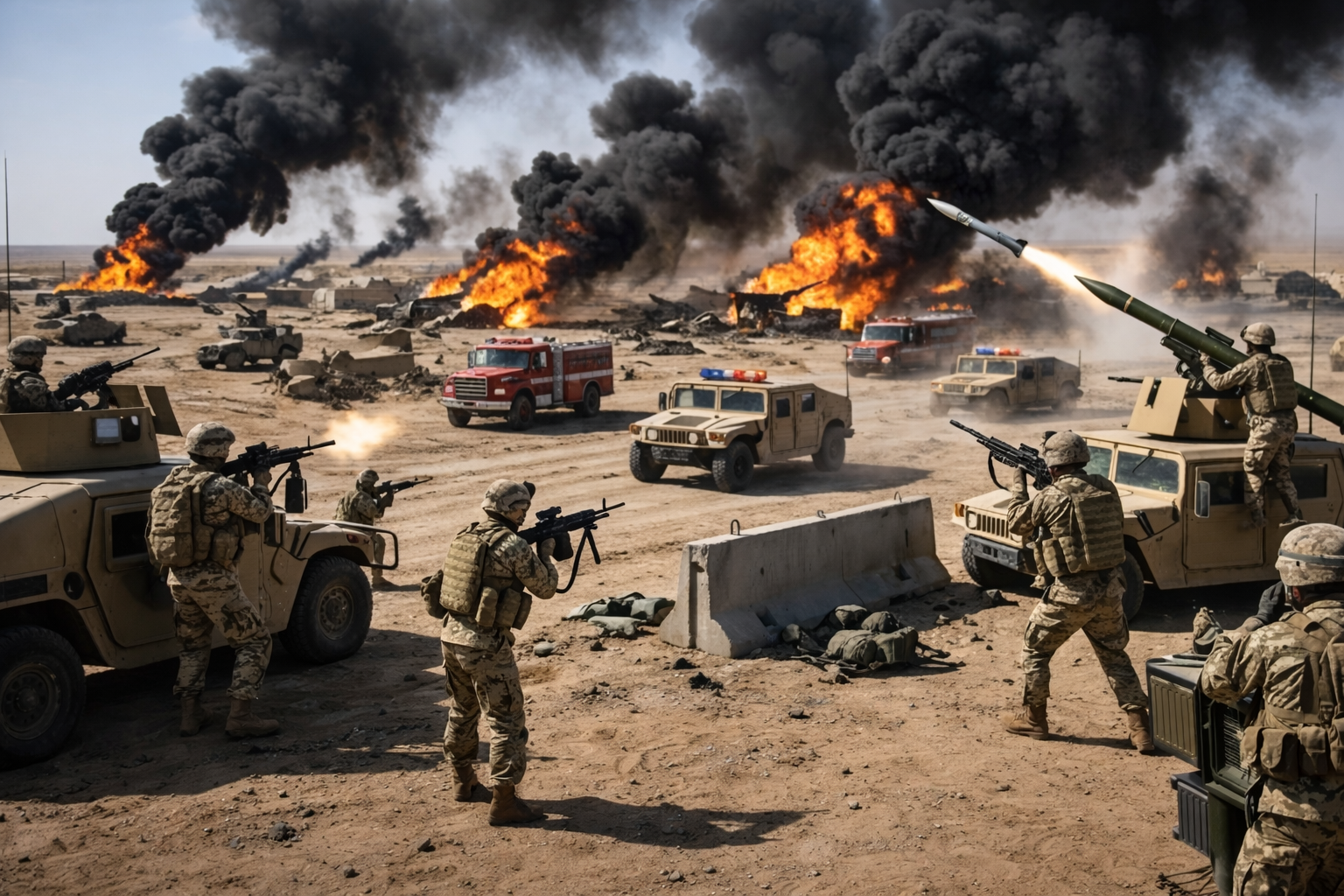
Videos circulating online appear to show low-flying drones navigating toward the installation before impact, while eyewitness accounts describe moments of confusion as alarms sounded and personnel sought cover. Air defense systems were activated, but the nature of the drones—reportedly flying at low altitude and in coordinated patterns—may have complicated interception efforts.
Analysts note that the incident reflects an evolving pattern in modern conflict, where surveillance and strike capabilities are increasingly combined in a single operation. The ability to gather real-time intelligence and act on it quickly can shift the balance, especially when targeting high-value assets in fixed locations.
Beyond the immediate damage, the event could have wider implications. Disruptions to equipment and infrastructure may affect operational readiness, while the psychological impact on personnel and regional partners is also significant. Markets and security observers are closely watching developments, particularly given the strategic importance of Gulf-based installations.
As investigations and damage assessments continue, the incident highlights a broader challenge: even heavily defended bases must adapt to increasingly agile and unconventional threats.