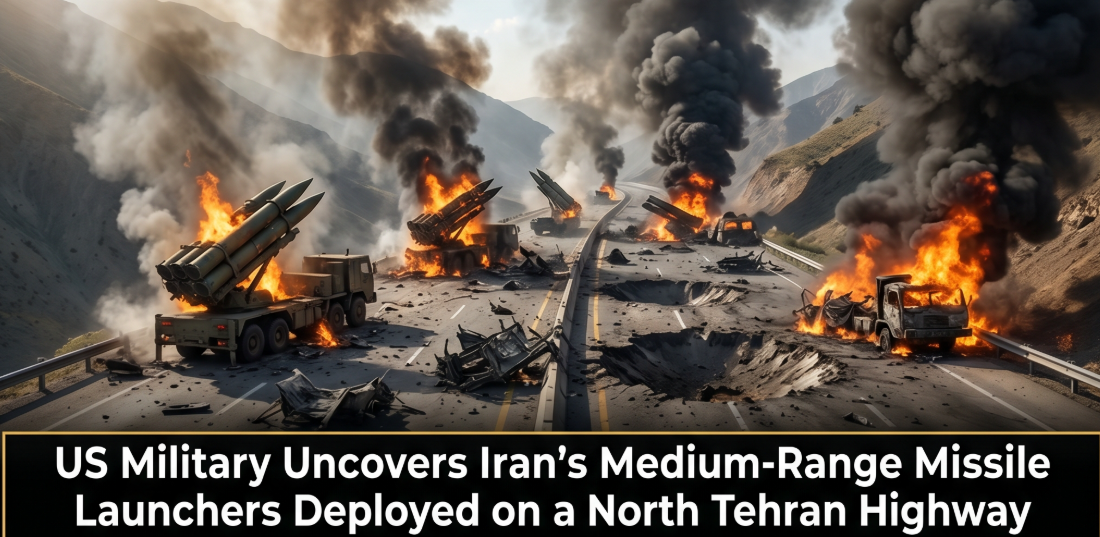
In a significant intelligence breakthrough, U.S. military surveillance assets have reportedly identified Iranian medium-range missile launchers positioned along a major highway in northern Tehran. The discovery highlights a growing shift in Iran’s military strategy—moving critical missile systems into more mobile and unconventional locations to avoid detection and destruction.
According to defense analysts, Iran has increasingly relied on “shoot-and-scoot” tactics, deploying launchers on trucks that can quickly relocate after firing. This approach complicates targeting efforts by U.S. and allied forces, who have spent months striking fixed missile bases and underground facilities. Evidence from past operations shows that mobile launchers have been transported across the country, including toward Tehran, in attempts to evade airstrikes.
The newly uncovered highway deployment suggests Iran may be embedding its missile infrastructure within civilian areas, leveraging urban environments for concealment. Such tactics raise serious concerns about escalation risks, as any strike on these systems could occur near populated المناطق, increasing the likelihood of collateral damage.
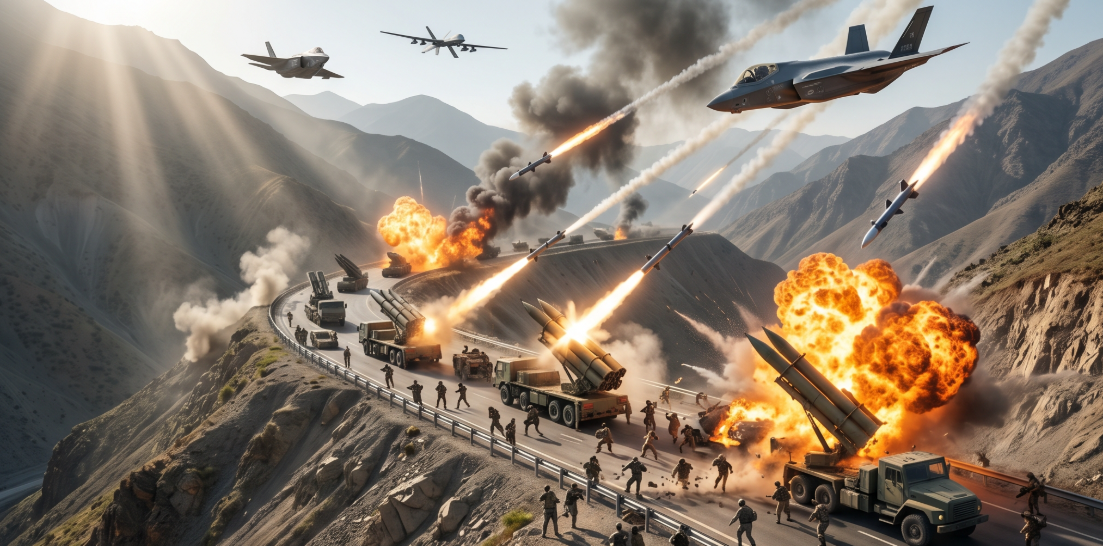
Recent intelligence assessments indicate that despite sustained attacks on its military infrastructure, Iran still retains a substantial missile arsenal. U.S. officials believe thousands of missiles and drones remain operational, with many assets hidden underground or dispersed across mobile platforms. This resilience has forced adversaries to adapt, placing greater emphasis on real-time surveillance and rapid-response targeting.
The highway deployment also reflects the broader evolution of modern warfare. Rather than relying solely on hardened “missile cities,” Iran appears to be diversifying its launch methods. Some launchers are now believed to be stationed temporarily in transit routes, allowing for quick activation and immediate relocation. Satellite imagery and past strike footage have shown similar convoys carrying missile systems moving under cover of darkness or blending with civilian traffic.
From a strategic perspective, positioning launchers near Tehran carries symbolic and tactical significance. It demonstrates Iran’s willingness to defend its capital while also signaling that its missile forces remain operational despite ongoing pressure. At the same time, it complicates any potential preemptive strike, as targeting assets in densely populated zones carries political and humanitarian risks.
Military experts warn that such deployments increase the خطر of miscalculation. A rapidly moving launcher on a public highway could be mistaken for civilian transport—or vice versa—leading to unintended consequences. In high-tension environments, even small errors in identification can escalate into larger confrontations.
While officials have not disclosed whether any immediate action will be taken, the discovery underscores the continuing cat-and-mouse dynamic between surveillance and evasion. As both sides refine their tactics, the battlefield is no longer confined to remote bases or front lines—it now extends into everyday infrastructure.
The situation remains fluid, but one thing is clear: mobility, concealment, and speed are becoming the defining elements of modern missile warfare.