
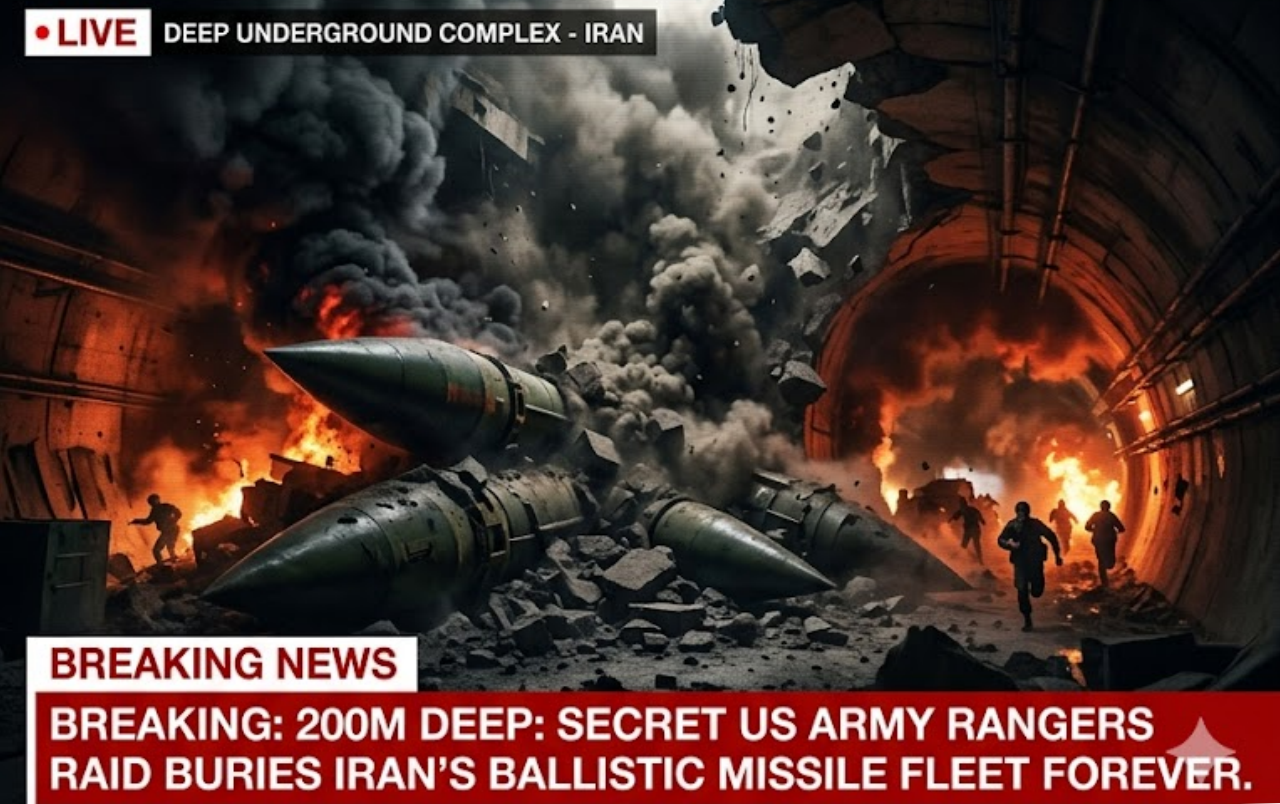
In the high‑stakes backdrop of the ongoing U.S.–Iran conflict, dramatic claims are now emerging online about a secretive deep raid by U.S. Army Rangers that supposedly struck 200 meters underground into Iran’s hardened ballistic missile facilities, claiming to “bury Iran’s missile fleet forever.” While sensational, independent reporting confirms that the situation on the ground is more complex and ongoing, not a one‑shot annihilation as some narratives suggest.
At the center of this conflict is Iran’s extensive ballistic missile infrastructure, which has been a major focus of U.S. and allied military operations. According to expert analysis of satellite imagery and military assessments, U.S. and Israeli strikes have inflicted significant damage on Iran’s ballistic missile sites, hitting multiple manufacturing facilities and launch bases. These air campaigns have targeted key complexes like Khojir, Parchin and other facilities, damaging above‑ground structures, blocking access to underground storage, and temporarily slowing some production and launch capabilities. But experts warn that this doesn’t equate to total destruction.
U.S. intelligence assessments also indicate that Iran still retains a substantial portion of its missile launchers and weapons, with roughly half of its ballistic missile infrastructure reportedly intact or hidden in deep underground tunnels and “missile cities.” These buried sites are highly resilient and designed to withstand aerial attacks, making them difficult to neutralize completely without sustained operations or ground incursions.
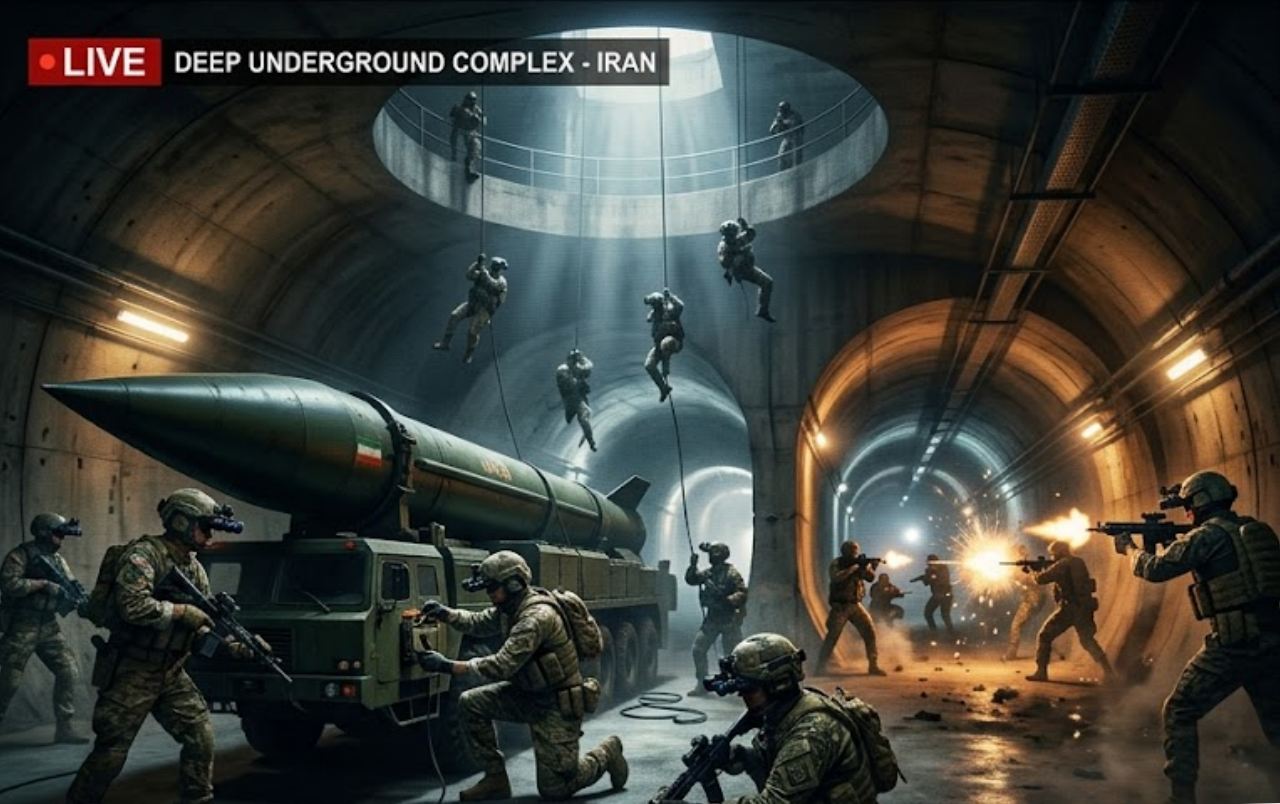
The idea of Army Rangers — elite light infantry trained for raids and direct action — penetrating 200 meters deep into Iranian missile megastructures is largely speculative. There’s no verified confirmation from major news organizations or official U.S. military statements detailing such a covert “tunnel raid,” nor any independent evidence showing that every ballistic launcher has been permanently neutralized. Most credible sources emphasize that while many launchers have been damaged, Iran’s remaining arsenal remains capable of posing regional threats.
Furthermore, larger analyses of the conflict indicate that the U.S. military strategy has relied heavily on precision strikes and air campaigns to degrade Tehran’s capabilities, not exclusively on deep underground ground raids. Conventional wisdom in military strategy underscores that eliminating deeply buried missile stockpiles and hardened silos often requires a combination of precision bunker‑busting munitions and sustained pressure over time, rather than a single raid.
In fact, independent expert reporting suggests that Iran’s missile program is resilient, with many launchers and drones still operable even after sustained bombing campaigns. Analysts explain that while surface sites have been damaged, many ballistic missiles and storage areas remain inaccessible or undiscovered, preserving Iran’s capacity for retaliation.
In summary, while U.S. forces and allies have indeed degraded parts of Iran’s ballistic missile network, there’s no verified evidence that a secret Army Rangers raid has permanently buried Iran’s missile fleet. The conflict continues, with Iran’s underground and hardened infrastructure still partially intact and ready for sustained operations. The battle over missile capabilities is ongoing — and far from concluded.
If you’d like, I can also provide an analysis of how deep underground facilities like these are typically targeted in modern conflicts.