

At 4:47 a.m., the silence over the Persian Gulf was broken—not by explosions, but by radar.
Somewhere in contested airspace, a U.S. Navy F-35 stealth fighter was being watched.
Then tracked.
Then locked.
According to viral scenarios and defense discussions circulating online, multiple Iranian F-4 Phantom jets—older but still dangerous—were said to have achieved radar lock on a single American F-35. For a moment, it looked like a clash between generations: Cold War-era fighters versus one of the most advanced stealth aircraft ever built.
But here’s the critical truth:
There is no verified evidence that six Iranian F-4s locked onto or engaged a U.S. Navy F-35 in the way described in that headline.
In fact, the widely shared version of this story comes from a dramatic recreation video, not a confirmed real-world event.
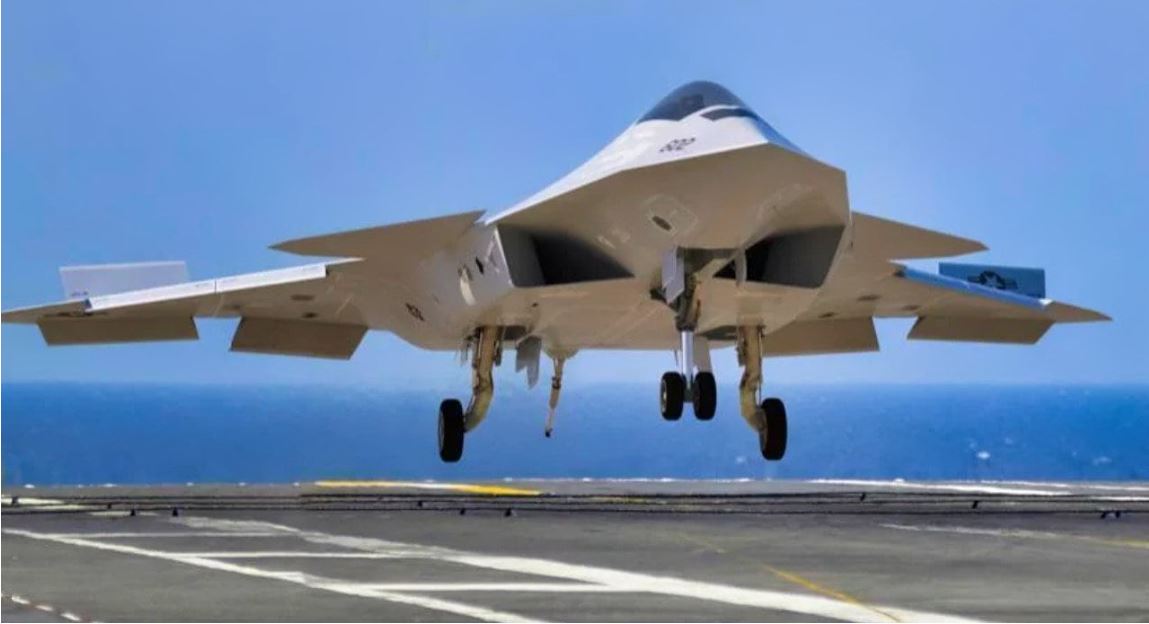
However, the idea behind it isn’t completely fictional—and that’s what makes it interesting.
Because something very real has already happened:
A U.S. F-35 was involved in a combat incident over Iran, where it was reportedly hit or damaged by Iranian fire and forced to make an emergency landing.
That alone is significant.
The F-35 is designed to be nearly invisible to radar. But Iran’s air defense network may have used alternative tracking methods, such as infrared sensors or networked detection systems, to locate and engage it.
And that changes the equation.
So what would happen if a scenario like “6 F-4s locking onto an F-35” actually occurred?
Technically:
- The F-35 would likely detect the threat long before being seen
- It could jam radar, evade tracking, or strike from beyond visual range
- Older jets like the F-4 would struggle against its stealth and sensor advantage
But there’s a twist.
Modern warfare is no longer just about aircraft vs. aircraft.
It’s about networks.
If Iranian fighters were supported by:
- Ground radar
- Air defense systems
- Passive tracking sensors
Then even a stealth jet could be tracked under certain conditions.
And that’s exactly what recent real-world incidents are hinting at.
The bigger takeaway isn’t about one dogfight.
It’s about a shift.
For decades, stealth aircraft like the F-35 were considered nearly untouchable. Now, even the possibility of detection—or partial tracking—forces military planners to rethink how these jets are used in high-risk airspace.
So while the “4:47 A.M.” scenario is likely dramatized…
The underlying reality is very real:
Stealth is no longer absolute.
Airspace over Iran is highly contested.
And even the most advanced aircraft can face unexpected threats.
Because in modern war, it’s not just about who has the best fighter…
It’s about who sees first.
And who adapts faster.