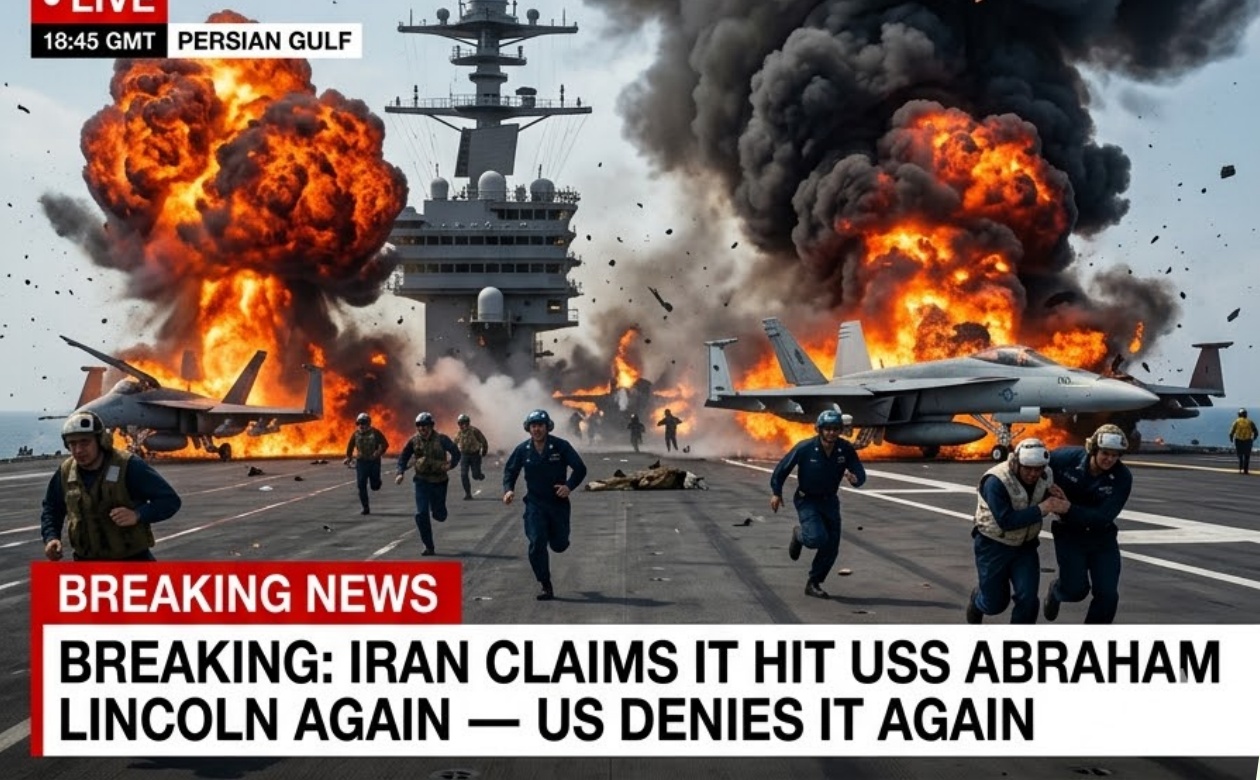
In the latest episode of an already intense military standoff in the Middle East, Iranian forces have once again claimed they successfully struck the U.S. aircraft carrier USS Abraham Lincoln. According to Iranian state media and military spokespeople, this represents a repeated blow against one of America’s most powerful naval assets — a claim the U.S. government has firmly denied for the second time.
The USS Abraham Lincoln, a Nimitz‑class aircraft carrier strike group deployed in the Arabian Sea and near the Strait of Hormuz, has become a lightning rod in the ongoing conflict between the United States and Iran. Tehran has repeatedly broadcast statements through the Islamic Revolutionary Guard Corps (IRGC) claiming that its ballistic missiles or cruise missiles have struck or crippled the carrier. Iran’s military narrative has portrayed these alleged strikes as victories that demonstrate its growing defensive and offensive capabilities against U.S. forces in the region.
However, U.S. Central Command and Pentagon officials have consistently rejected these assertions. They have posted public statements and visual evidence showing the Abraham Lincoln continuing flight and operational routines, asserting that the carrier and its strike group remain fully functional and have not been physically hit or incapacitated by Iranian attacks. The U.S. military has described Iran’s repeated claims as false and misleading, part of a broader misinformation campaign rather than verified battlefield results.
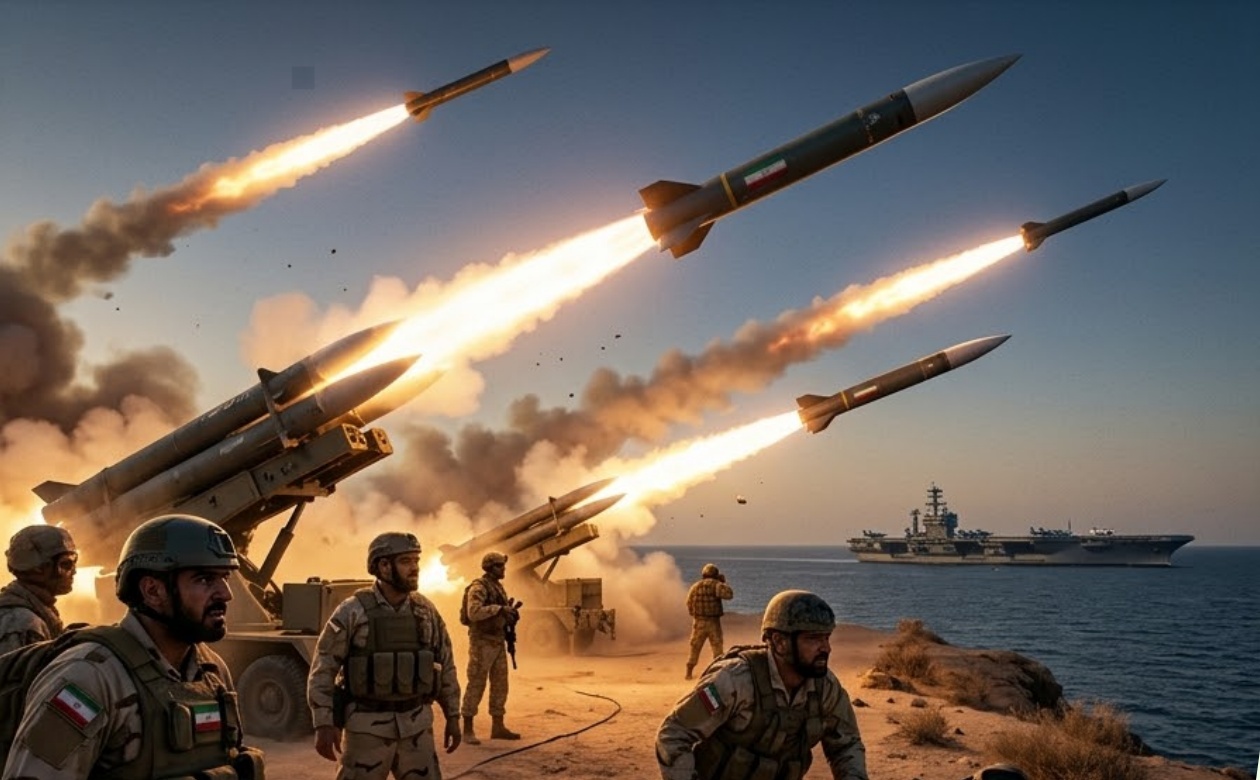
This pattern of claim and counter‑claim has played out multiple times over the past weeks, contributing to an information war that parallels the kinetic conflict itself. Iran has also broadcast statements suggesting that U.S. naval movements are being monitored and targeted whenever possible, and that its coastal missile systems are capable of engaging large naval vessels operating in the Gulf and the Indian Ocean.
Analysts note that aircraft carriers like the Abraham Lincoln are among the most heavily defended objects on the planet. They are typically surrounded by escort ships, layered defensive missiles, electronic warfare systems, and rapid reaction air wings — making them exceedingly difficult to strike successfully with ballistic or cruise missiles. Even in the face of growing regional hostility, there has been no independently verified evidence that Iran’s claims of hitting the carrier are accurate.
The ongoing conflict between the United States, Iran, and their respective allies shows signs of escalating in both military actions and propaganda campaigns. As each side continues to press its narrative domestically and internationally, distinguishing verified facts from strategic claims becomes increasingly challenging.
For now, the story remains one of contested narratives: a dramatic Iranian claim of striking a symbol of U.S. naval power — and an equally forceful American denial asserting the carrier’s continued operational status. The repetition of these claims and counter‑claims only underscores how critical information strategy has become in this modern theater of conflict, shaping global perceptions even as the actual military engagements continue to unfold.