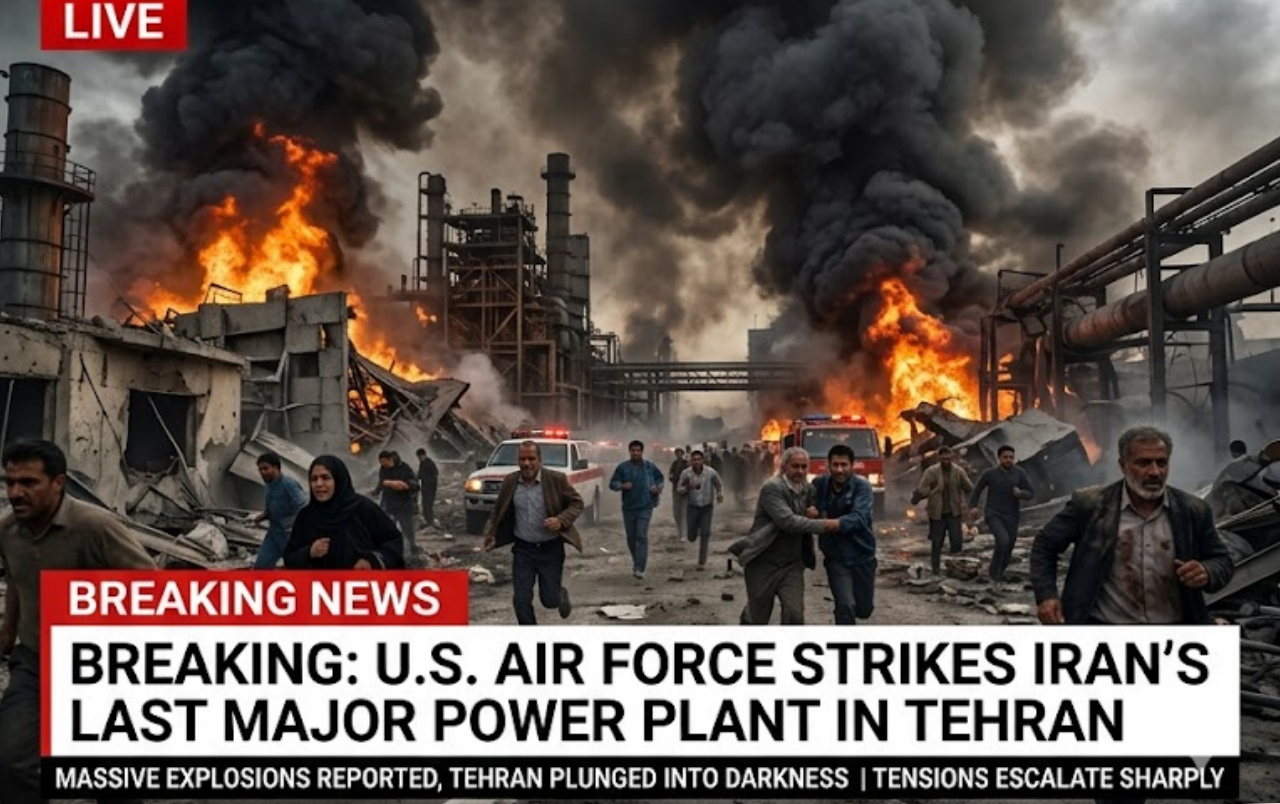
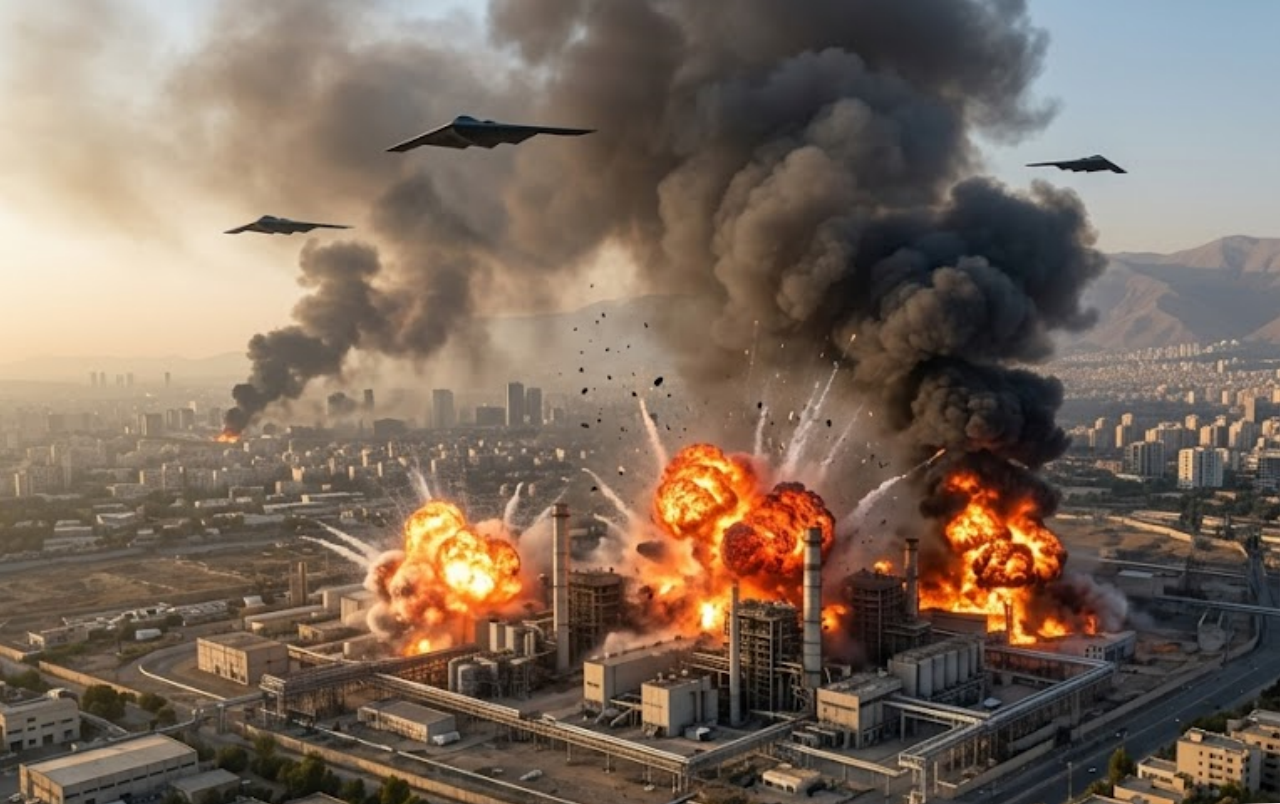
In a dramatic escalation of the ongoing conflict, reports have emerged claiming that the U.S. Air Force has carried out a निर्णायक strike on what is described as Iran’s last major operational power facility in Tehran, triggering widespread blackouts and deepening the humanitarian and strategic crisis inside the country.
While the full extent of the damage remains unclear, recent developments confirm that energy infrastructure has increasingly become a central target in the war. Earlier strikes on power facilities and الكهرباء grids have already caused partial outages in and around Tehran, exposing vulnerabilities in Iran’s critical systems. A separate attack on a power station in northeastern Iran also resulted in localized blackouts and raised fears of broader disruption.
The alleged destruction of a major power plant in the capital would mark a turning point. Tehran, a city of millions, depends heavily on a stable electricity supply for hospitals, communication systems, transportation, and basic daily life. A sustained blackout could paralyze essential services, disrupt military coordination, and intensify civilian suffering.
This development comes amid increasingly aggressive rhetoric from former U.S. President Donald Trump, who had previously warned that Iran could lose “every power plant” if it failed to comply with U.S. demands, particularly regarding the reopening of the Strait of Hormuz. Such statements signaled a strategic shift toward targeting infrastructure rather than solely military assets.
On the ground, the psychological impact is already visible. Civilians in Iran have reportedly mobilized to protect key infrastructure, even forming human chains around power facilities in anticipation of further strikes. This reflects both the strategic importance of energy sites and the growing خوف among the population as the conflict directly affects civilian life.
However, experts caution that claims of a “final blackout” or the destruction of the “last” major power plant may be exaggerated. National الكهرباء grids are typically designed with some level of redundancy, meaning that even severe damage does not necessarily result in total, long-term collapse. Instead, outages may be widespread but temporary, depending on repair capabilities and backup systems.
Still, the broader implications are severe. Targeting energy infrastructure represents a significant escalation, blurring the line between military and civilian targets. It risks worsening humanitarian conditions and could provoke stronger retaliation from Iran, potentially expanding the conflict beyond its current scope.
Ultimately, whether or not this strike truly eliminated Tehran’s final major power source, the message is clear: the war has entered a phase where infrastructure—and the المدني population it supports—has become a central battleground. As darkness spreads across parts of the city, so too does uncertainty about what comes next in an increasingly volatile and unpredictable conflict.