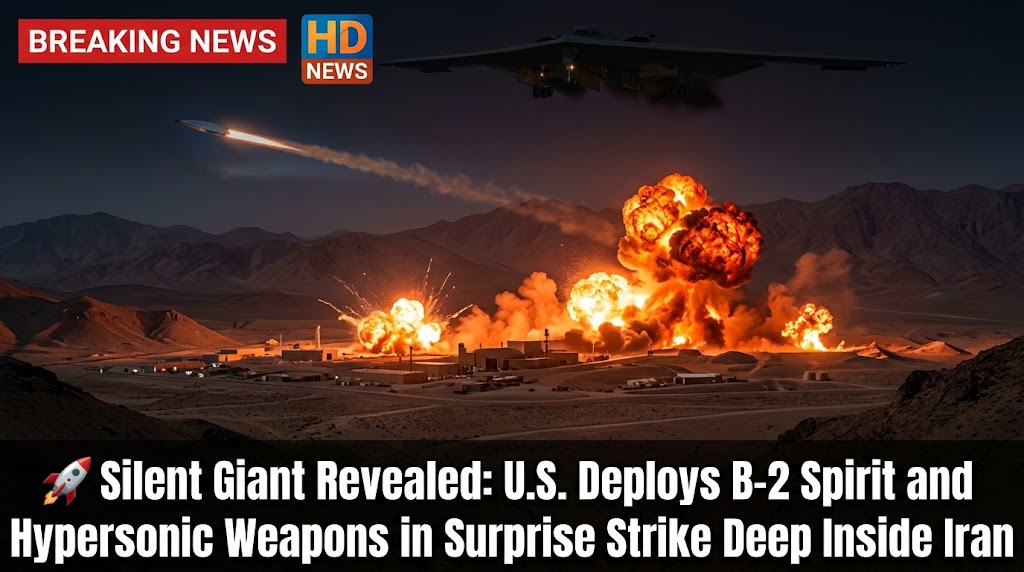
In one of the most significant escalations of the ongoing conflict, the U.S. Air Force’s highly advanced B‑2 Spirit stealth bombers have reportedly conducted deep‑penetration strikes inside Iran, hitting high‑value military targets with precision ordnance. These missions mark a dramatic use of America’s most capable long‑range bomber platform in active combat against Iranian forces, demonstrating both strategic reach and evolving tactical objectives.
According to multiple defense sources and U.S. officials, B‑2 bombers flew extended missions that penetrated well into Iranian airspace to engage underground command structures associated with the Islamic Revolutionary Guard Corps (IRGC) and other hardened military sites near Tehran. The bombers reportedly delivered Massive Ordnance Penetrators (GBU‑57), each weighing about 30,000 pounds, designed specifically to destroy heavily fortified and deeply buried facilities.
One mission highlighted by military reporting involved a 36‑hour nonstop sortie, emphasizing the capability of the B‑2 Spirit to fly long distances with aerial refueling support before executing precision strikes on critical nodes of Iran’s command and control infrastructure.
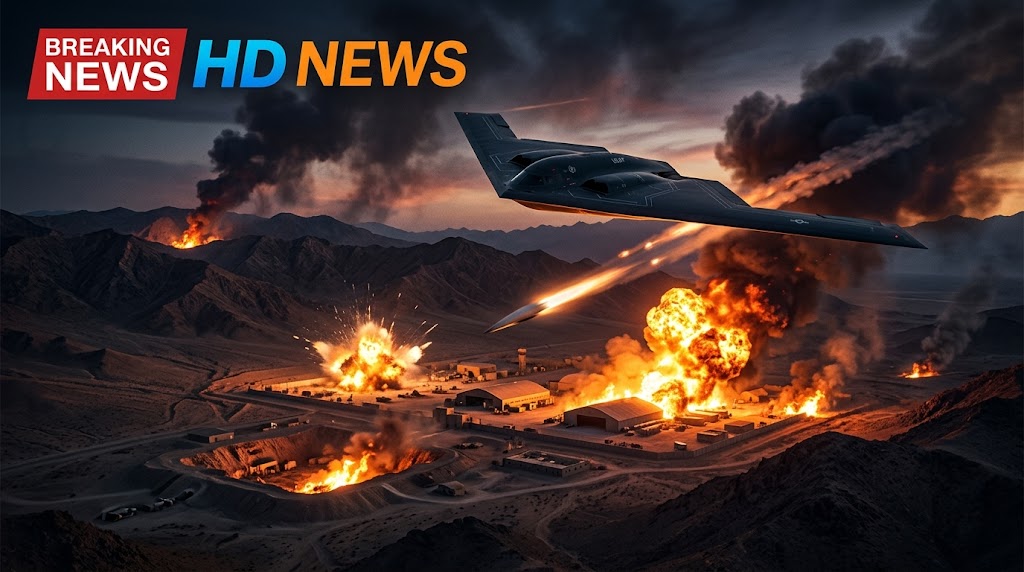
These operations are part of a broader U.S. campaign, code‑named Operation Epic Fury, aimed at degrading Iran’s ability to coordinate and sustain hostile actions, including missile and drone strikes against U.S. and allied forces in the region. Previous B‑2 missions in early March also targeted ballistic missile facilities and other hardened assets as part of this sustained effort.
Beyond the tactical impact on Iran’s military architecture, the deployment of B‑2 bombers carries a powerful strategic message. The aircraft’s stealth characteristics allow it to evade advanced air defenses and reach targets that would be highly risky or impossible for non‑stealth platforms to engage effectively. By showcasing this capability, the U.S. signals both to Tehran and to international observers that it retains decisive long‑range strike options even without relying on proximate regional basing.
However, while these missions demonstrate advanced military reach, they also heighten concerns about escalation. Strikes deep inside Iranian territory could provoke retaliatory actions by Tehran’s forces or by allied militia groups, potentially expanding the conflict beyond its current bounds.
As the situation continues to unfold, global attention remains focused not only on the physical effects of these strikes but also on their geopolitical implications. For now, the “silent giant” of the U.S. bomber fleet has re‑emerged at the forefront of modern warfare—quiet, hard to detect, and capable of delivering decisive blows deep inside enemy territory.