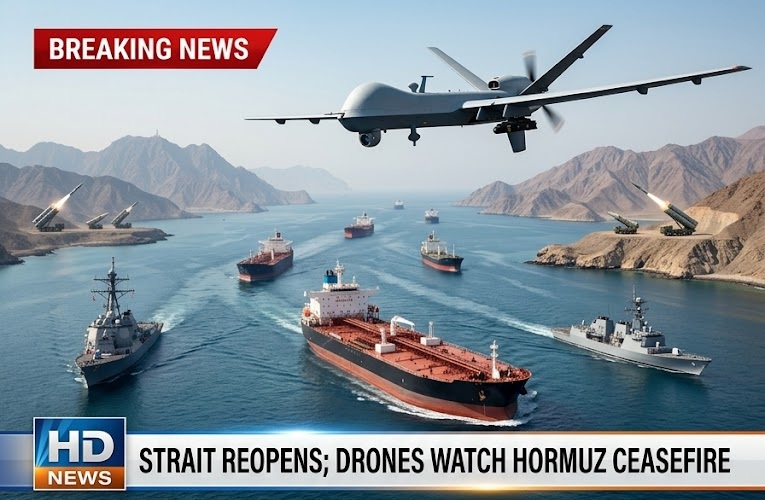
Commercial shipping has begun to cautiously return to the Strait of Hormuz following a fragile ceasefire, but the reopening comes under unprecedented levels of aerial surveillance. Military drones now dominate the skies above the narrow waterway, reflecting deep concerns that the truce could unravel at any moment.
According to regional security officials, both manned and unmanned surveillance systems have been significantly expanded in recent days. High-altitude drones, maritime patrol aircraft, and reconnaissance platforms are working in coordination to monitor vessel movements and detect potential threats in real time. The goal, officials say, is to ensure that any hostile activity—whether from missiles, fast attack craft, or additional drones—can be identified and addressed before it escalates.
The Strait of Hormuz remains one of the most strategically critical passages in the world, serving as a gateway for a substantial share of global oil exports. Even brief disruptions in this corridor can send shockwaves through international markets. The recent ceasefire has allowed tanker traffic to resume, but confidence remains fragile, and security forces are taking no chances.
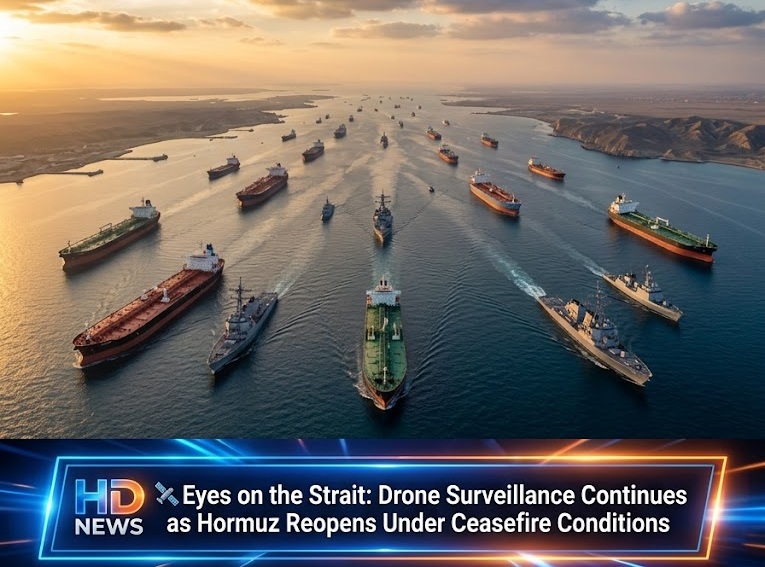
Drone surveillance has emerged as a central component of this security strategy. Advanced unmanned systems equipped with high-resolution imaging and thermal sensors are capable of tracking vessels across vast distances, even in low-visibility conditions. These drones can relay live data to naval command centers, allowing for rapid decision-making and coordinated responses.
Naval forces from multiple countries are also maintaining a strong presence in the area, complementing aerial surveillance with surface patrols. Warships continue to escort tankers through designated safe corridors, while communication channels between military units and commercial vessels have been reinforced. Shipping companies have been advised to follow strict navigation guidelines and maintain constant contact with monitoring authorities.
Despite these measures, concerns persist that the ceasefire may not hold. Intelligence reports indicate that missile systems and armed groups in the region remain active, and the risk of miscalculation is high. The increased reliance on drones reflects both technological advancement and the seriousness of the current threat environment.
For the global economy, the reopening of the strait offers cautious relief. Oil shipments are beginning to flow again, easing immediate supply concerns. However, analysts warn that the heavy security presence—and the very need for it—underscores how unstable the situation remains. Any renewed attack could quickly disrupt traffic and trigger another surge in energy prices.
Diplomatic efforts continue behind the scenes, with international actors urging restraint and pushing for a more durable agreement. For now, the skies above Hormuz tell the story: a ceasefire in place, but watched closely from above, where every حرکت is tracked and every risk carefully assessed.