
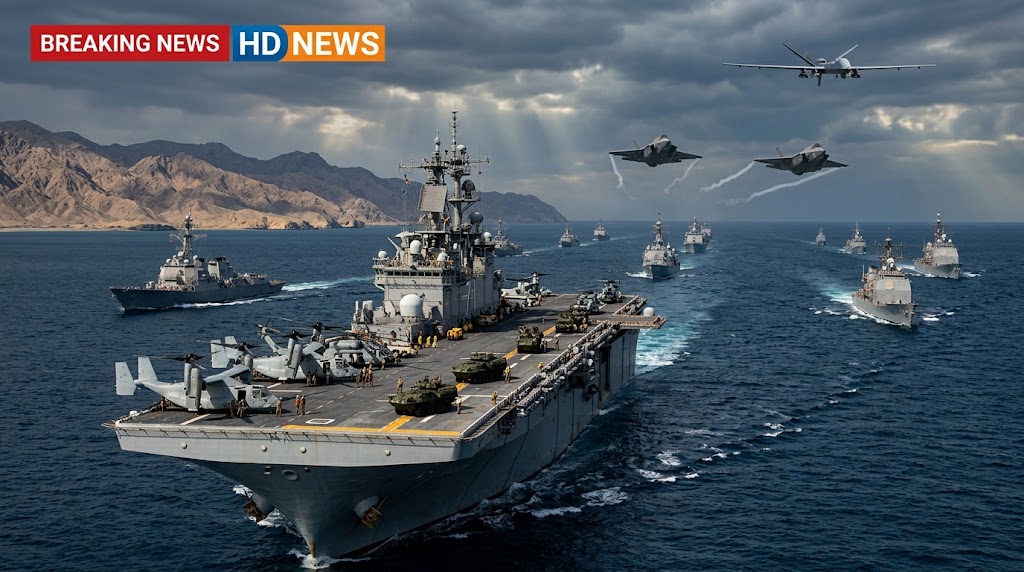
A major U.S. military operation is currently in motion, led by the amphibious assault ship USS Wasp, as it directs a substantial deployment of Marines toward the Strait of Hormuz—one of the most critical maritime chokepoints in the world.
Defense officials report that the mission involves hundreds of Marines, backed by a range of equipment including amphibious vehicles, helicopters, and aircraft designed for rapid vertical deployment. The primary objective is to strengthen regional security and maintain stability in an area increasingly challenged by maritime risks.
Acting as a mobile command center, the USS Wasp is equipped to launch both helicopters and short takeoff aircraft, enabling swift and flexible responses. This capability allows U.S. forces to quickly address emerging situations along vital shipping lanes.
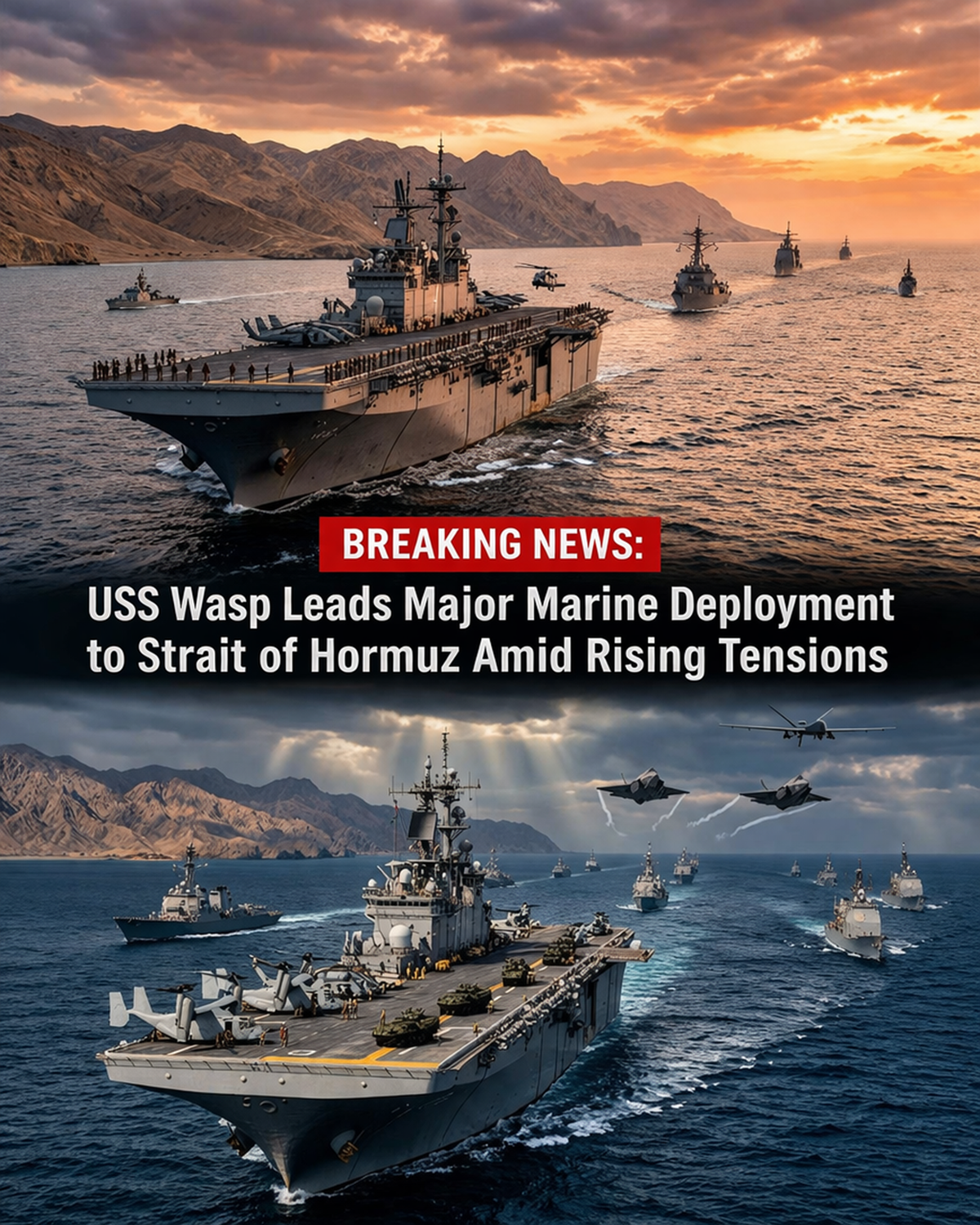
The move comes at a time of rising concern over the safety of commercial shipping and energy transport through the Strait of Hormuz—a passageway that handles a significant share of the global oil supply each day. Any disruption here could have wide-reaching economic consequences.
This deployment is part of a broader strategy by the United States to enhance its military readiness and presence in the region. Reports indicate that additional naval and air support units are prepared to assist if the situation escalates.
Although U.S. officials stress that the mission is intended as a defensive measure, the scale of the operation clearly demonstrates a strong military posture and a willingness to act if tensions intensify.
As activity continues to build, the situation remains dynamic, with developments in the region unfolding rapidly.