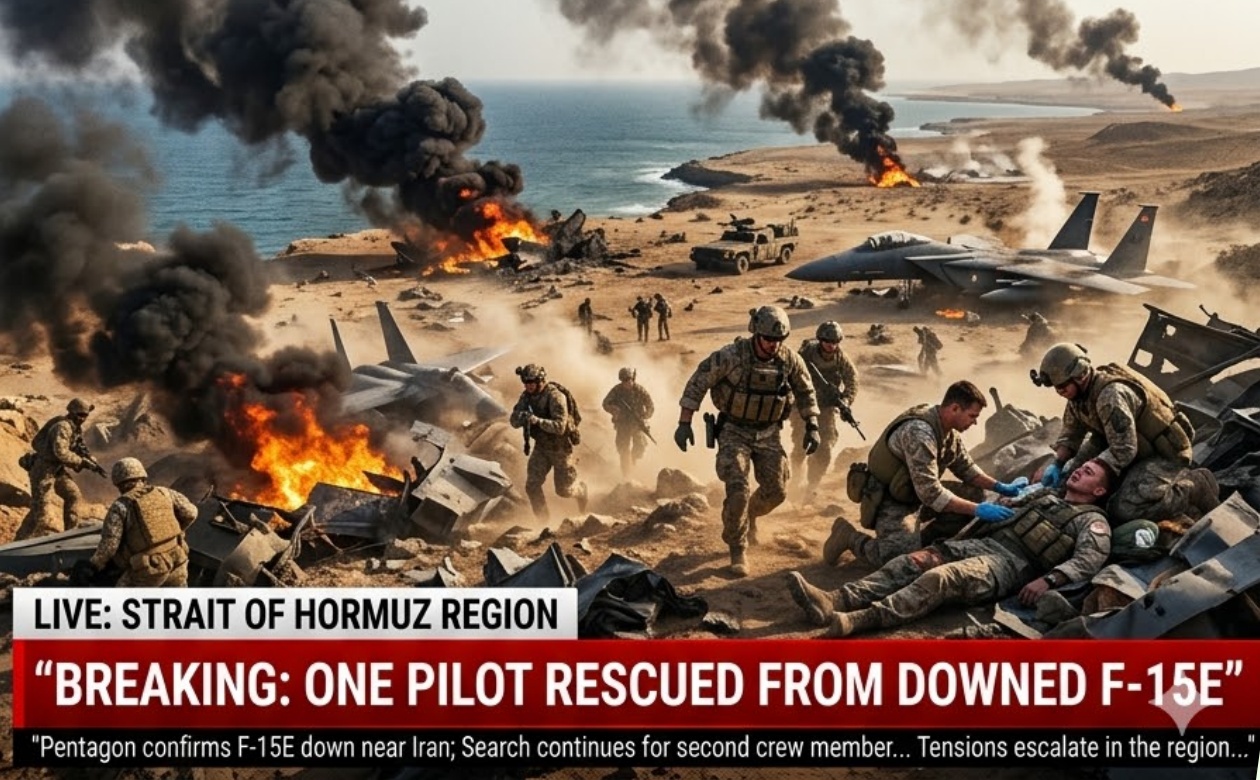
In a tense and rapidly unfolding situation, U.S. military officials have confirmed that one pilot has been rescued after an F-15E Strike Eagle was downed during operations over a contested region in the Middle East. The incident marks another escalation in ongoing aerial confrontations and highlights the dangers faced by U.S. pilots operating near heavily defended airspace.
According to sources familiar with the rescue operation, the F-15E was engaged in a routine strike mission when it encountered hostile fire or suffered a critical technical failure — details of which remain under investigation. The two-seat fighter jet went down quickly, prompting an immediate search and rescue response by U.S. forces. Helicopters, drones, and specialized personnel were deployed to locate and extract the crew, working under the constant threat of enemy fire and unstable terrain.
The rescued pilot, whose identity has not yet been released for operational security reasons, was retrieved in a high-risk operation carried out by U.S. special forces. Eyewitnesses report seeing a rapid extraction from a hostile area, with the pilot airlifted to a nearby safe location for medical evaluation and debriefing. Military spokespeople have confirmed that the pilot is in stable condition, though further assessments are ongoing.
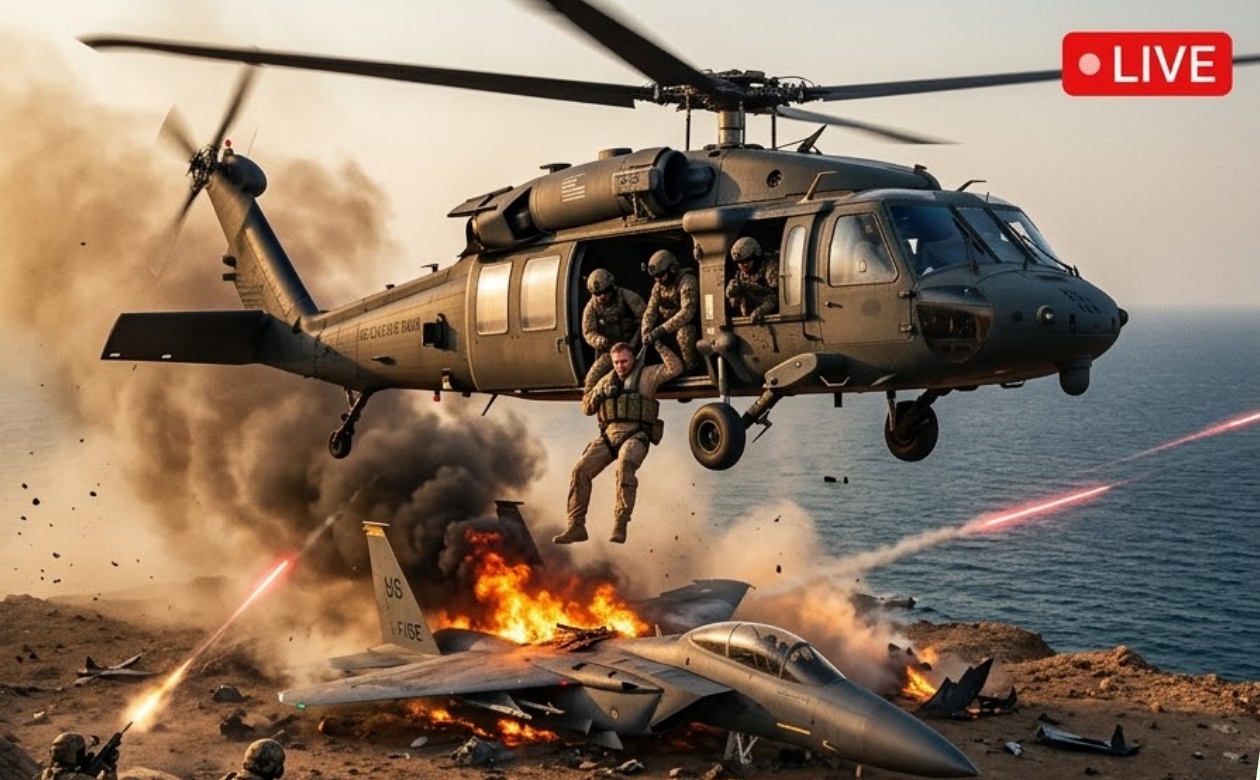
The status of the second crew member remains unknown, and search-and-rescue teams are continuing their efforts. Intelligence assets, including aerial drones and satellite reconnaissance, have been redirected to assist in locating the missing pilot. U.S. officials have emphasized that the recovery of all personnel remains a top priority and that every available resource is being employed to bring the second airman home safely.
This incident highlights the increasing risks faced by U.S. pilots operating over contested airspace, particularly near regions with advanced air defense systems. The F-15E Strike Eagle, a multirole fighter designed for deep-strike missions and ground attack, has been a cornerstone of U.S. airpower. However, modern threats, including sophisticated missile systems and surface-to-air weaponry, pose significant dangers even to advanced aircraft.
Analysts note that the successful rescue of one pilot demonstrates the high level of coordination and preparedness within U.S. search-and-rescue operations. These operations rely on a combination of intelligence, rapid deployment, and specialized personnel trained to operate in hostile environments. The fact that one crew member was safely extracted despite the hazardous conditions reflects the precision and speed with which U.S. forces can respond to emergencies in combat zones.
While details of the downing are still emerging, the situation is likely to have significant strategic and political implications. Military leaders are assessing the impact on ongoing operations, while policymakers weigh the potential for escalation and the need to maintain air superiority in sensitive regions.
For now, the rescue serves as a rare positive note amid the ongoing aerial confrontations — a demonstration of U.S. capabilities to protect its personnel under extremely challenging circumstances. As search efforts continue for the second pilot, all eyes remain on the region, with tensions continuing to mount.