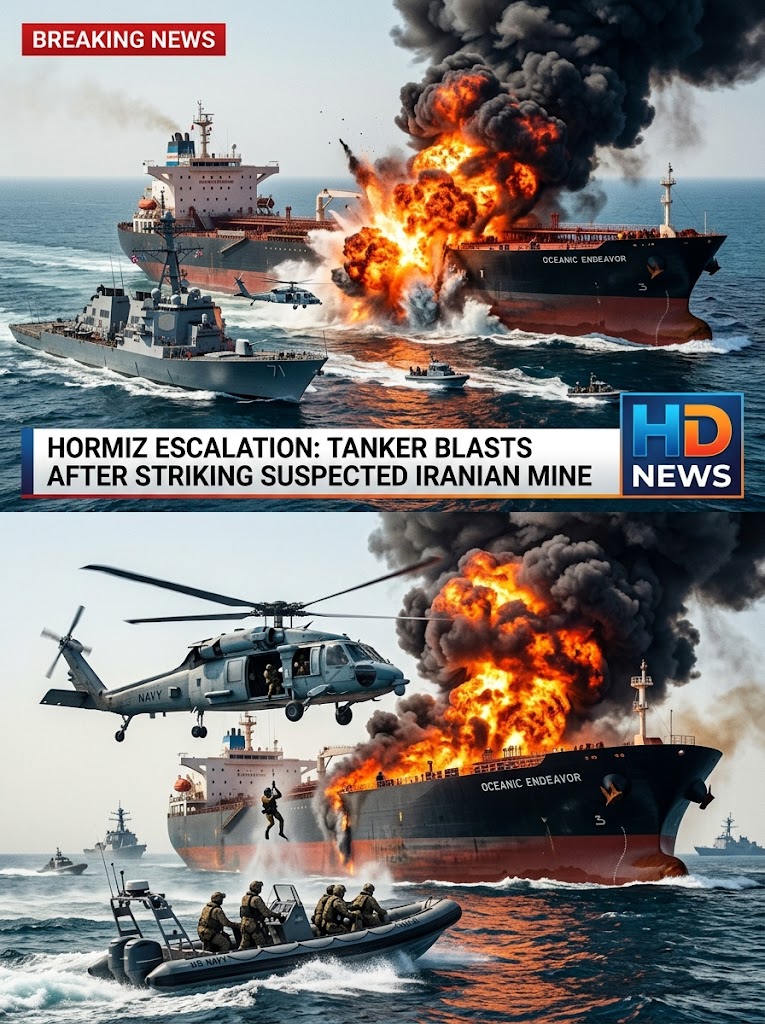
A commercial oil tanker has been damaged in a suspected sea mine explosion in the Strait of Hormuz, triggering an immediate emergency response and raising serious concerns over the safety of one of the world’s most critical maritime routes. The incident occurred as the vessel was transiting through the narrow waterway under heightened security conditions.
According to preliminary maritime security reports, the tanker was struck by an underwater explosion consistent with a naval mine detonation. The blast reportedly caused structural damage to the vessel’s hull, forcing the crew to initiate emergency procedures. While no immediate fatalities have been confirmed, several crew members are believed to have sustained minor injuries as firefighting and damage-control teams worked to stabilize the situation.
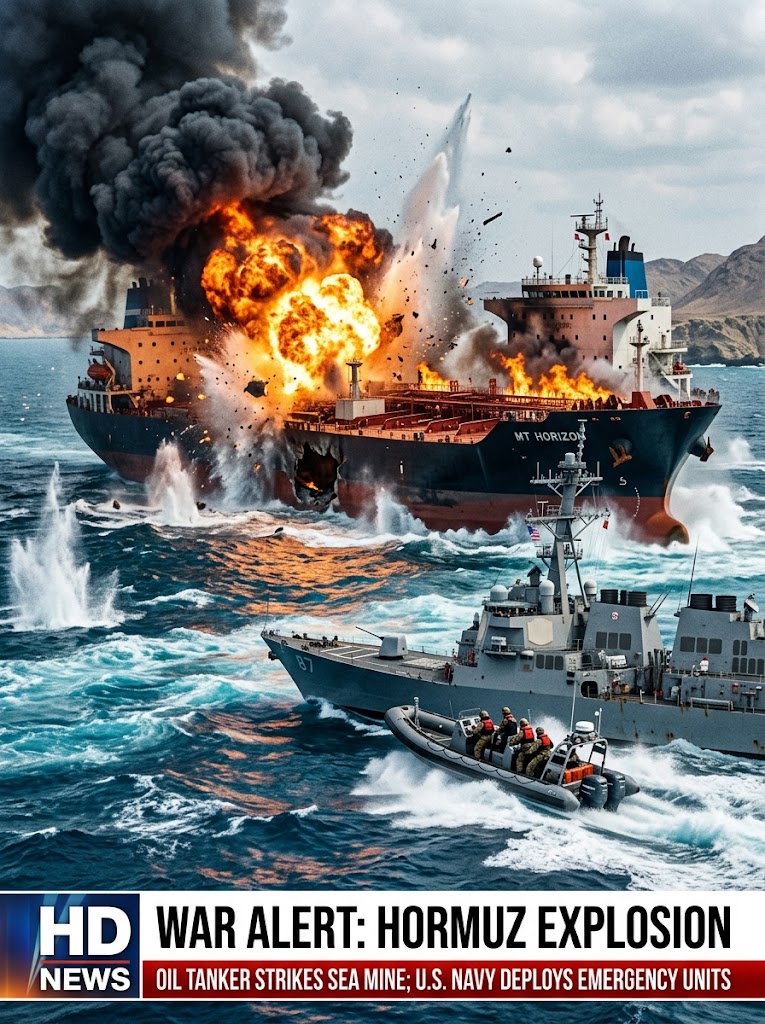
The tanker sent a distress signal shortly after the explosion, prompting nearby naval forces and rescue units to respond. Escorting warships in the area quickly moved to secure the vessel and establish a protective perimeter, while mine countermeasure teams were dispatched to assess whether additional explosive devices might be present in the surrounding waters.
Military officials have not yet confirmed the exact origin of the mine. However, early assessments suggest it may have been either a drifting explosive device or a deliberately placed naval mine, reflecting the growing complexity and danger of underwater threats in the region. The Strait of Hormuz has recently seen increased military activity, including surveillance operations, convoy escorts, and mine-sweeping missions.
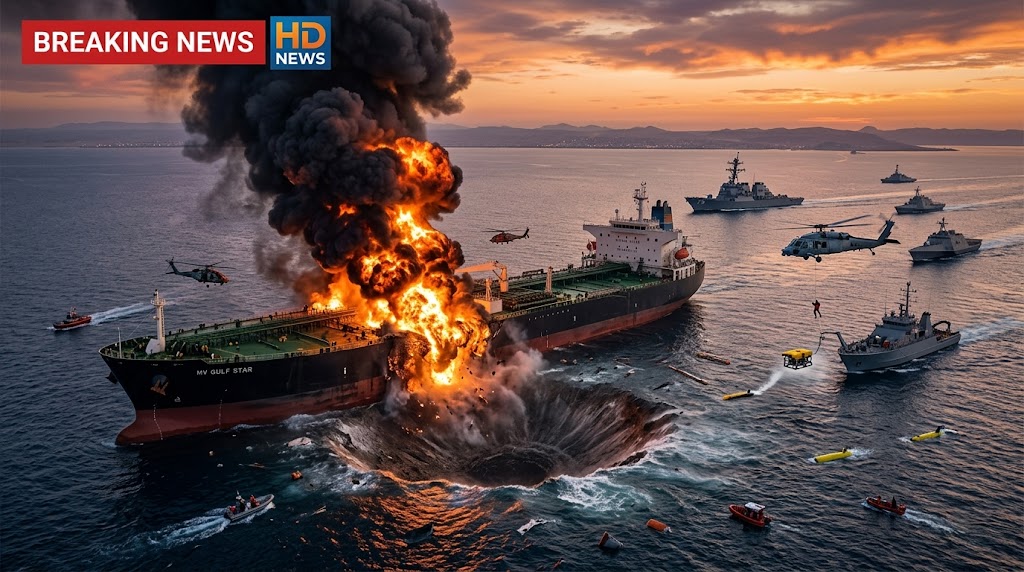
The damaged tanker is currently being stabilized, with emergency crews working to prevent fuel leakage and further structural failure. Tugs and support vessels are preparing to assist in towing the ship to a secure port for inspection and repairs. Authorities have not yet disclosed the extent of environmental risk, but precautionary containment measures have been activated.
The Strait of Hormuz remains one of the most strategically important chokepoints in global energy trade, with a significant portion of the world’s oil shipments passing through its waters daily. Any disruption caused by mine-related incidents poses a direct threat to international supply chains and can rapidly influence global energy prices.
In response to the explosion, maritime authorities have issued urgent advisories to all commercial vessels in the area, instructing them to reduce speed, maintain strict convoy discipline, and avoid unverified routes. Additional naval units have been deployed to conduct sweeping operations and secure safe passage corridors.
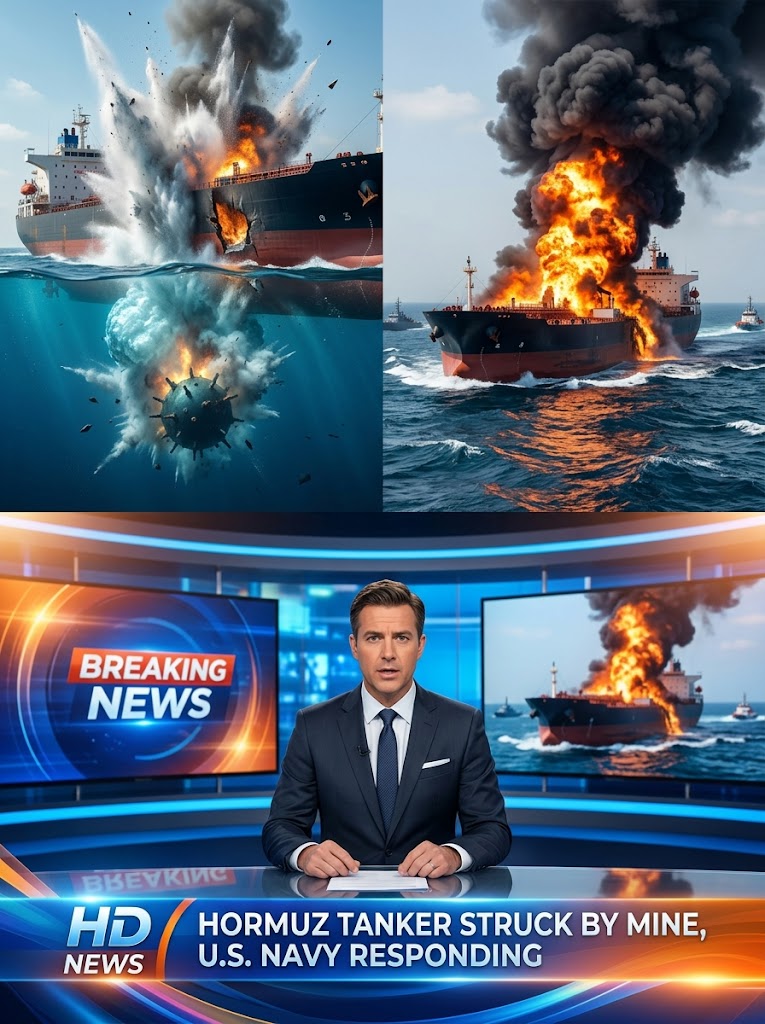
Energy markets reacted swiftly to early reports of the attack, with oil prices showing signs of volatility amid fears of further disruptions. Analysts warn that even isolated incidents of this nature can have outsized impacts due to the strategic importance of the strait.
International leaders and maritime organizations have called for restraint and immediate investigation into the incident. As emergency teams continue their response, the explosion serves as a stark reminder of the fragile security environment in the region, where hidden underwater threats can quickly escalate into global crises.