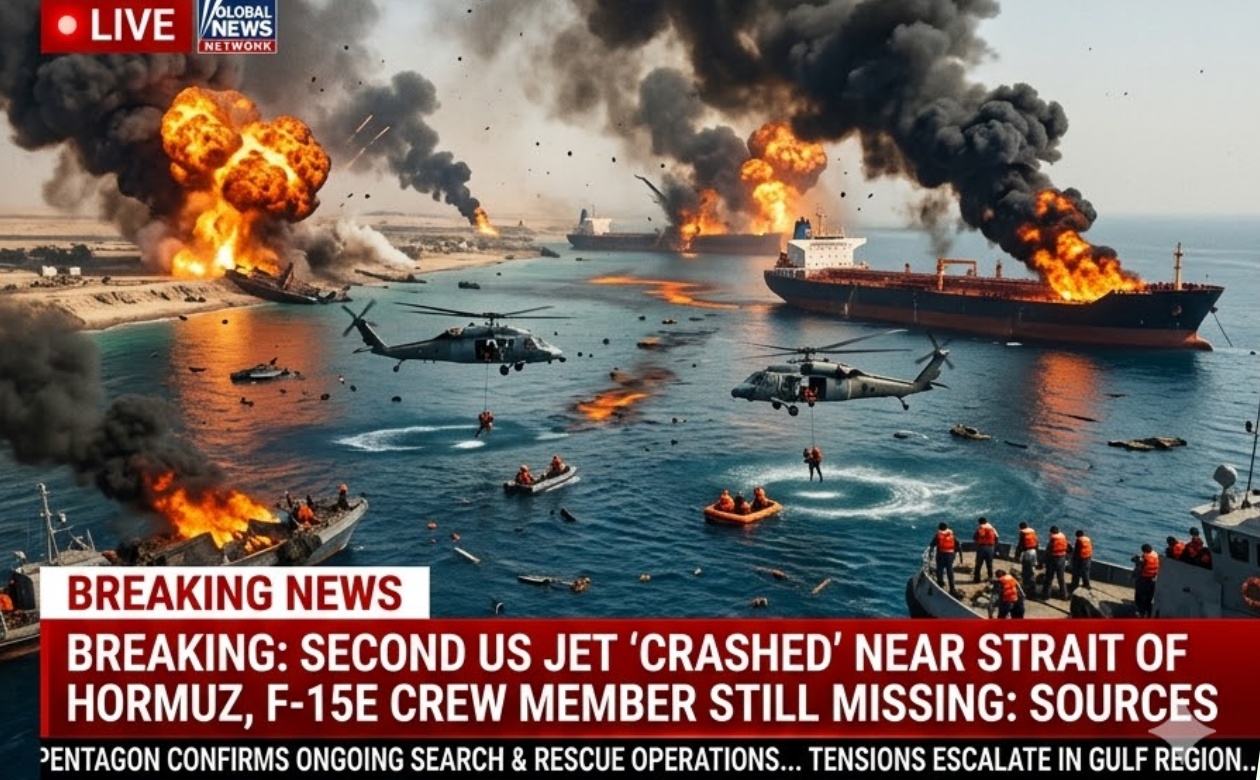
Tensions in the Persian Gulf have reached a dangerous new high as reports emerge that a second U.S. fighter jet has crashed near the Strait of Hormuz, with one crew member still unaccounted for, according to multiple sources. The incident comes amid ongoing military operations in the region and follows the downing of another U.S. aircraft earlier this week, intensifying concerns over the escalating conflict between U.S. and Iranian forces.
According to defense insiders, the aircraft involved is believed to be an F-15E Strike Eagle, a twin-engine multirole fighter used for deep strike missions. Initial reports suggest that the jet went down under uncertain circumstances during a high-risk sortie near Iranian-controlled airspace, an area known for dense radar coverage and sophisticated air defense systems. The surviving crew member was reportedly rescued, but the second airman remains missing, triggering urgent search and rescue operations. (apnews.com)
Eyewitness accounts and satellite imagery released by private monitoring groups show smoke rising near the strategic Strait of Hormuz, a narrow maritime passage through which approximately 20% of the world’s seaborne oil trade passes. Analysts warn that repeated incidents in this corridor could severely disrupt international shipping and heighten global energy market volatility.
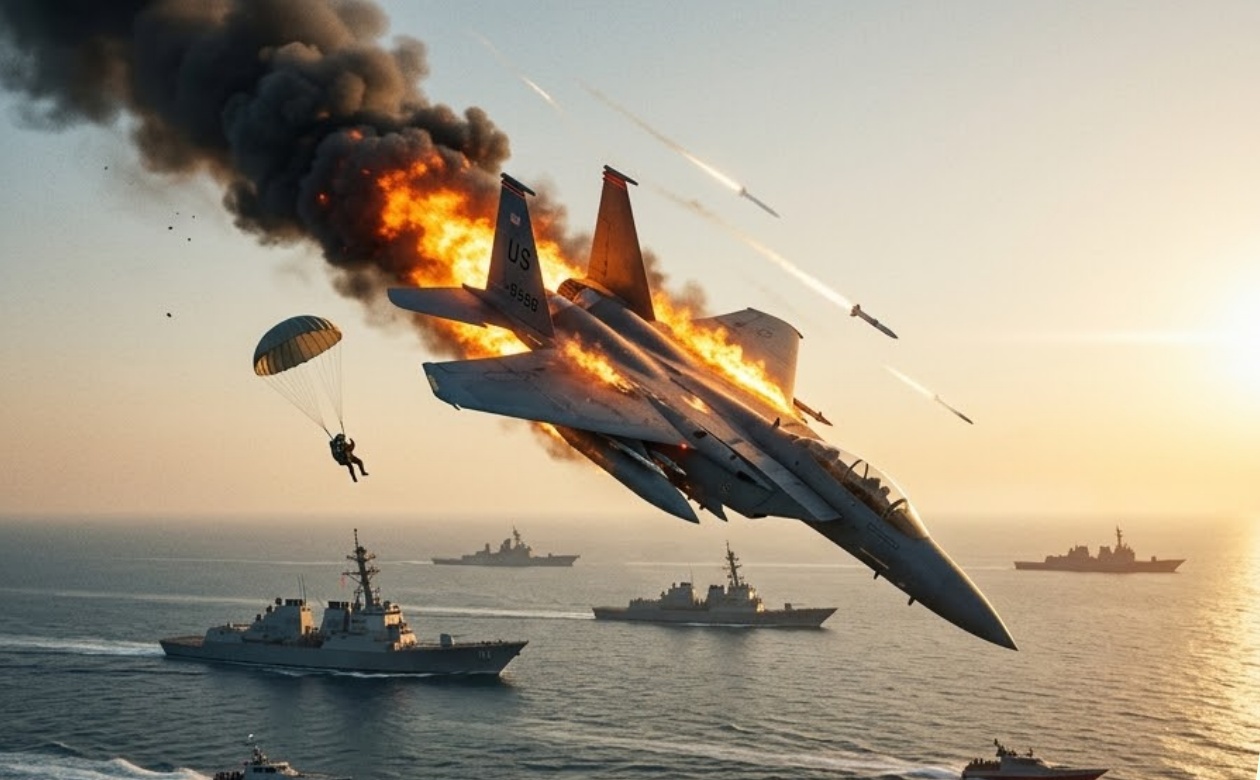
U.S. military officials have confirmed that a jet was lost in the area but have been careful to withhold operational details, citing ongoing personnel recovery and security concerns. They emphasized that rescue efforts are underway and that the safety of all personnel remains the top priority. Meanwhile, Iranian state media has neither confirmed nor denied involvement, though local military sources have hinted that Iran’s integrated air defense systems remain fully operational and “capable of responding to foreign incursions.”
Strategic experts note that the Strait of Hormuz has become a focal point of modern military confrontations due to its strategic importance. The proximity of hostile forces, combined with the narrow geography, makes it one of the most dangerous theaters for aerial and naval operations in the world. Even routine patrols carry extreme risk, and the loss of a second jet underscores the heightened stakes in the region.
The incident is already generating political fallout. Lawmakers in Washington are demanding briefings from the Pentagon, and analysts warn that further losses could pressure U.S. leadership to adopt a more aggressive posture against Iranian forces. International observers have called for restraint, emphasizing that escalation could have far-reaching consequences, including broader regional conflict and disruption of global oil supplies.
For now, the priority remains the recovery of the missing F-15E crew member. Search-and-rescue teams are combing the area with helicopters, drones, and naval assets, while intelligence units coordinate satellite imagery and real-time surveillance to locate the missing airman. Each hour that passes increases the urgency of the operation, highlighting the inherent dangers of military missions near the Strait of Hormuz.
As the situation develops, the world watches closely. The loss of a second U.S. jet in the region is a stark reminder of the volatility of the Gulf theater, the risks of air operations over contested airspace, and the potential for a single incident to escalate into a far larger confrontation.