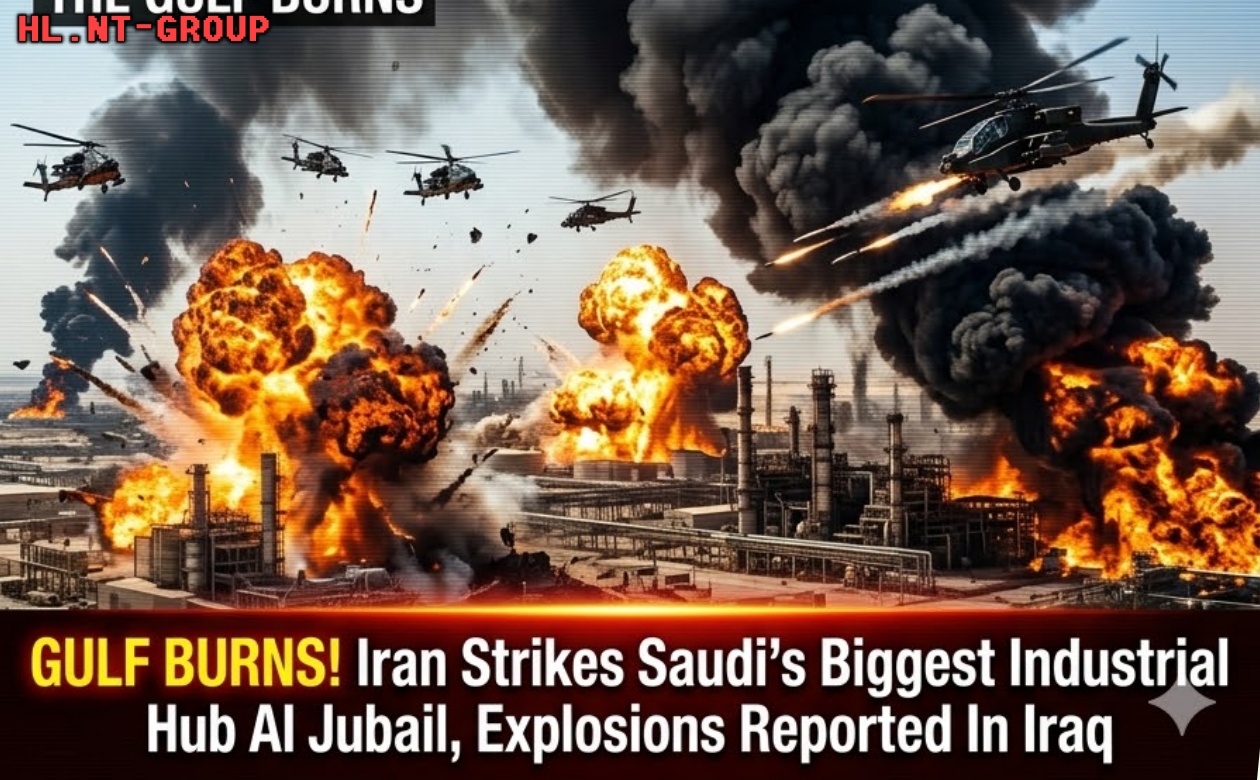
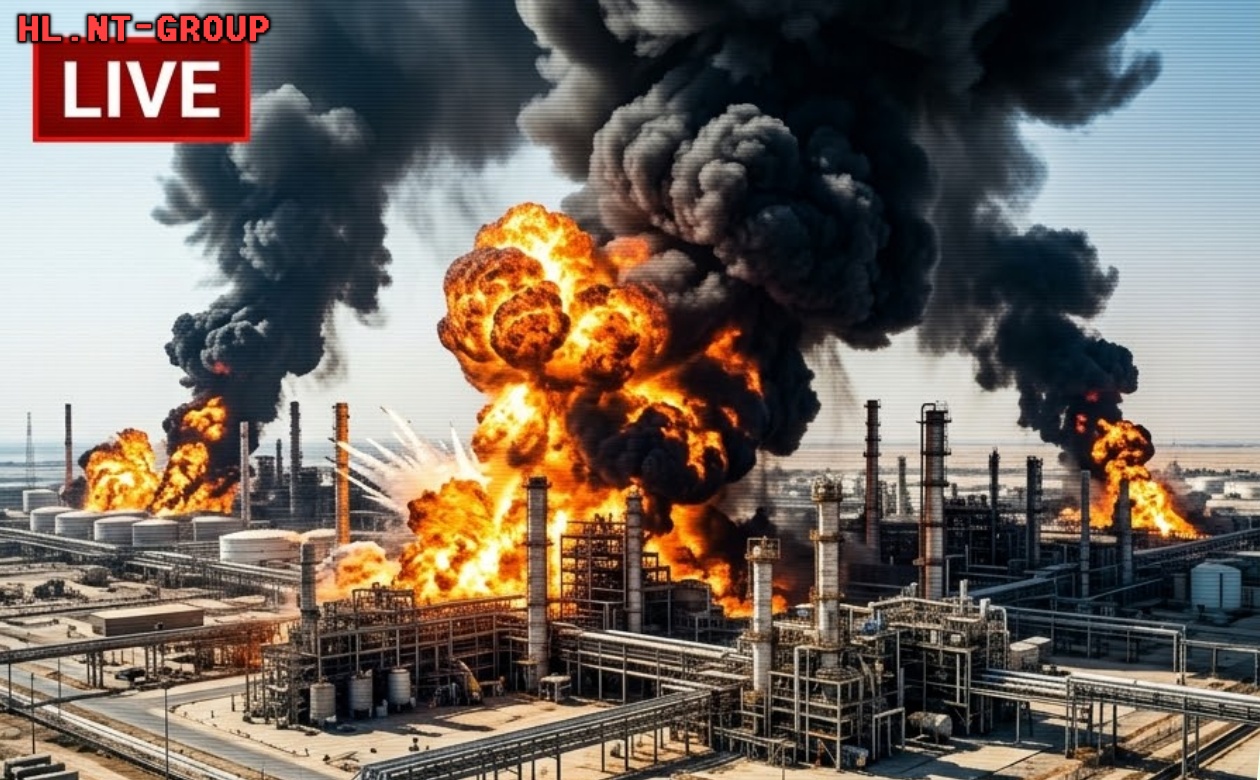
The Middle East is witnessing a sharp escalation in hostilities as Iran allegedly launched a **major missile and drone barrage against Al Jubail, one of Saudi Arabia’s largest industrial and petrochemical hubs, sparking massive explosions and fires that lit up the night sky. Reports from multiple news outlets and open‑source intelligence indicate that the strike hit key facilities in the sprawling industrial city, causing widespread fires and raising fears of significant disruption to both regional security and global energy markets.
Al Jubail hosts some of the world’s most important petrochemical and energy operations, including plants run by Saudi Basic Industries Corporation (SABIC) and major joint ventures with global partners. Following the attack, thick plumes of smoke and flames were seen across the industrial zone, and emergency responders were mobilized to contain the blaze and prevent it from spreading to adjacent facilities.
Saudi authorities confirmed that their air‑defense systems intercepted and destroyed multiple ballistic missiles launched toward the Eastern Province, but debris from these interceptions reportedly fell near energy facilities, complicating the damage assessment. The defense ministry said it was investigating the full extent of the impact, highlighting the unprecedented scale and boldness of the strike.
The assault on Al Jubail comes amid a wider cycle of retaliation and counter‑retaliation tied to the ongoing Iran conflict that began with U.S. and Israeli strikes on Iranian targets earlier this year. Tehran has repeatedly vowed to respond to military pressure with strikes on infrastructure across the Gulf region, and its latest attack underscores how the conflict has broadened beyond direct military targets to include critical industrial and economic hubs.
In addition to the strikes on Saudi Arabia, explosions have also been reported in parts of Iraq tied to Iranian‑aligned militant actions and ongoing battles among armed factions. While details remain fluid and it is too early to conclusively link every blast in Iraq to Iran’s broader campaign, analysts warn that unrest in Iraq adds a dangerous new layer to the regional crisis, blurring the lines between conventional military engagements and asymmetric warfare involving proxy groups.
Global markets reacted swiftly to the news, with oil prices climbing sharply as traders weighed the risk of prolonged disruption to petrochemical and crude output from one of the region’s largest energy production zones. Al Jubail is a cornerstone of Saudi Arabia’s industrial output, contributing significantly to both the national economy and global petrochemical supply chains; any extended disruption could have far‑reaching economic consequences.
Diplomatic efforts to halt the widening conflict have struggled to gain traction. World leaders have expressed concern over the targeting of civilian infrastructure and industrial centers, urging restraint and a return to negotiation. However, Tehran’s continued willingness to strike high‑value economic targets and regional energy hubs suggests that the conflict may continue to escalate unless a comprehensive ceasefire can be brokered.
As tensions continue to rise across the Gulf, the attack on Al Jubail stands as a stark reminder of how quickly economic assets can become frontline targets in modern warfare — with implications that extend far beyond the battlefield.