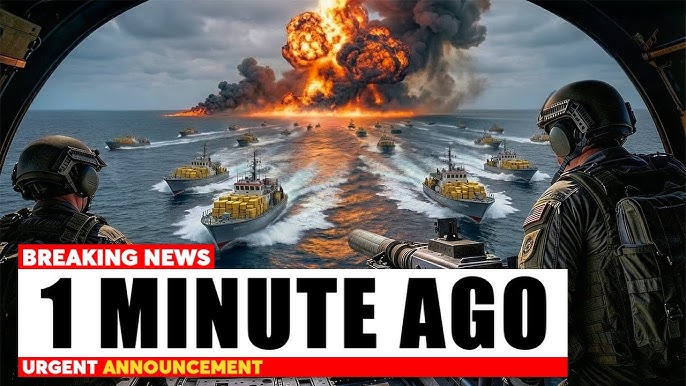
A high-risk overnight confrontation in the Strait of Hormuz escalated dramatically at approximately 4:18 AM local time, when Iranian forces allegedly attempted to encircle and capture a group of eight U.S. Marines operating on a remote island in the strategic waterway. The incident quickly triggered a large-scale U.S. military response, culminating in a rapid extraction operation that reportedly caught Iranian units off guard.
According to defense sources and regional security reporting, the Marines were part of a forward-deployed security and reconnaissance element positioned to monitor maritime activity near key shipping routes. Iranian fast-attack craft and ground units are believed to have attempted to isolate the group shortly before dawn, exploiting the island’s limited terrain and its proximity to contested waters.
However, U.S. forces immediately launched a coordinated rescue mission involving naval assets, aerial surveillance, and special operations units stationed in the region. Carrier-based aircraft were scrambled to provide overwatch, while destroyers moved closer to establish a defensive perimeter around nearby shipping lanes. Within a short window, additional forces were inserted to extract the Marines under cover of electronic warfare and air superiority measures.
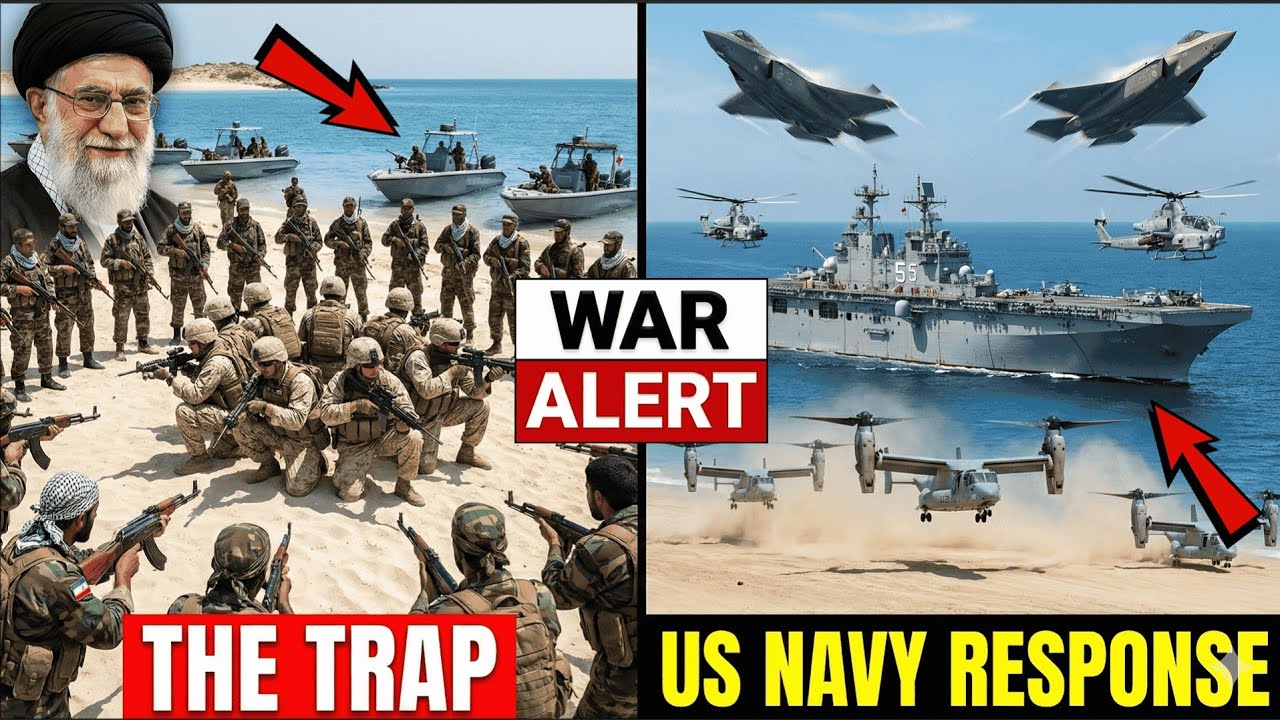
Military analysts describe the operation as highly synchronized, with multiple layers of coordination between air, sea, and special forces elements. Intelligence disruption tactics were reportedly used to interfere with Iranian targeting systems, reducing their ability to track movements in real time. Despite the rapid escalation on the ground, no confirmed casualties have been reported on the U.S. side.
Sources suggest that Iranian units withdrew after realizing the scale of the U.S. response, which included overwhelming aerial presence and the risk of direct naval engagement. The attempted capture, if confirmed, would mark one of the most serious close-range confrontations between Iranian and U.S. forces in recent months.
The rescue operation, completed within hours, is now being described by officials as a “successful extraction under extreme conditions.” However, the incident highlights the increasingly volatile security environment in the Strait of Hormuz, where small islands, shipping lanes, and military patrol zones overlap in dangerously tight proximity.
The Pentagon has not released full operational details but emphasized that U.S. forces remain committed to protecting deployed personnel and ensuring freedom of navigation in international waters. Iranian authorities have also not issued an official statement regarding the alleged incident.
Energy markets reacted cautiously to the news, as traders weighed the risk of further escalation in a region already critical to global oil flows. Even brief disruptions in the Hormuz corridor can trigger sharp price volatility, and analysts warn that repeated confrontations could increase insurance costs and force shipping diversions.
As investigations continue, the 4:18 AM incident underscores a broader reality: in the Strait of Hormuz, rapid military encounters can unfold in minutes, and even small tactical events have the potential to ripple into major geopolitical consequences.