
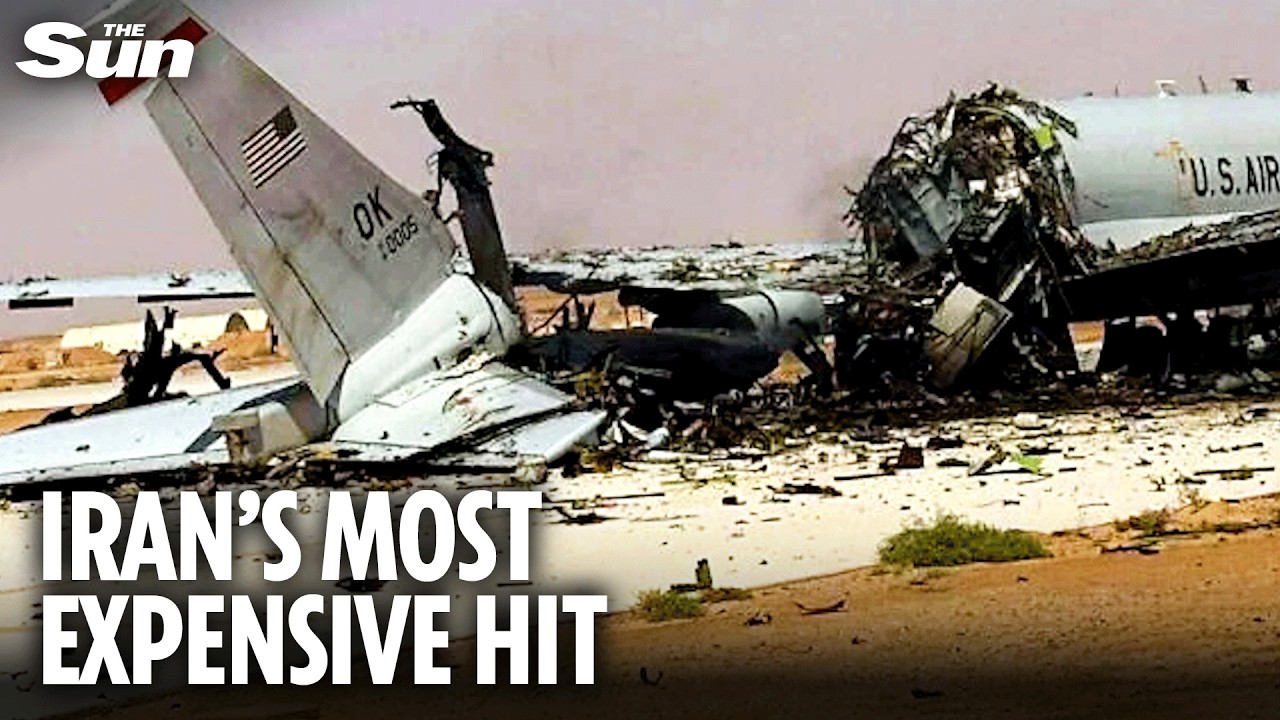
It was supposed to be untouchable.
High above the battlefield, orbiting silently in controlled airspace, the U.S. military’s airborne command center—often described as a “flying war hub”—served as the brain of modern warfare. Worth over $500 million, this aircraft wasn’t just another plane. It was a nerve center in the sky, capable of tracking threats hundreds of kilometers away, coordinating strikes, and controlling entire air campaigns in real time.
But in a shocking turn of events, that symbol of American dominance suddenly became a target.
And Iran was ready.
As tensions escalated into open conflict in early 2026, Iran began shifting tactics. Instead of only targeting bases or ships, it focused on something far more critical: the systems that see everything. Radar networks, missile defense systems—and most dangerously—the airborne command platforms that tie it all together.
Then came the strike.
In a coordinated assault, Iran launched waves of missiles and drones aimed at U.S. military infrastructure across the region. Among the chaos, one high-value target stood out: a U.S. airborne early-warning and command aircraft—often compared to a “flying headquarters.” These platforms are rare, incredibly expensive, and essential for battlefield awareness.
And somehow… Iran got through.
Reports indicate that the attack overwhelmed layered defenses using a saturation strategy—multiple incoming threats arriving at once, forcing systems to choose what to intercept. Some missiles were decoys. Others flew low, hugging terrain and evading radar. By the time defenses reacted, it may have already been too late.
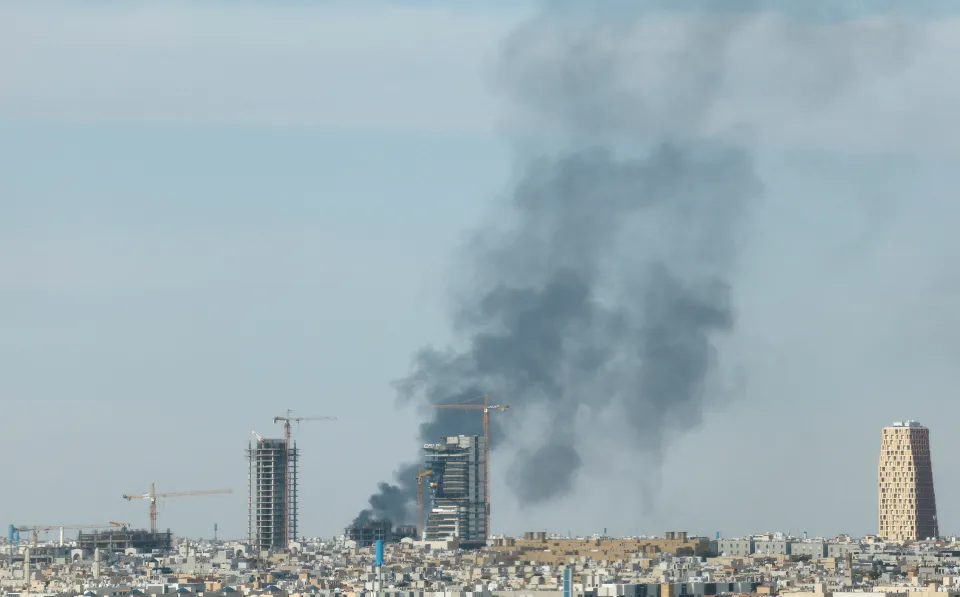
The result?
Severe damage.
During one of the strikes, an E-3 Sentry—one of the U.S.’s most critical airborne radar aircraft—was reportedly hit and damaged at Prince Sultan Air Base. Military analysts described it as a “serious blow” to U.S. surveillance capabilities.
And that’s what makes this moment so dangerous.
Because this wasn’t just about destroying a plane.
It was about blinding the battlefield.
These airborne systems act as the eyes and coordination hub for entire operations. Without them, response times slow. Threat detection weakens. Air superiority becomes harder to maintain. In modern warfare, losing that edge—even temporarily—can shift momentum in ways that aren’t immediately visible.
But how did Iran manage it?
Experts point to a combination of strategy, intelligence, and timing. Iran has spent years developing asymmetric tactics—designed not to match U.S. power directly, but to exploit its vulnerabilities. Instead of confronting strength, it targets dependence.
And the U.S. depends heavily on information dominance.
Iran’s use of drones, ballistic missiles, and possibly external intelligence support allowed it to identify and strike high-value assets with precision. Some reports even suggest coordinated attacks on air defense systems themselves—systems worth hundreds of millions—further weakening the protective shield.
The psychological impact is just as important.
If a $500 million flying command center can be hit… what else is vulnerable?
For decades, platforms like these symbolized near-invulnerability—protected by technology, distance, and layered defense. But this incident challenges that assumption. It suggests that even the most advanced military systems can be penetrated under the right conditions.
And that changes everything.
Because wars are no longer just about firepower—they’re about disrupting systems, breaking coordination, and creating moments of chaos.
Iran didn’t need to destroy an entire fleet.
It just needed to prove it could reach the heart of it.
Now, as both sides reassess their strategies, one thing is clear: the battlefield has evolved. The skies are no longer safe havens. The most advanced machines are no longer untouchable.
And the next strike… could go even further.