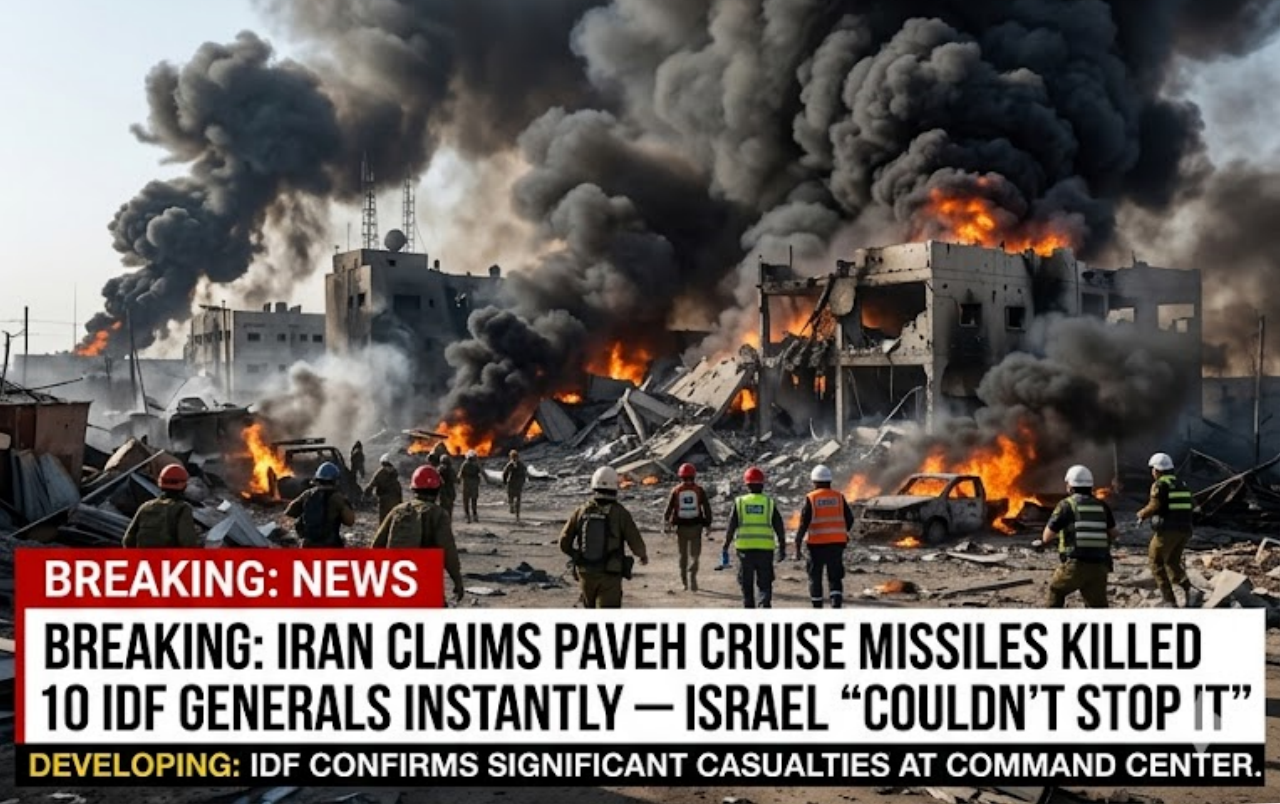
A dramatic claim circulating from Iranian state-aligned sources asserts that Iran’s Paveh long‑range cruise missiles managed to kill ten senior Israel Defense Forces (IDF) generals instantly, despite Israel’s advanced missile defenses. The report also suggests that Israel was unable to stop the strike — a narrative that has quickly gained traction in some online outlets.
However, it’s important to note that there is no verified evidence from major international news organizations or official Israeli military sources confirming the death of ten IDF generals in a single missile attack. Independent reporting on missile engagements between Iran and Israel continues to focus on broader missile strikes and defensive interceptions, rather than targeted elimination of top military leadership.
Iran’s Paveh cruise missile is a long‑range guided weapon with an estimated range of up to 1,650 km and a sophisticated guidance system capable of altering its trajectory mid‑flight. This range technically puts much of Israel within reach of Tehran’s missile arsenal. However, credible reports on how these systems have been used during the current conflict remain limited, and there are no verified claims that they have been used to precisely strike individual generals.
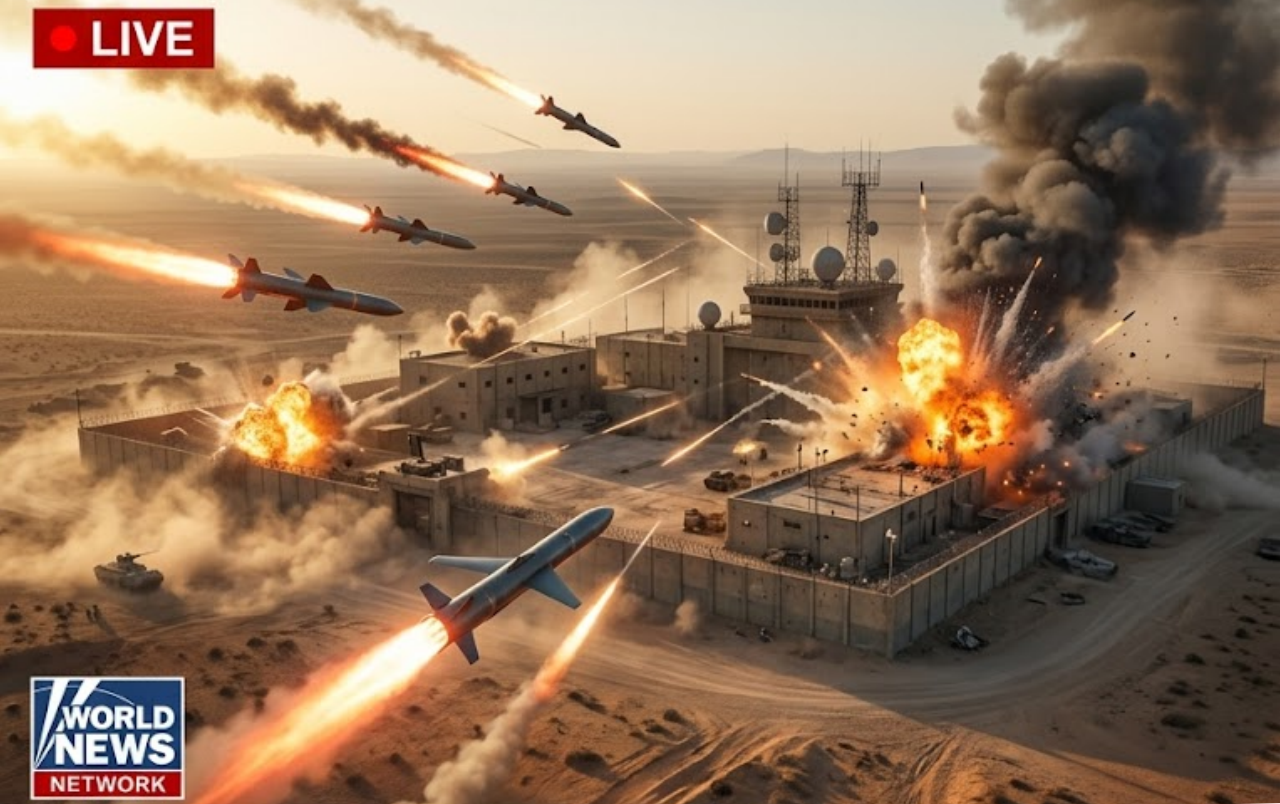
In reality, the conflict between Iran and Israel has involved significant but conventional missile exchanges. Iranian missile salvos targeting Israeli population centers and military infrastructure have been intercepted by air defenses, with civilian casualties and infrastructure damage reported in some areas. Israel has also conducted extensive air operations aimed at degrading Iran’s missile launcher capability, reflecting a long campaign to reduce Tehran’s strike options.
Israeli forces have also targeted senior Iranian military leaders in previous operations, but these actions have involved airstrikes and intelligence‑driven missions, not confirmed cruise missile hits. There is no widely corroborated evidence that a mass decapitation of Israeli military leadership has occurred as a result of Paveh missile strikes. Coverage of senior leadership fatalities tends to be precise and verified, but current reputable sources do not support the claim of ten generals killed in one incident.
The propagation of dramatic narratives like “Israel couldn’t stop it” is common in contemporary information environments, particularly amid active conflicts where state media and aligned outlets seek to bolster morale or influence international opinion. Without independent confirmation, such claims should be understood in the context of propaganda and psychological warfare, rather than established fact.
In summary, while Iran’s Paveh cruise missile represents a long‑range strike capability that could theoretically threaten deep targets, there is no verified reporting that Paveh missiles have killed ten IDF generals or that Israel’s defenses failed utterly. Ongoing missile exchanges between Iran and Israel continue to be a highly dynamic and complex aspect of the broader regional conflict, with credible reporting emphasizing broad impacts on civilians, infrastructure, and military readiness rather than specific elite casualties.