In the volatile 2026 conflict involving the United States and Iran, the strategic Strait of Hormuz has become one of the world’s most contested battlegrounds. Iran’s continued control of this vital waterway has choked global oil traffic and challenged US naval dominance — a pressure point that now appears to have forced the American military to pivot tactics under intense conditions.
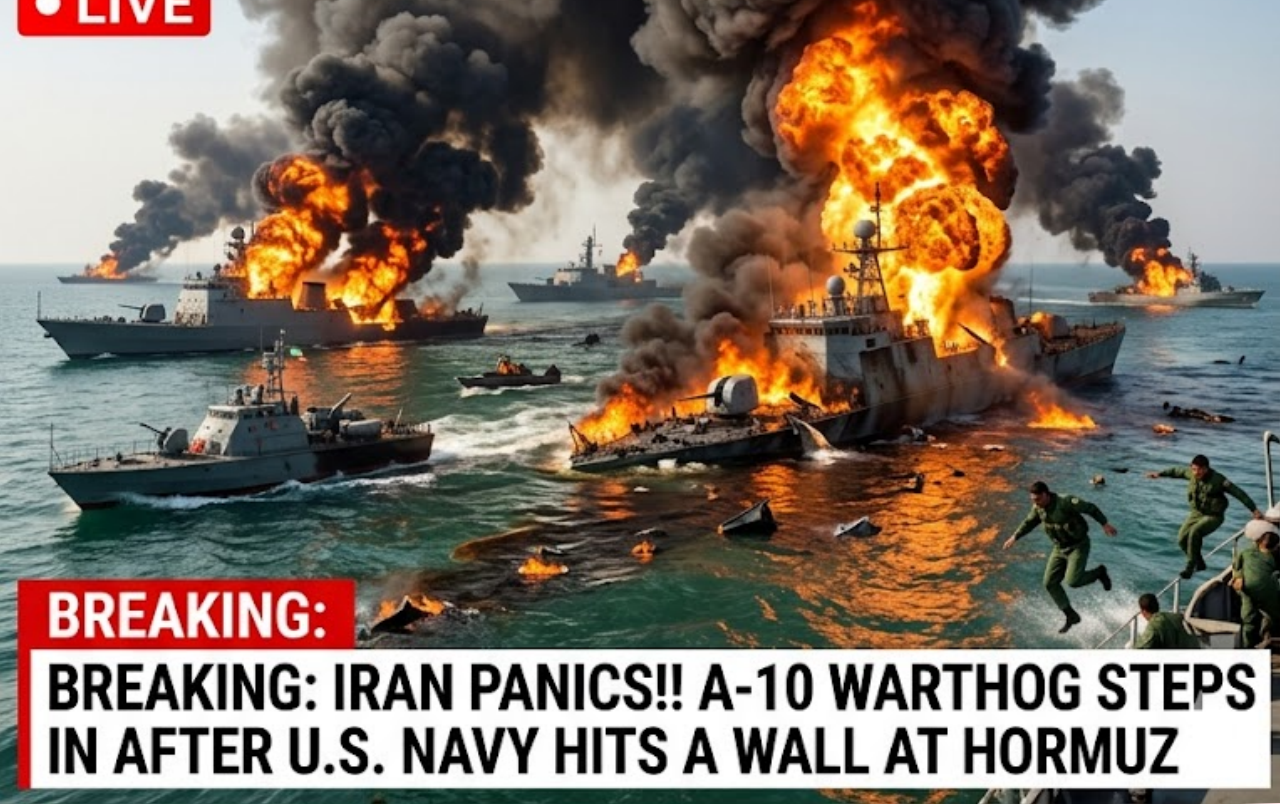
Reports over the past 36 days have shown that despite massive air and naval operations, the US Navy has struggled to fully secure the strait against Iranian asymmetric defenses, including coastal missile systems, fast‑attack boats, drones, and sea mines. These forces have effectively created a chokehold on a route that normally carries about 20% of the world’s oil shipments, significantly disrupting shipping and sending global energy prices higher.
Amid this stalemate, a growing role for Fairchild Republic A-10 Thunderbolt II (“Warthog”) aircraft has emerged. Traditionally known for close air support and ground‑attack roles, A‑10s have been increasingly committed to operations over the Persian Gulf and around Hormuz, flying interdiction and maritime patrol missions to suppress Iranian fast boats and other tactical threats.
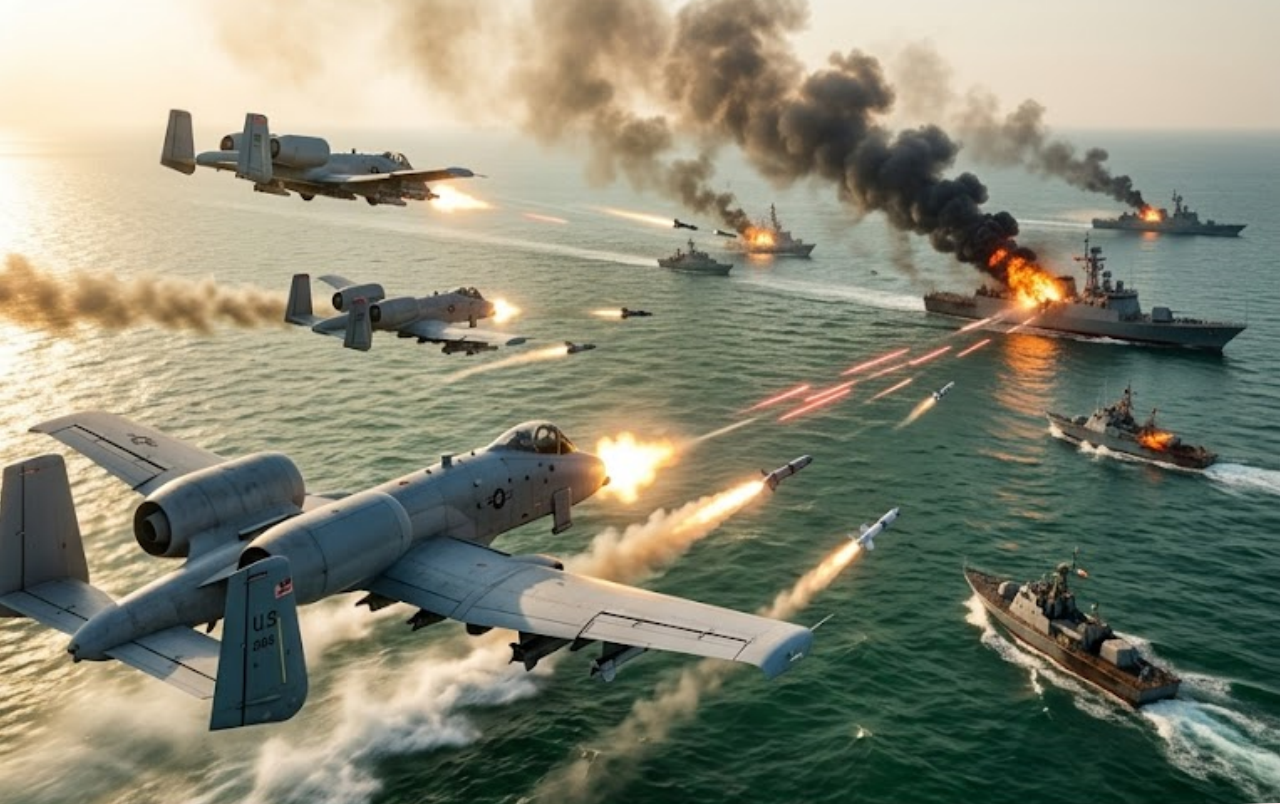
Then came the shocking incident reported this week: Iranian state‑linked media claims their air defenses shot down a US A‑10 near the strait, releasing video footage they allege shows the aircraft being struck. Independent verification of these claims is still pending, and US officials have not yet publicly confirmed the details. However, multiple sources — including US media — have reported that an A‑10 did crash near the Strait of Hormuz on the same day a US F‑15E was shot down over Iran. The lone A‑10 pilot was reportedly rescued after ejecting safely, according to unnamed US officials cited by The New York Times.
The deployment of A‑10s in this theater reflects a broader shift in American tactics. Facing a highly mobile and dispersed Iranian defense network, US forces have resorted to using rugged aircraft like the Warthog to engage low‑altitude threats that naval missiles and high‑altitude jets have struggled to neutralize. Their heavy GAU‑8 Avenger cannon and ability to loiter over a target area makes them useful in suppressing small, fast moving sea and ground targets that otherwise evade traditional naval engagements.
For Iran, the appearance of A‑10s in combat zones — and the reported loss of one — has been portrayed domestically as evidence of American frustration and escalation. Tehran is using these developments to emphasize that its defenses remain potent and that foreign forces have not achieved the decisive dominance they had hoped for.
Strategically, this shift highlights how even a technologically superior force like the US military can encounter unexpected resistance when a smaller but well‑prepared adversary exploits geography, asymmetric tactics, and air defense networks. With the Strait of Hormuz still effectively blocked and Tehran unlikely to lift its control anytime soon, the conflict continues to test the limits of conventional and unconventional warfare in one of the world’s most geopolitically sensitive regions.