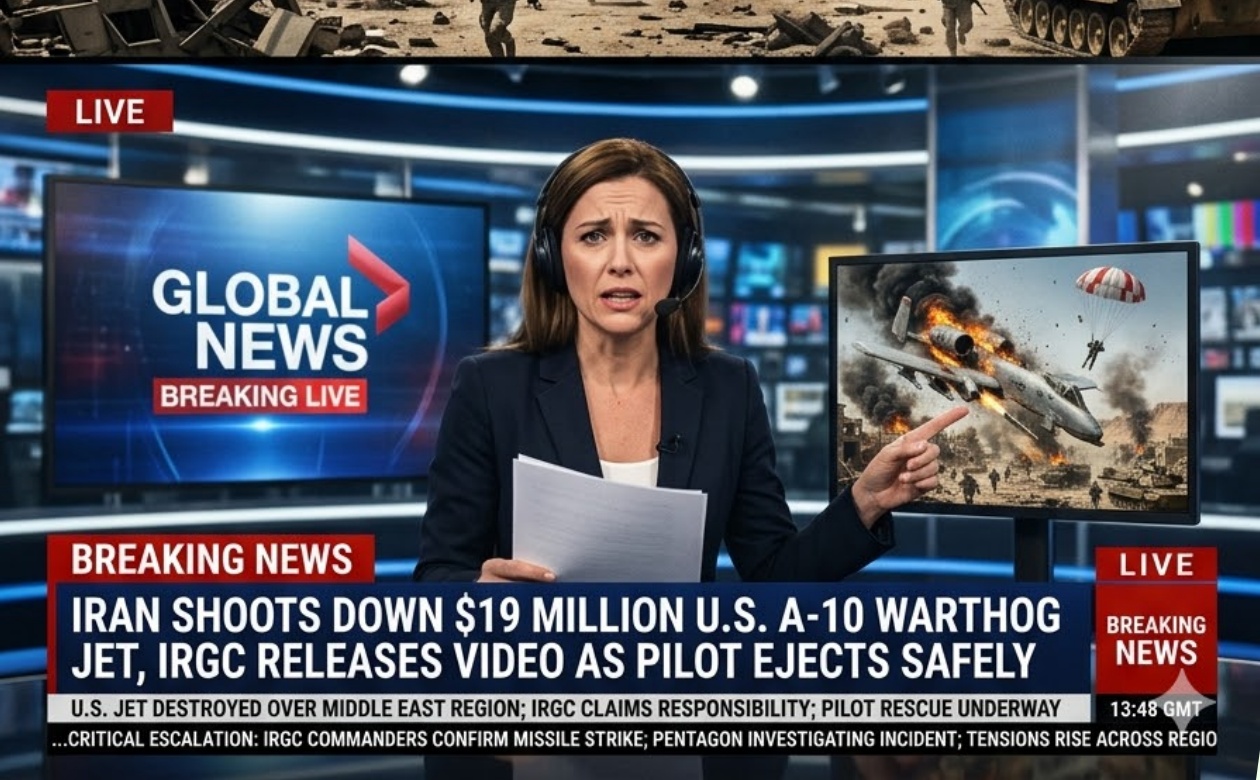
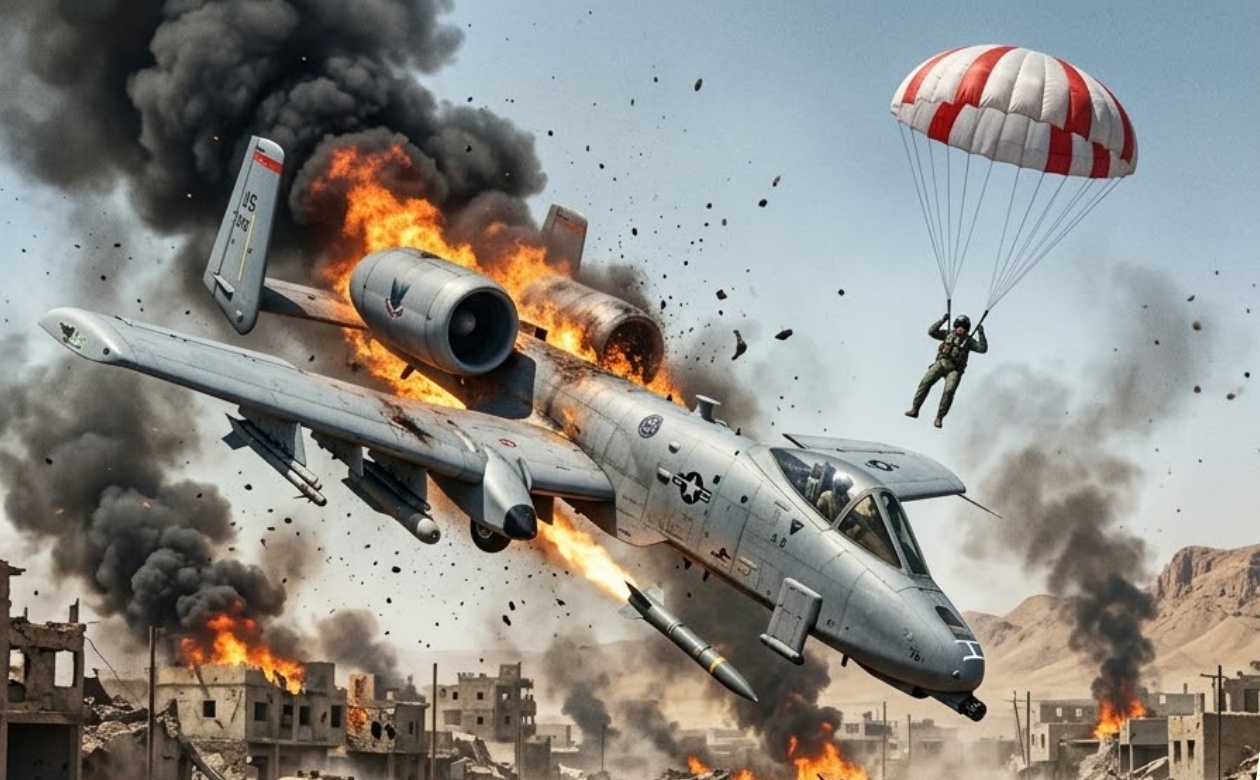
In a dramatic escalation of the ongoing conflict between the United States and Iran, Iranian state media and military sources claim that their air defense forces have shot down a U.S. Air Force A‑10 Thunderbolt II “Warthog” attack aircraft near the Strait of Hormuz, releasing what they say is video footage of the strike. According to these reports, the aircraft was engaged by Iranian missiles and subsequently crashed into the Persian Gulf, marking one of the most significant aircraft losses in the conflict so far.
The Fairchild Republic A‑10 Thunderbolt II, often nicknamed the “Warthog”, is built for survivability, low‑altitude operations, and close air support. It’s valued at roughly $18–$19 million per unit, excluding armament and operational costs, making it both a crucial asset and a costly loss for U.S. forces.
Despite the Iranian claim and released footage, U.S. officials have not yet issued a full public confirmation about how the A‑10 was lost. However, American sources and multiple news outlets report that the aircraft was indeed struck and subsequently crashed, with the lone pilot managing to eject safely and being rescued by U.S. forces after the incident. This safe ejection and rescue highlight the effectiveness of pilot survival systems even in heavily contested airspace.
The reported shoot‑down occurred amid intense military operations that day, which also saw another U.S. combat aircraft, an F‑15E Strike Eagle, shot down over Iranian territory. One of its two crew members was rescued, while the other remained missing, prompting a high‑stakes search and rescue effort.
Iran’s release of video footage serves multiple strategic purposes: It aims to demonstrate that Tehran’s defense systems remain operational and potent, countering claims of Iranian military degradation, and to influence both domestic and international perception of the conflict’s dynamics. The Islamic Revolutionary Guard Corps (IRGC) has been active in publicizing such material, framing the engagement as a defensive success against a technologically superior adversary.
From a tactical perspective, the loss of an A‑10 in this theater underscores the evolving risks of combat operations near the Strait of Hormuz and Iranian airspace. Even aircraft designed for toughness and resilience can be vulnerable when facing layered air defense systems in congested and contested environments.
Strategically, the incident will likely have reverberations across military planning and diplomatic efforts. For the United States, losing a combat aircraft to hostile fire — even with the pilot safely recovered — challenges prior assertions about air superiority in the conflict zone. For Iran, showcasing the downing of a U.S. warplane bolsters its narrative of resistance and capability in the face of sustained U.S. military pressure.
As the situation continues to develop, independent verification of battlefield footage and further official statements from both sides will be crucial in understanding the full implications of this dramatic event.