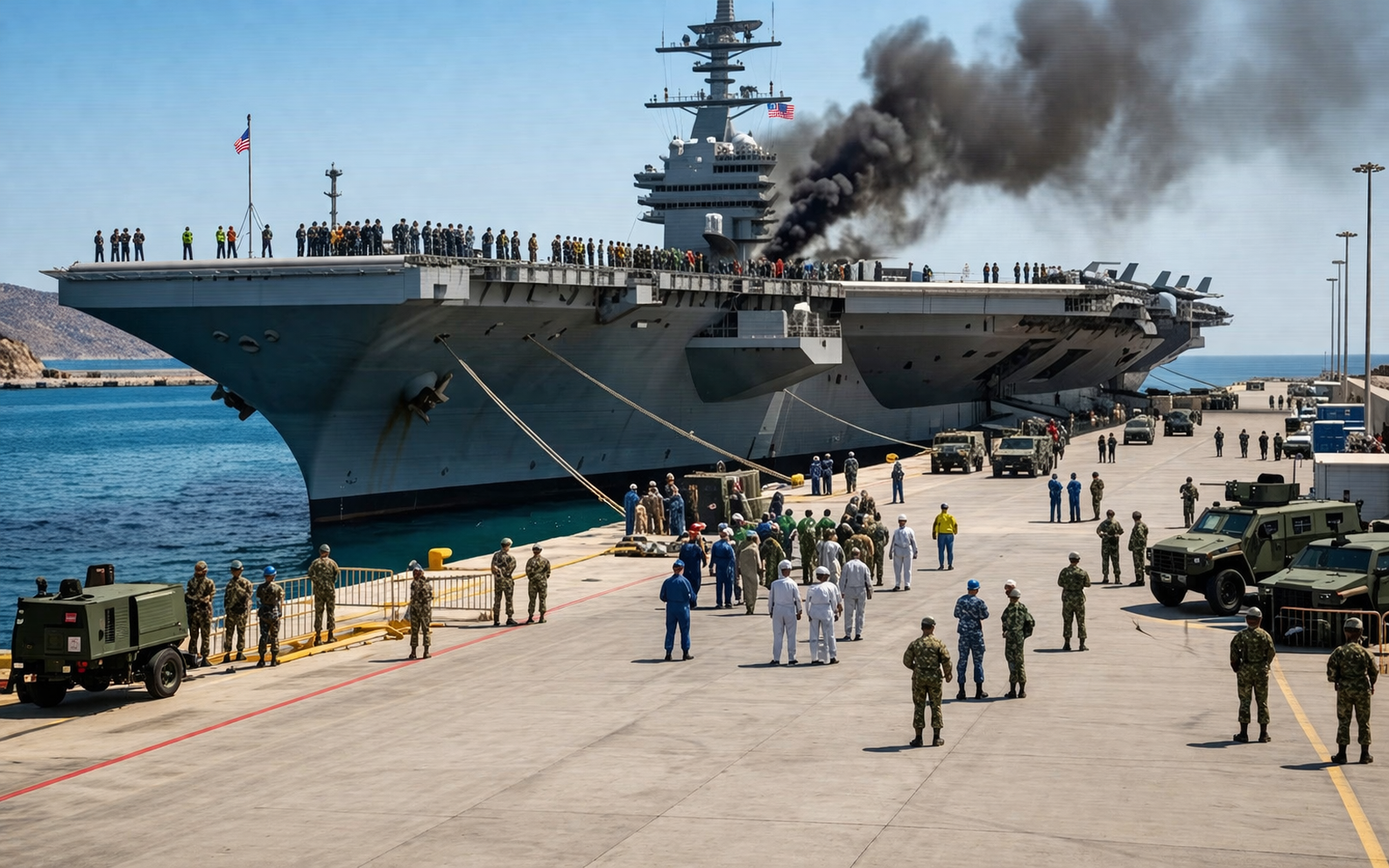
A striking indication of pressure on U.S. naval strength has emerged as the USS Gerald R. Ford—widely regarded as the most advanced and costly aircraft carrier ever built—has arrived at Souda Bay in Crete for urgent repairs. This unexpected stop has taken the vessel out of active duty during a critical phase of tensions involving Iran. Although the U.S. Navy describes the situation as routine maintenance following a reported fire in a laundry area, many observers suspect that the official explanation may not tell the full story.
Valued at around $13 billion, the carrier has played a leading role in operations across the Red Sea and in missions targeting forces aligned against U.S. interests. It reached Crete on March 23 after an extended period at sea. According to official statements, a fire on March 12 damaged close to 100 sleeping quarters and affected crew living spaces. Yet, the timing of this incident—combined with earlier mentions of technical glitches and system irregularities during encounters with Iranian missiles and drones—has led analysts to question whether the ship may have sustained more serious, combat-related damage.
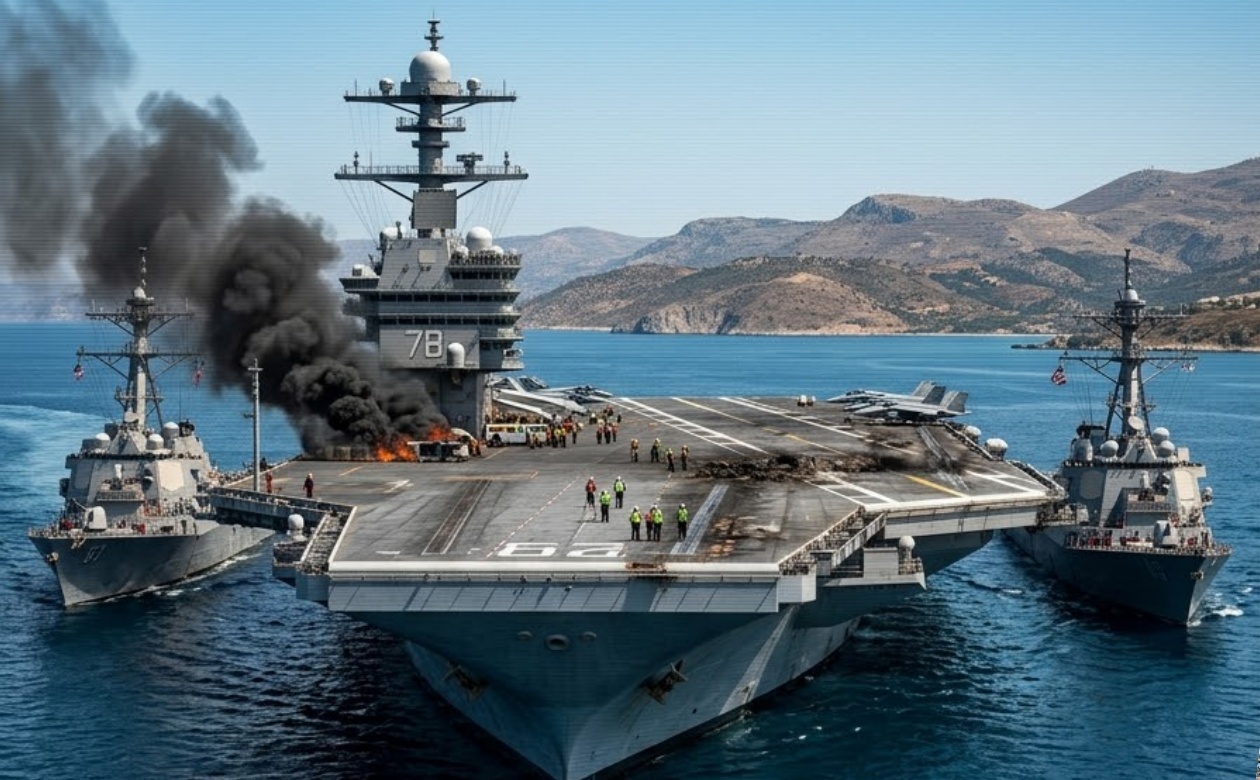
Recent satellite imagery and footage from the area show the enormous carrier docked at a NATO facility, surrounded by repair teams. At the same time, its aviation activities have been significantly scaled back. This reduction removes a key element of U.S. military capability in the region, especially at a moment when air power is crucial. Experts warn that the carrier’s absence creates a noticeable gap, forcing other already strained resources to compensate.
Meanwhile, Iranian officials have been quick to respond, portraying the situation as evidence of American weakness. Some have gone as far as labeling the carrier ineffective, suggesting that its current condition is the result of earlier successful attacks and sustained electronic warfare pressure.
Beyond immediate speculation, the situation highlights a broader issue: the toll of prolonged deployments on even the most advanced military assets. After spending around nine months at sea with repeated extensions, the Gerald R. Ford appears to be facing mounting maintenance challenges. This raises questions about the long-term sustainability of high-intensity operations, especially when confronting unconventional and persistent opposition.
Ultimately, this development underscores a larger reality—no military system is immune to strain. What has been presented as a minor technical issue could, in fact, point to deeper vulnerabilities. As the carrier remains sidelined in the Mediterranean, far from the front lines, it serves as a reminder that endurance and strategic pressure can shift the balance, even against the most powerful forces.