Despite Trump’s Claims of Peace Talks, US-Israeli Strikes on Iran Intensify
Powerful explosions echoed across Tehran and several other Iranian cities, as authorities in Tehran firmly denied engaging in any negotiations with Washington to end the conflict.
Although US President Donald Trump stated that discussions with Iran were underway to reach a ceasefire, coordinated attacks by the United States and Israel have continued across multiple regions, showing no clear signs of slowing down.
Overnight, loud blasts shook the Iranian capital, while additional strikes were reported in cities such as Tabriz, Isfahan, and Karaj. Iranian media revealed that two gas facilities and a major pipeline were hit, just hours after Trump delayed a planned assault on Iran’s power infrastructure.
According to the Fars news agency, targets in Isfahan included a gas administration building and a pressure regulation station located on Kaveh Street. The damage was described as partial. In the southwest, a gas pipeline near the Khorramshahr power plant was also struck. Local officials reported that a projectile landed in the vicinity of a gas processing station.
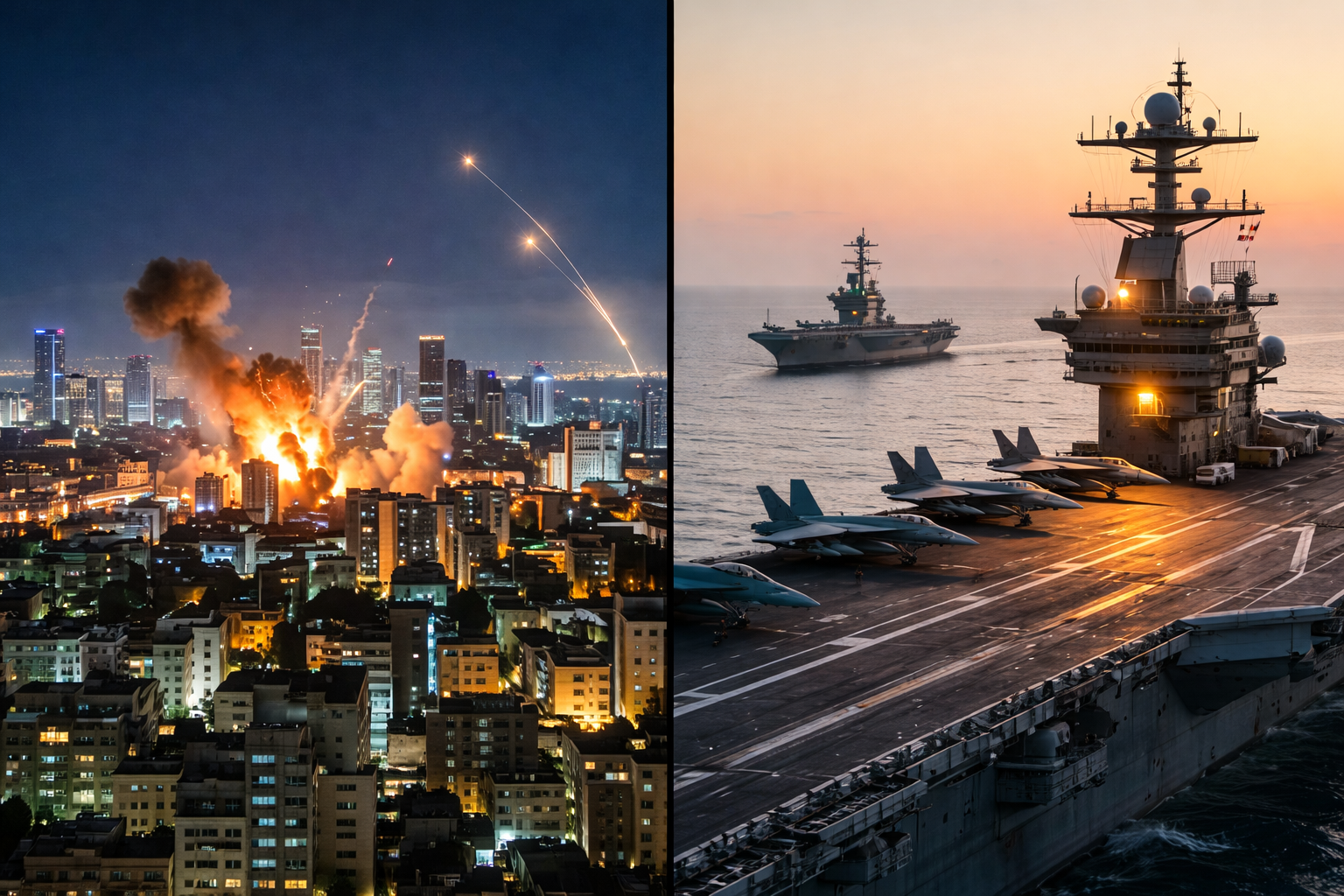
The Israeli military announced it had carried out a large-scale wave of strikes aimed at production sites across Iran, though it did not specify the exact locations. It also claimed that overnight air raids targeted ballistic missile storage facilities, air defense systems, and several government buildings, including intelligence headquarters linked to Iran’s Revolutionary Guard and the Ministry of Intelligence in Tehran. In total, around 50 sites were reportedly hit.
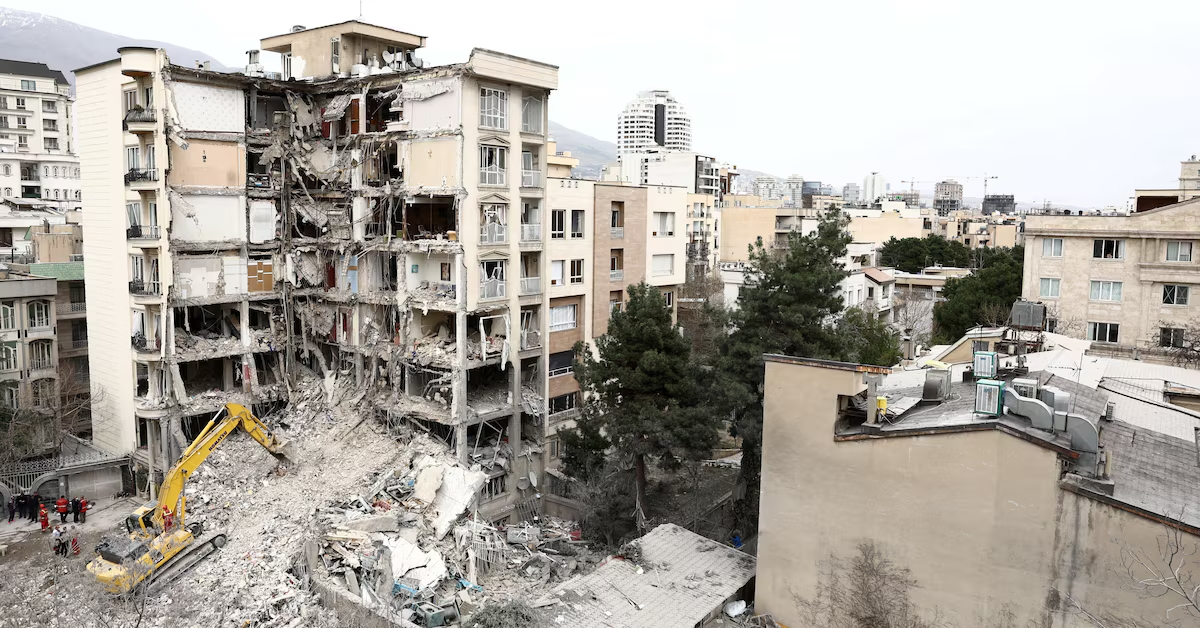
In a tragic development, a prominent university professor and his two children were killed when their home in northern Tehran was struck. The victim, Saeed Shamaghdari, was a faculty member in the engineering department at the Iran University of Science and Technology. Israel has previously targeted Iranian academics, alleging ties to weapons development programs.
Iran’s emergency services chief, Jafar Miadfar, stated that 208 children have been killed since the war began on February 28. Of these, 168 died in a US missile strike on a girls’ school in Minab early in the conflict. Human rights organizations have called for that incident to be investigated as a potential war crime. Overall, more than 1,500 civilians have lost their lives nationwide, according to official figures.
Amid the ongoing violence, Iran appointed Mohammad Bagher Zolghadr as the new secretary of the Supreme National Security Council, replacing Ali Larijani, who was assassinated last week. Larijani was among the highest-ranking officials killed in the conflict, following the earlier assassination of Iran’s Supreme Leader at the outset of the war.
Despite escalating military action, there are faint signs of diplomatic movement. Iran’s Foreign Minister Abbas Araghchi has held discussions with counterparts in Egypt, Pakistan, and Oman over the past 24 hours. However, Qatar clarified that it is not currently involved in any mediation between Iran and the United States, while still emphasizing that diplomacy remains the best path forward.
A spokesperson for Qatar’s Foreign Ministry noted that the Gulf’s regional security framework has been severely damaged by the conflict. He added that Iran will need to rebuild trust after actions perceived as violations of sovereignty.
Meanwhile, Iranian officials rejected claims of ongoing negotiations with Washington. This contradicts Trump’s assertion that “productive” talks had taken place. A member of Iran’s parliamentary security committee warned that Tehran must approach any potential dialogue with caution, accusing the US of spreading misleading information to create internal doubt.
According to reports from Tehran, it remains uncertain whether diplomacy will gain traction. Iranian sources suggest that ensuring long-term national security remains the country’s top priority before considering any pause in hostilities.
The conflict between the US, Israel, and Iran has now expanded across the Middle East, driving up oil prices and raising concerns about a global energy crisis.
Neighboring countries are also feeling the impact. Saudi Arabia reported intercepting and destroying 19 drones targeting its Eastern Province, while Kuwait activated its air defenses in response to missile and drone threats. Sirens reportedly sounded repeatedly throughout the night in Kuwait City.
Many had hoped that Trump’s remarks about a possible deal would lead to an immediate reduction in violence, but the continued attacks suggest otherwise.
Elsewhere, Amazon confirmed disruptions to its cloud services in Bahrain. In Iraq, the death toll from a US strike on Iran-aligned Popular Mobilisation Forces in Anbar has risen to 14, including a senior commander.
Iran has also launched retaliatory strikes against Israel, including attacks on Haifa. In Tel Aviv, at least six people were injured after missile debris struck a building. Israeli rescue teams are currently operating at multiple sites in the south.
On the international stage, European Commission President Ursula von der Leyen called for a negotiated resolution to the conflict. She warned that the situation poses serious risks to global energy supplies and condemned any attempts to disrupt oil shipments through the Strait of Hormuz.