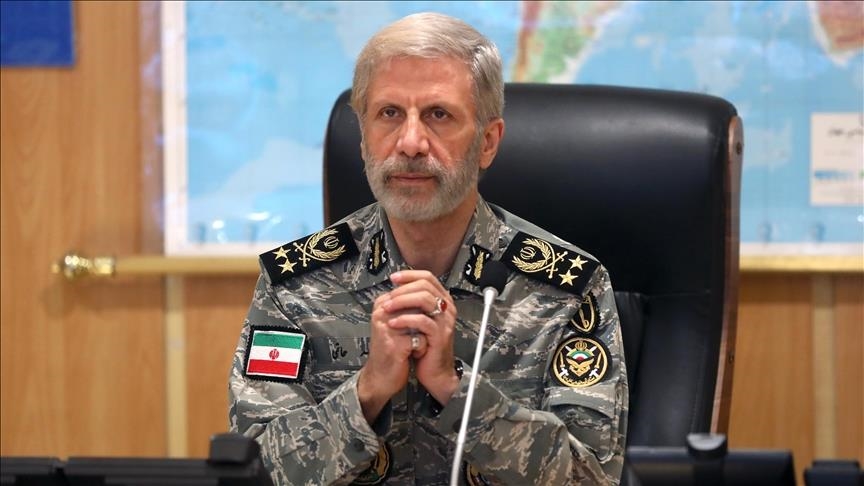
The rhetoric between Tehran and Washington has intensified sharply, reaching what many observers describe as a fever pitch following a stark ultimatum issued by Iran’s military leadership. By explicitly referencing the possibility of a ground invasion, Iran’s Army Chief is signaling a full activation of the country’s defensive doctrine—a doctrine deeply rooted in deterrence, resilience, and the ability to absorb and respond to external aggression. This kind of messaging is rarely incidental; it is carefully calibrated to communicate both capability and resolve.
At its core, the warning is aimed squarely at the United States and its regional allies. Iran is emphasizing that any attempt at direct military intervention—particularly a ground operation—would face not only conventional resistance but also a complex web of asymmetric warfare tactics. These include the use of proxy forces, missile systems, cyber capabilities, and guerrilla-style engagements across difficult terrain. Military analysts frequently point out that Iran’s geography alone—mountainous regions, deserts, and densely populated urban centers—would make any invasion logistically and operationally challenging. Combined with Iran’s “forward defense” strategy, which pushes potential conflict zones beyond its borders through allied groups, the cost of invasion could quickly escalate beyond acceptable limits.
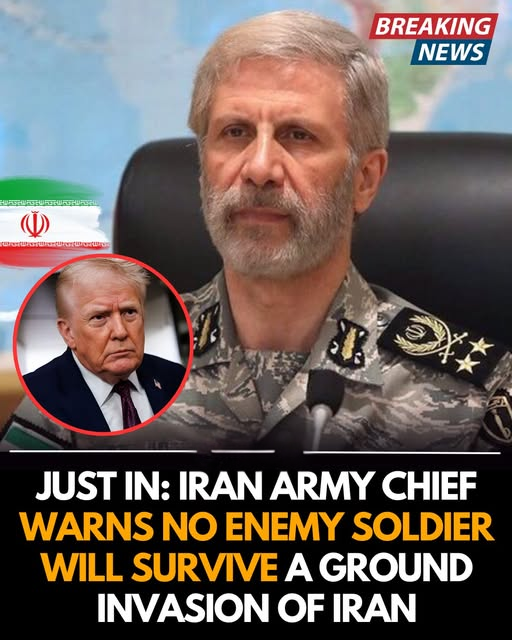
The symbolic inclusion of Donald Trump’s image in related messaging underscores the personalized nature of this confrontation. It reflects Tehran’s framing of the current tensions as a direct consequence of past and ongoing U.S. policies, particularly the “maximum pressure” campaign that combined economic sanctions with military signaling. By invoking this imagery, Iran is not only addressing current policymakers but also reinforcing a narrative for domestic and regional audiences about standing firm against external coercion.
Historically, Iran’s military doctrine has relied heavily on layered defense systems. This includes extensive underground facilities—used to store missiles, protect command infrastructure, and ensure continuity in the event of strikes—as well as the mobilization of large paramilitary forces such as the Basij. These elements are designed to complicate enemy targeting, prolong conflict, and create uncertainty for any adversary considering direct action. Statements like the recent ultimatum are therefore part of a broader strategy: to project strength, unify domestic sentiment, and signal to foreign intelligence and defense planners that escalation would come at a significant and unpredictable cost.
In the background, however, there are indications that diplomatic channels remain active. While public rhetoric continues to escalate, backchannel communications—often facilitated by intermediaries—are reportedly working to prevent miscalculation. This dual-track approach, where confrontation and diplomacy coexist, is characteristic of high-tension geopolitical standoffs.
For now, both Tehran and Washington appear locked in a high-stakes game of brinkmanship. Each side is attempting to assert dominance without crossing the threshold into open conflict. Yet the margin for error is thin. A misinterpreted signal, an unintended incident, or a disproportionate response could quickly spiral into a broader confrontation. Meanwhile, global markets—particularly energy—remain highly sensitive to these developments, with even the perception of instability in the region capable of triggering significant economic ripple effects.