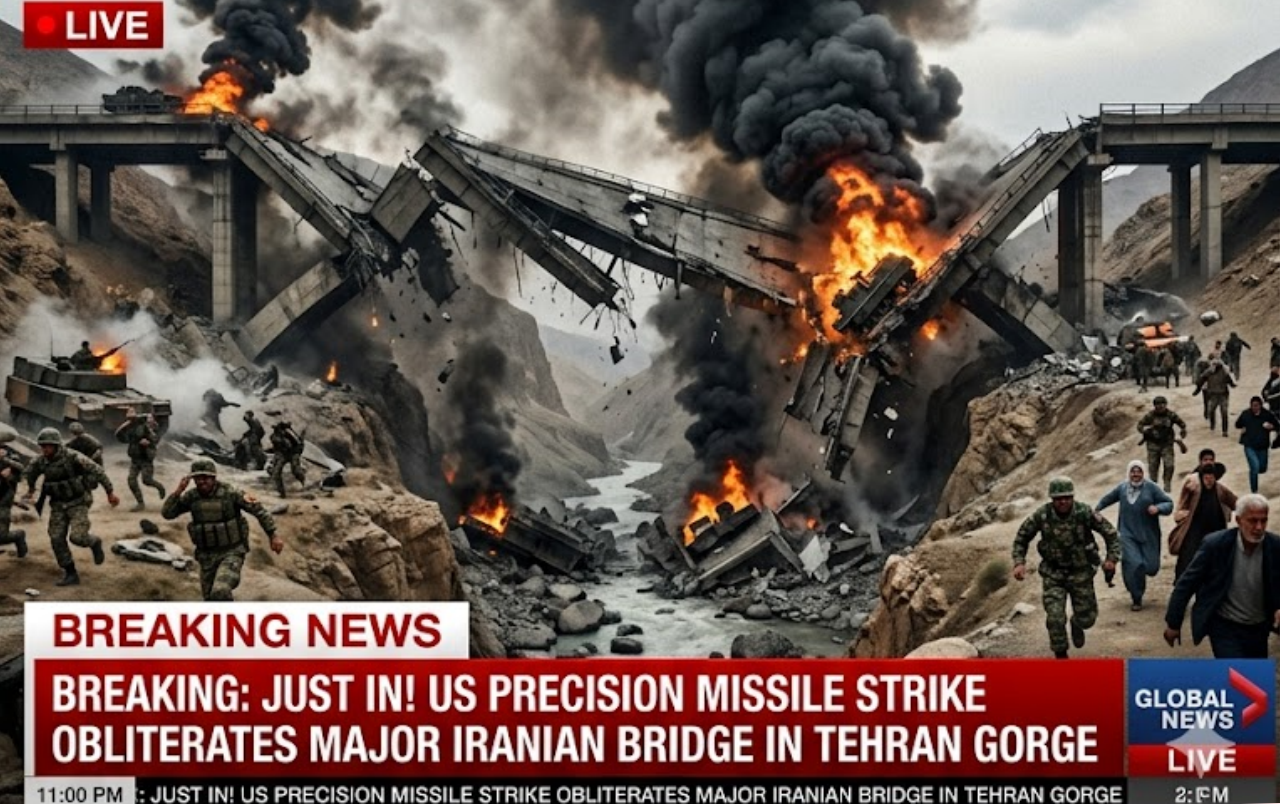
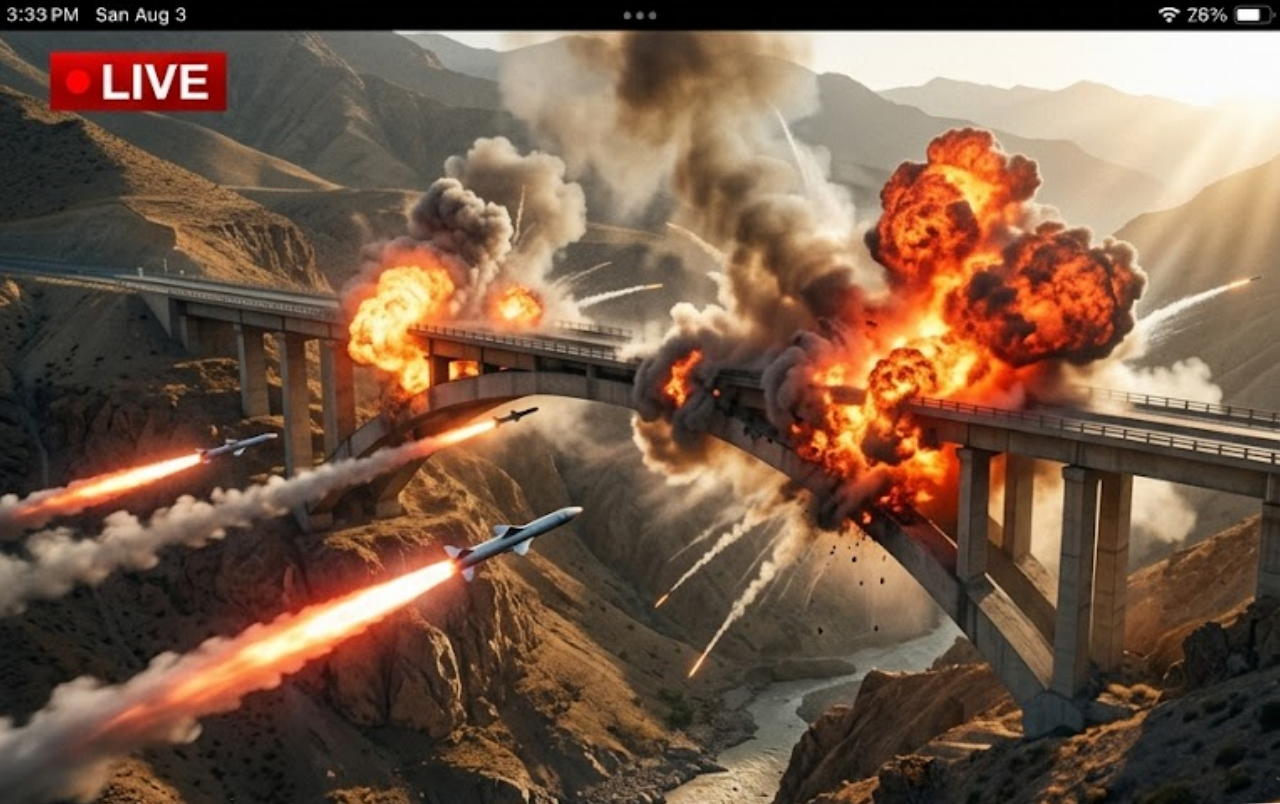
A major escalation in the ongoing U.S.–Iran conflict has unfolded following reports that American forces carried out a precision missile strike targeting a key bridge near Tehran, causing catastrophic structural collapse and raising fresh concerns about the widening scope of the war. The attack, reportedly conducted with high-precision munitions, struck a critical transport link in the mountainous corridor west of the capital, an area often described as a vital artery connecting Tehran to surrounding regions.
Images and footage emerging from the aftermath show collapsed road sections, twisted steel frameworks, and heavy damage to nearby infrastructure, highlighting the destructive impact of the strike. Emergency responders rushed to the scene as injured civilians were transported to hospitals already under strain from weeks of escalating hostilities.
U.S. officials have not released full operational details, but sources indicate the strike was intended to disrupt Iranian military logistics, particularly the movement of missile systems and equipment between Tehran and western launch zones. Some defense analysts suggest that bridges like the one targeted play a dual role — serving civilian traffic while also functioning as key supply routes for military operations.
However, Iranian authorities have strongly condemned the attack, describing it as a direct strike on civilian infrastructure. Officials in Tehran emphasized that the bridge had no confirmed military activity at the time of the strike and warned that such actions could constitute violations of international law. The incident has further fueled tensions, with Iran vowing retaliation and accusing Washington of deliberately targeting economic and transportation lifelines.
The strike comes amid increasingly aggressive rhetoric from U.S. leadership. In recent days, President Donald Trump has openly threatened to target Iranian infrastructure — including bridges and power plants — if Tehran refuses to comply with demands related to reopening the Strait of Hormuz, a critical global oil route.
Strategically, the destruction of a major bridge near Tehran carries significant implications. Beyond immediate physical damage, it disrupts transportation networks, emergency response routes, and economic activity, potentially isolating regions and complicating both civilian life and military coordination. Experts warn that repeated attacks on such infrastructure could lead to long-term instability within Iran’s urban systems.
International reaction has been swift and divided. While some U.S. allies argue that targeting logistical routes may weaken Iran’s military capabilities, others — including humanitarian organizations and legal experts — have expressed alarm over the growing focus on infrastructure targets, warning of escalating civilian harm and the erosion of wartime norms.
As the conflict intensifies, the destruction of this key bridge underscores a troubling shift toward high-impact strikes on critical infrastructure, signaling that the war is entering an even more dangerous and unpredictable phase. With diplomatic efforts faltering and retaliatory threats mounting, the risk of broader regional escalation continues to rise — leaving both military planners and civilians bracing for what may come next.