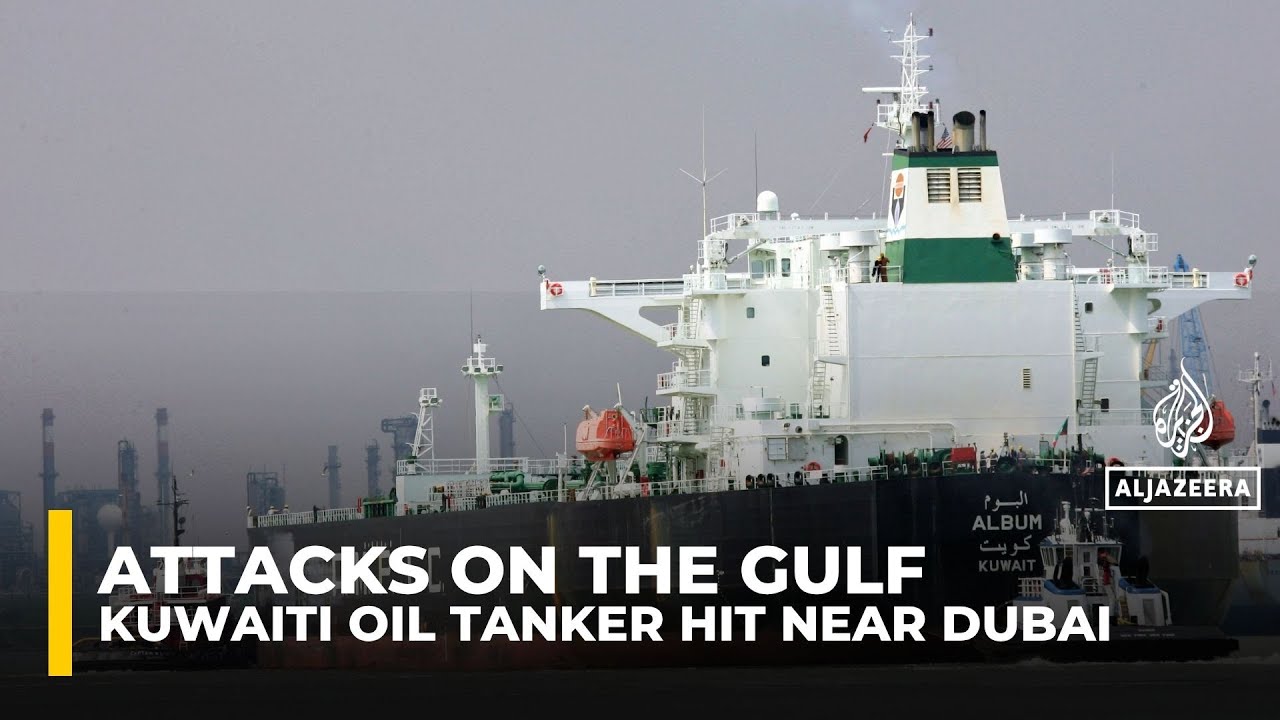
Flames lit up the night at one of the world’s busiest shipping hubs—but what could have been a catastrophic disaster stopped just short of the worst-case scenario.
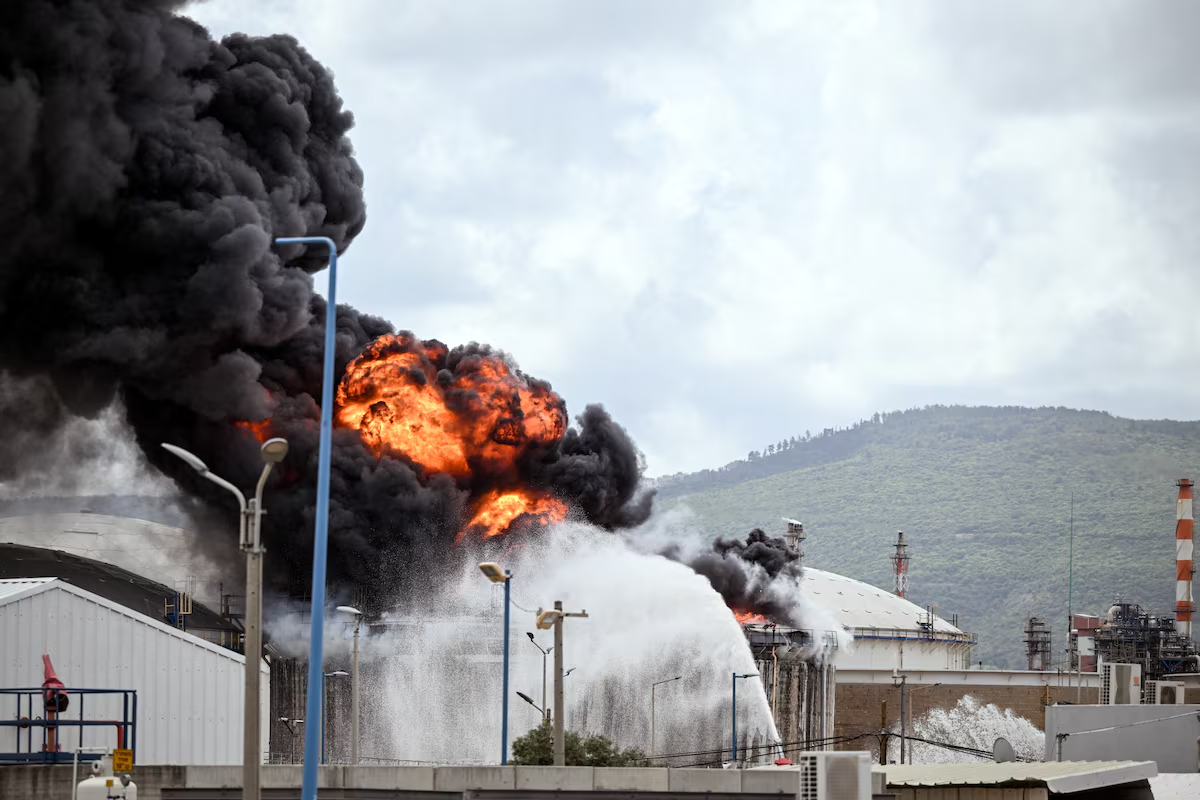
At Dubai Port, a sudden explosion rocked a docked oil tanker following what officials described as an Iranian-linked attack. Within seconds, fire engulfed part of the vessel, sending thick smoke into the air and triggering emergency alarms across the harbor. For a moment, fears surged: was this the beginning of a major environmental and economic crisis?
Then came the relief.
Kuwaiti authorities quickly confirmed that no oil spill had occurred and, even more critically, no injuries were reported. Despite the intensity of the fire, containment systems held, and emergency crews acted with remarkable speed to prevent the flames from spreading to nearby ships or infrastructure.
But the incident still sent shockwaves far beyond the port.
Dubai is not just another harbor—it is a key artery in the global النفط trade, handling massive volumes of crude and refined products every day. A single tanker fire, especially one linked to a geopolitical conflict, raises immediate concerns about supply disruptions, maritime security, and the safety of one of the world’s most vital shipping corridors.
According to initial reports, the attack may have involved drones or precision strikes targeting the tanker while it was docked. If confirmed, this would mark yet another escalation in a growing pattern: energy infrastructure and shipping vessels becoming direct targets in the widening regional conflict.
And that’s what makes this moment so significant.
Even though the damage was contained, the message was clear—no location is entirely safe. Not ports, not tankers, not even heavily monitored commercial zones. The خطوط between military and civilian targets are becoming increasingly blurred.
Global markets reacted almost instantly. Oil prices showed signs of volatility as traders assessed the risk of further attacks on shipping routes across the Gulf. Insurance costs for tankers could rise. Shipping companies may reconsider routes. And governments are now being forced to reevaluate the security of critical maritime lanes.
Yet, amid the tension, one fact stands out:
This could have been far worse.
Had the fire spread or triggered a large-scale oil spill, the environmental consequences would have been devastating—polluting coastlines, disrupting marine ecosystems, and shutting down port operations for days or even weeks.
Instead, disaster was narrowly avoided.
But the warning remains.
Because in a conflict where missiles, drones, and strategic strikes are becoming more frequent, even a “contained” incident like this signals a dangerous shift. The battlefield is expanding—beyond land, beyond air, and now directly into the heart of global trade routes.
And next time… containment may not be enough.