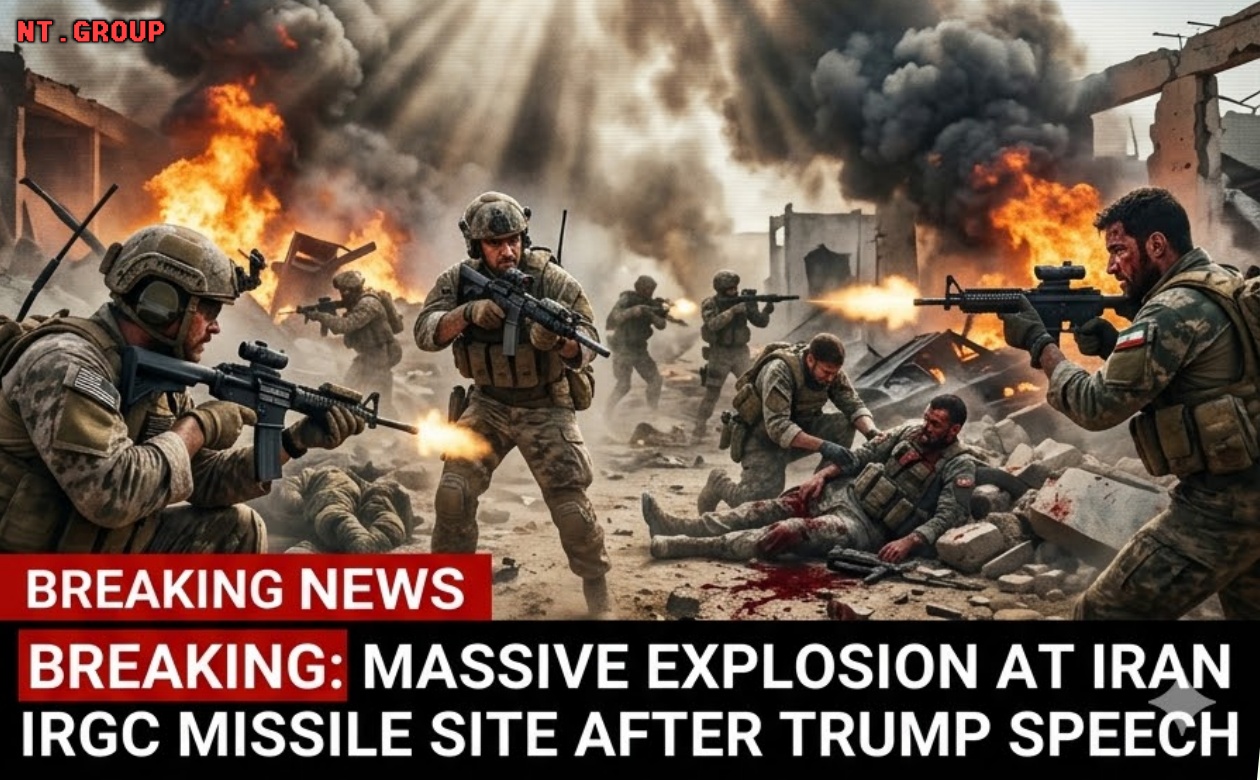
The sky over Isfahan lit up in flames.
Just hours after Donald Trump escalated his rhetoric about the war—warning of intensified operations and declaring major progress—a سلسلة of massive explosions rocked central Iran, shaking one of the country’s most critical military regions.
At the center of it all: an IRGC-linked weapons and missile complex.
Videos circulating online showed fireballs erupting into the night, followed by thick plumes of smoke rising high above the city. The blasts were powerful enough to be visible from long distances—and, according to reports, were caused by precision strikes using bunker-buster bombs designed to penetrate deep underground.
This wasn’t just another strike.
This was a direct hit on Iran’s military core.
Isfahan is one of the most strategically important locations in Iran. It hosts:
- Missile production and storage facilities
- Ammunition depots
- Nuclear-related infrastructure
Because of this, it has become a primary target in the U.S.–Israel campaign aimed at weakening Iran’s long-range strike capabilities.
And this strike appears to have been one of the most powerful yet.
Reports suggest that 2,000-pound bunker-buster bombs were used—capable of smashing through reinforced concrete and rock before detonating inside underground facilities.
The result?
A chain reaction.
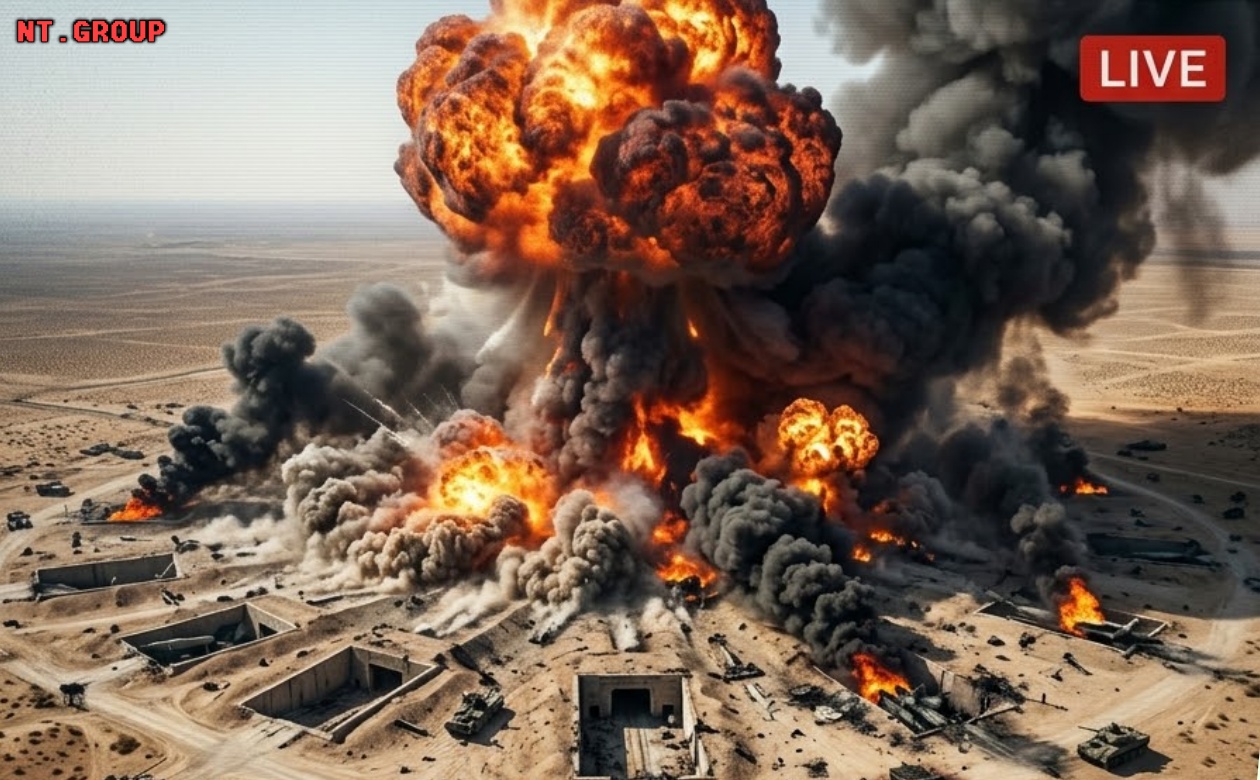
Explosions triggered secondary blasts inside the depot, likely igniting stored munitions and fuel. What began as a targeted strike quickly turned into a massive firestorm—one that may have destroyed significant ذخيرة and equipment inside the complex.
But here’s the critical context:
There is no confirmed evidence that the entire IRGC missile network in Isfahan was destroyed in a single strike.
What experts say instead is more measured—and more realistic:
- Iran’s missile infrastructure has been heavily damaged across multiple sites
- Underground facilities have been hit and partially disabled
- But the overall network is degraded—not eliminated
Still, the timing matters.
The explosions came immediately after Trump’s speech, amplifying their psychological impact. Whether coordinated or coincidental, the message was clear:
The war is escalating.
Strikes are getting deeper.
Targets are becoming more strategic.
And Iran’s most protected sites are no longer safe.
For Iran, the hit to Isfahan is both military and symbolic.
For the U.S. and Israel, it’s a demonstration of reach.
But the aftermath raises bigger questions.
Because every strike like this invites a response.
And Iran has already shown it is willing to retaliate—with missiles, drones, and attacks across the region.
So while the fires in Isfahan may fade…
The consequences of that explosion are just beginning.
Because in this war, every blast doesn’t just destroy a target—
It pushes the conflict one step closer to something much bigger.