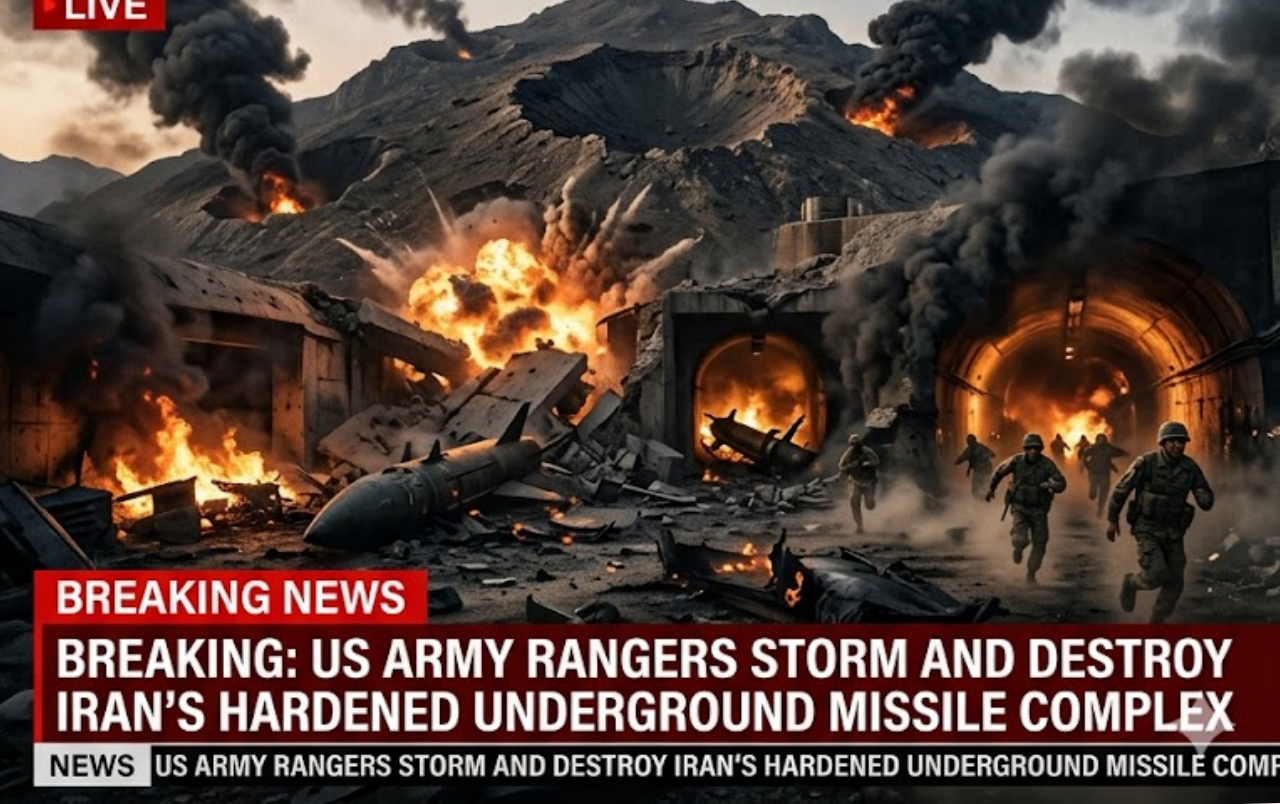
In a dramatic development in the escalating conflict between the United States and Iran, U.S. Army Rangers reportedly carried out a high‑risk ground operation deep inside Iranian territory targeting one of Tehran’s most significant hardened underground missile complexes. The mission marks a departure from the largely air‑centric phase of the war and signals a new level of direct engagement by U.S. special operations forces against deeply buried strategic assets.
Iran has developed an extensive network of underground missile bases and bunkers designed to protect its ballistic and cruise missile arsenals from aerial bombardment. These so‑called “missile cities,” often constructed hundreds of meters beneath mountains and fortified with reinforced entrances, have been a centerpiece of Tehran’s strategy to preserve its long‑range strike capability despite weeks of sustained U.S. and allied air campaigns. Intelligence assessments have highlighted the difficulty of neutralizing such facilities solely through air strikes, as Tehran has repeatedly demonstrated an ability to quickly repair damaged bunkers and return launchers to operation.
Against this backdrop, U.S. military planners authorised a ground insertion by highly trained Army Rangers supported by air assets, artillery, and intelligence units. The primary objective was to penetrate the complex’s outer defenses, engage hostile forces, and completely neutralize the underground missile infrastructure that had been repeatedly used to threaten U.S. regional bases and allied nations. While the exact location of the targeted complex has not been publicly disclosed for operational security reasons, previous reporting has identified multiple Iranian underground missile facilities, including those in western provinces like Kermanshah, which house IRGC missile systems and storage tunnels.
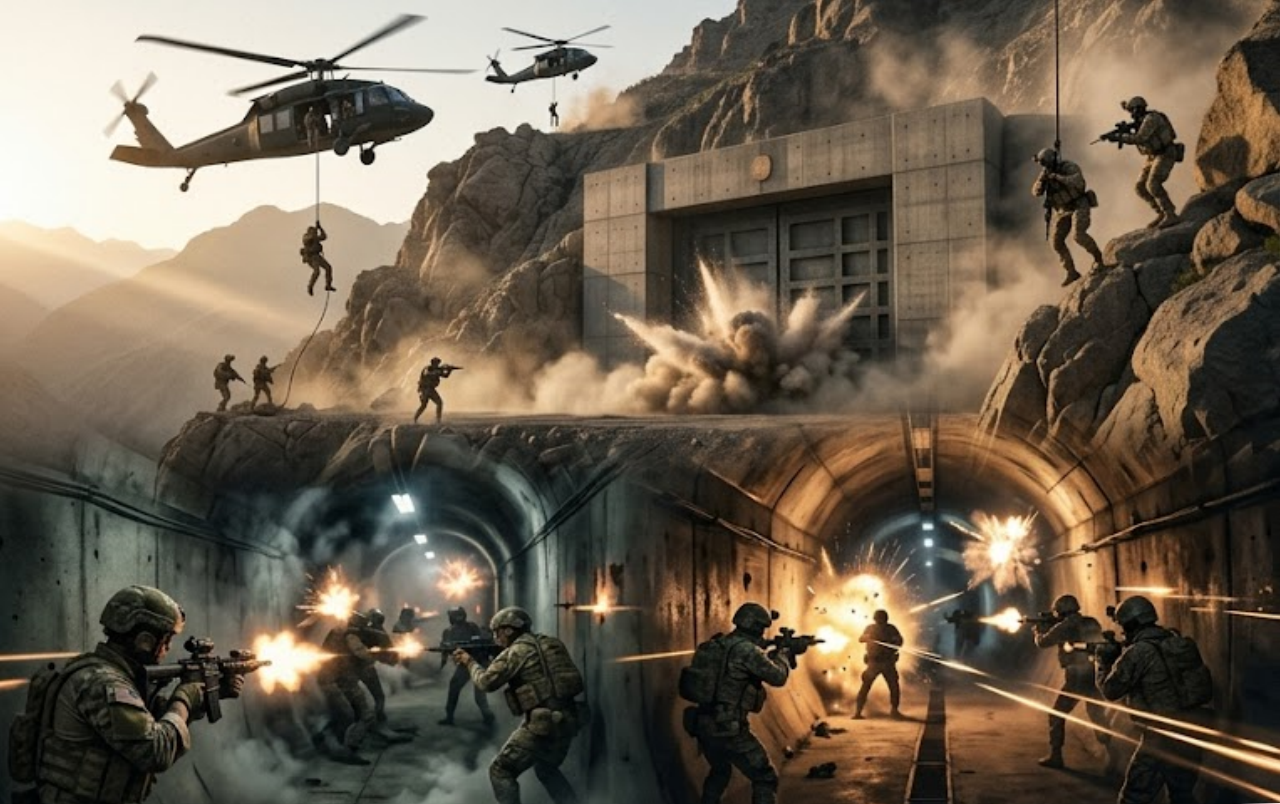
According to descriptions from military insiders and analysts familiar with similar operations, the Rangers navigated through rugged terrain, bypassing minefields and anti‑aircraft systems that surrounded the facility. Once inside the perimeter, they engaged enemy defenders in close quarters and utilised specialized demolition charges to collapse key sections of the missile complex. The objective was not only to destroy missiles and launchers but also to render the underground tunnel network unusable as a future weapons production or deployment hub.
This operation represents one of the few ground raids aimed at strategic infrastructure in the conflict, contrasting sharply with the hundreds of air strikes and long‑range missile barrages that have been the norm. U.S. intelligence officials have repeatedly acknowledged how difficult it has been to degrade Iran’s missile force using air power alone, given the resilience and depth of the underground sites.
While details remain limited, the reported success of the Rangers in eliminating the targeted missile complex could have significant repercussions. Destroying hardened and deeply embedded missile infrastructure is likely to degrade Iran’s ability to sustain large‑scale missile launches against U.S. and allied forces in the region. It also delivers a psychological blow, demonstrating that Tehran’s most secure facilities may no longer be beyond reach. However, analysts caution that Iran’s larger network of underground sites and dispersed launch capabilities still pose challenges, and it may take many similar operations to systematically dismantle them.
As the conflict continues to evolve, this ground operation underscores the increasingly multifaceted nature of military engagement in the Middle East, where precision ground forces are now being used to strike where aerial power alone could not.