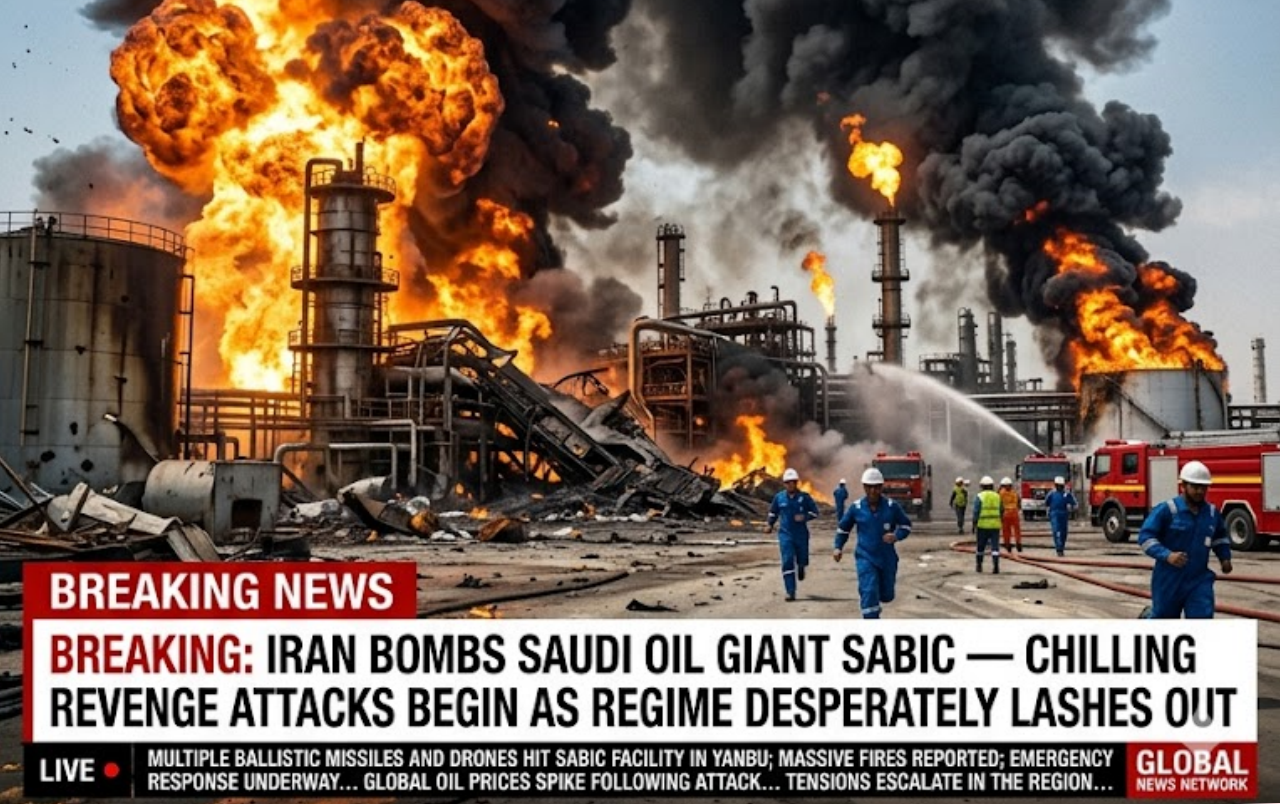
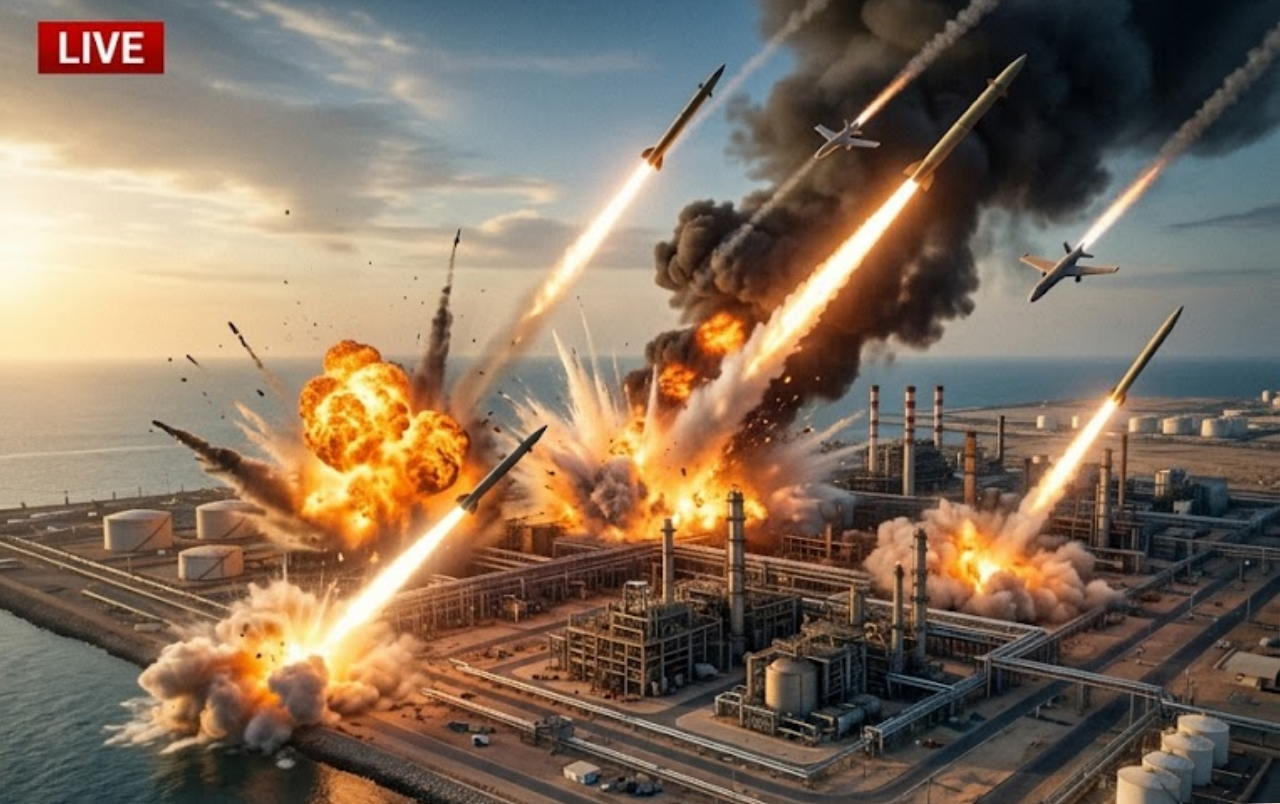
In a dramatic escalation of regional hostilities, Iran has launched a powerful missile and drone strike on Saudi Arabia’s eastern industrial hub, targeting facilities associated with the Saudi Basic Industries Corporation (SABIC) and other energy infrastructure in Al‑Jubail — one of the world’s largest petrochemical production centers. The overnight barrage triggered explosions and widespread fires, signaling a new chapter of retaliation in the widening Middle East conflict.
The attacks, confirmed by multiple international outlets, hit the densely populated Jubail Industrial Zone, a massive economic complex responsible for gasoline, petrochemical and lubricants production that contributes significantly to both Saudi Arabia’s economy and global energy markets. Witnesses and local sources reported loud explosions and towering plumes of smoke rising above the facility well into the morning hours.
Saudi defenses intercepted several ballistic missiles launched toward the Eastern Province, but falling debris and blast forces still sparked fires at or near SABIC plants, raising concerns about damage to equipment and production lines. Authorities have yet to release a full damage assessment, and it remains unclear how much output might be affected or whether critical infrastructure was disabled.
Iran’s decision to strike facilities linked to SABIC — among the world’s most important petrochemical producers — reflects the regime’s increasingly desperate strategy of “revenge” attacks following sustained strikes on Iranian targets by U.S. and allied forces. Tehran has vowed to retaliate against infrastructure across the Gulf in response to bombardments of its own petrochemical and energy sites.
The assault on Saudi industrial installations is part of a broader pattern of Iranian attacks that have already targeted refineries, energy hubs, and allied territories across the region. Previous strikes included Iranian missile and drone attacks on Qatar’s LNG facilities and Saudi oil refineries, which had already disrupted production and contributed to volatility in energy markets.
Global energy markets reacted sharply to the news, with oil and petrochemical prices climbing amid fears of further supply disruptions. The Strait of Hormuz — a critical chokepoint for roughly a fifth of the world’s oil and gas shipments — remains effectively closed due to ongoing conflict, exacerbating concerns about long‑term supply stability.
International reactions have been mixed. Some Gulf states have condemned the Iranian strikes as provocative acts that jeopardize civilian safety and economic stability, while others have called for an urgent ceasefire to prevent further escalation. Diplomatic efforts are reportedly underway behind the scenes, but no breakthrough has yet been announced.
Analysts warn that continued strikes on energy infrastructure — particularly facilities owned by major corporations like SABIC — could slow petrochemical output, disrupt global supply chains, and push energy prices even higher. With tensions remaining high and retaliation likely, the region’s economic and security outlook remains precarious.
As fires continue to burn in Al‑Jubail and nations scramble to respond, the latest Iranian attack represents a chilling escalation that reaches far beyond the battlefield — with real consequences for global energy markets, regional stability, and international diplomacy.