The night the missiles came, the sea itself seemed to hold its breath.
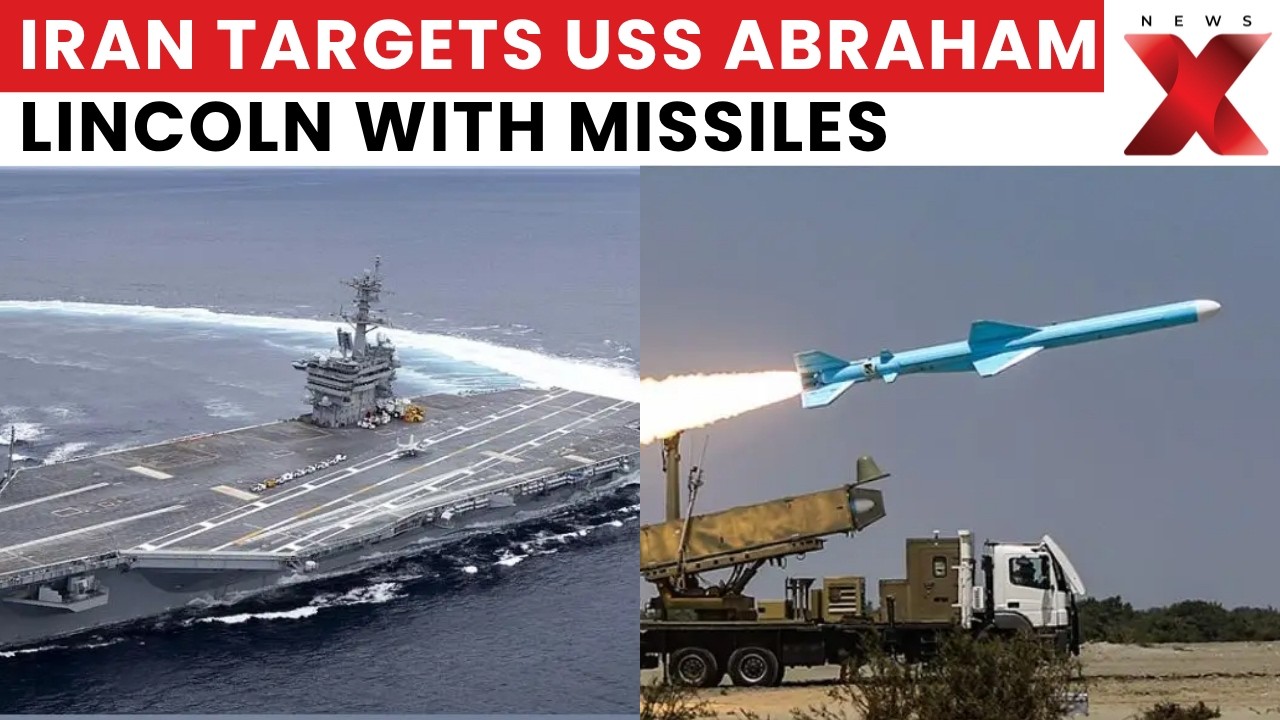
Somewhere beyond the dark horizon, Iran had reportedly unleashed what many were calling its most terrifying weapon yet—a barrage of advanced cruise missiles aimed straight at one of the most powerful warships on Earth: the USS Abraham Lincoln. The massive aircraft carrier, a floating fortress bristling with jets, radar systems, and layered defenses, suddenly found itself at the center of a high-stakes confrontation that could have changed the course of the entire conflict.
According to Iranian state sources, coastal missile batteries fired a coordinated strike, claiming their weapons had either hit the carrier or forced it to retreat from strategic waters. These weren’t ordinary missiles. Reports suggested they included precision-guided cruise missiles designed to skim low over the sea, evade radar detection, and strike with devastating accuracy. In theory, even a single successful hit could cripple a vessel the size of a small city.
For a few tense moments, the world waited.
Then—THIS happened.
Instead of chaos, there was control.
U.S. officials quickly responded, pushing back against the claims and asserting that the USS Abraham Lincoln remained fully operational, continuing flight missions as if nothing had happened. Fighter jets were still launching from its deck. Radar systems were still sweeping the skies. And most importantly, no confirmed damage had been reported.
Behind the scenes, however, what unfolded was likely far more dramatic.
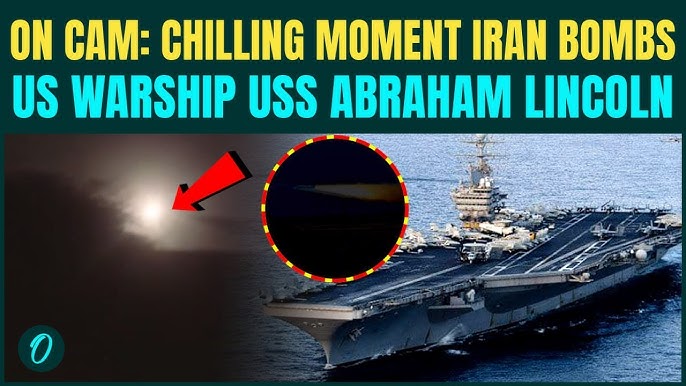
Military experts believe the carrier’s advanced defense systems sprang into action the moment the missiles were detected. Layers of protection—ranging from long-range interceptors to close-in weapon systems—would have engaged in rapid succession. Electronic warfare measures may have scrambled guidance systems, while escort ships in the carrier strike group likely contributed their own firepower to neutralize incoming threats.
In modern naval warfare, an aircraft carrier is never alone—it is the centerpiece of a heavily defended network. And on that night, that network may have been pushed to its limits.
What makes this moment even more intense is the uncertainty surrounding it. Iran has repeatedly claimed successful strikes against the carrier throughout the conflict, while the U.S. has consistently denied any direct hits. The truth may lie somewhere in between—an attempted strike that triggered a real defensive response, but ultimately failed to achieve its objective.
Still, the message was unmistakable.
Iran demonstrated that it has the capability—and the willingness—to target even the most heavily protected assets in the U.S. military. Launching missiles at a supercarrier is not just a tactical move; it’s a bold strategic signal, one that raises the stakes for everyone involved.
And for the crew aboard the USS Abraham Lincoln, it was a stark reminder: even the most advanced war machine is not invincible.
As tensions continue to rise across the region, this incident—whether a near miss or a successfully repelled attack—marks a turning point. The line between deterrence and direct confrontation is growing thinner, and each new exchange carries the risk of escalation.
One thing is certain: the next time missiles are fired, the outcome may not be the same.
Because in modern warfare, it only takes one to get through.