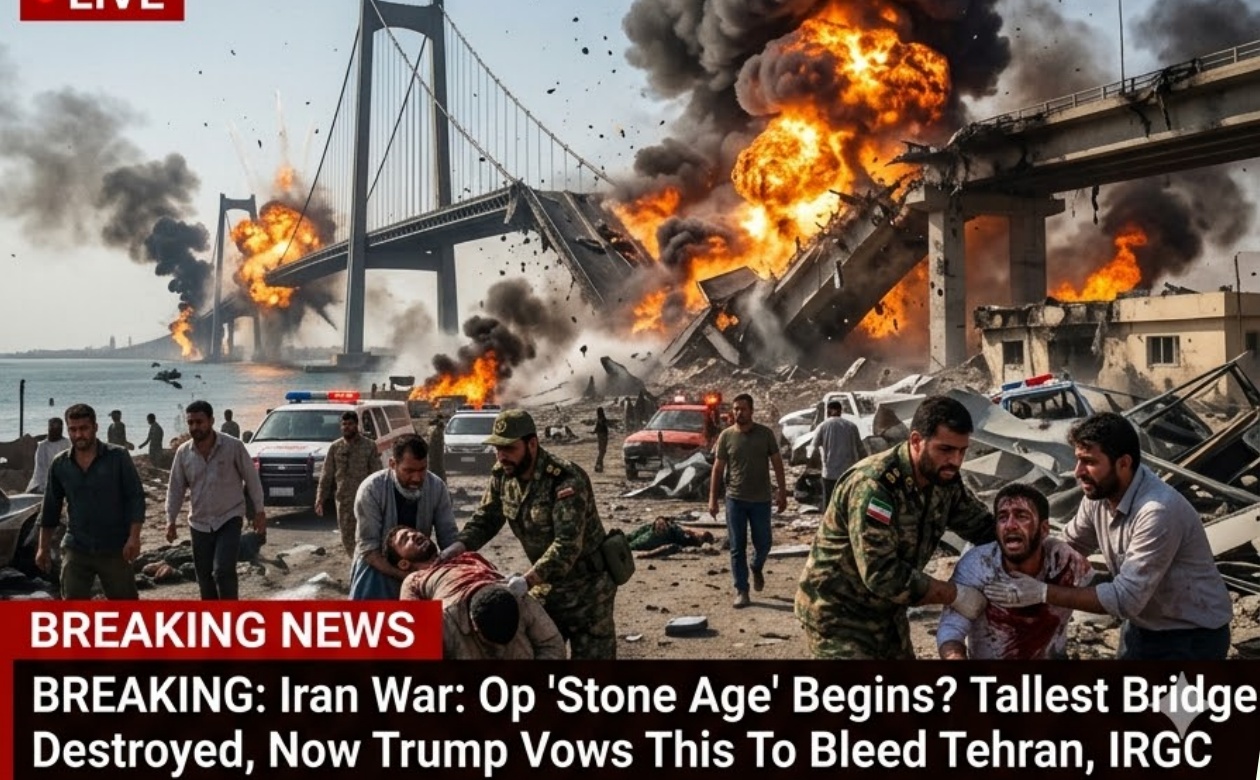
In a dramatic escalation of the conflict between the United States and Iran, the U.S. military has carried out an unprecedented strike that destroyed Iran’s tallest bridge — the B1 suspension bridge connecting Tehran to Karaj — and President *Donald Trump has doubled down on his threats to intensify pressure on Tehran and the Islamic Revolutionary Guard Corps (IRGC).
The B1 bridge, an engineering marvel standing about 136 meters tall and one of the most ambitious infrastructure projects in the Middle East, was struck in a series of coordinated airstrikes. Iranian state media reported that several sections collapsed, sending massive dust clouds into the skyline and cutting a critical highway artery used by millions. Local officials confirmed that eight people were killed and 95 injured in the strikes, though exact numbers may rise as rescue workers continue their efforts.
President Trump quickly posted footage of the destruction on social media, declaring that the “biggest bridge in Iran comes tumbling down, never to be used again — much more to follow!” In blunt terms that have reverberated internationally, Trump reiterated that the U.S. military has “not even begun destroying what’s left in Iran,” and hinted that future targets could include more bridges and Iran’s power plants — part of his vow to strike Tehran’s infrastructure “extremely hard.”
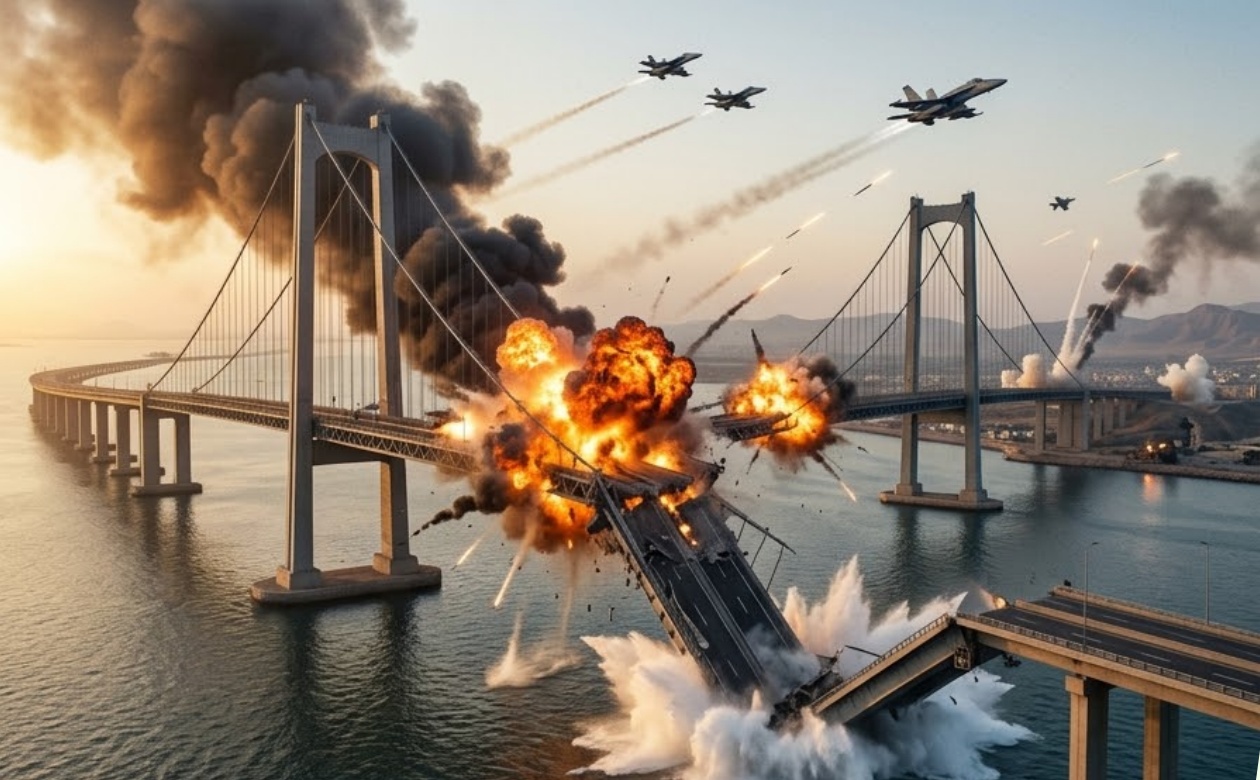
Trump even invoked the phrase “bomb Iran back to the Stone Age,” a warning that has raised alarm among world leaders and legal experts who argue that deliberately targeting civilian infrastructure — especially facilities like bridges and power grids — may cross boundaries set by international law.
The logic from Washington, according to U.S. officials, is that such infrastructure is not merely symbolic — it’s part of Iran’s logistical network that supports military movements, including the IRGC and missile divisions that have been actively targeting U.S. and allied assets across the region. By severing these links, the strategy aims to “bleed Tehran and the IRGC” over time, degrade military effectiveness, and force Iran back to negotiations before the conflict spreads further.
However, Tehran has rejected these claims outright. Iranian leaders and state media have condemned the bridge strike as a blatant attack on civilian infrastructure, asserting that destroying a bridge still under construction — not a military installation — proves Washington’s disregard for human life and international norms. They argue these actions will not compel surrender but instead deepen Iranian resistance.
In response to the bridge’s destruction, Iran’s government has reportedly identified multiple bridges and key infrastructure sites across the broader Middle Eastern region as possible targets for future IRGC operations, signaling a tit‑for‑tat escalation that could spread beyond Iran’s borders.
The collapse of the B1 bridge has also intensified global diplomatic and economic pressures. With markets worrying about extended disruptions to regional transport networks and energy routes, many governments are urging restraint. United Nations officials have expressed concern that continued attacks on infrastructure could have cascading effects on civilians and regional stability.
As the war moves into this more destructive and uncertain phase — with major infrastructure directly targeted and presidential warnings of an even broader campaign — analysts warn that the path ahead may be far more perilous than the conflict has already proven to be.